
Reviewed · ANCIENT ROME TOURS
Domus Aurea Tour with WEST WING & Virtual Reality Experience
Nero’s buried palace, with VR in tow. This Domus Aurea tour packs skip-the-line entry into a small group and pairs an expert explanation with VR reconstruction, so you see past the rubble to what it was meant to be. You also get a licensed English-speaker guide who frames what you’re looking at with Nero, the palace, and the political backlash around him.
My favorite part is the way the experience turns history into something you can picture fast, not just memorize. One consideration: the format can feel like two stages, with a short guide-led intro outside and then official site staff running the in-gallery portion inside.
Quick take
- Prebooked access for a site that limits entry so you are not stuck hunting tickets
- Skip-the-line direct entry, which matters a lot at Domus Aurea
- A licensed historian or archaeologist guide, focused on what you’re seeing, not generic facts
- East plus recently reopened West Wing, so you cover more of the complex
- Virtual reality that reconstructs the palace, not just a video for show
- Underground cool-down, so you may need a layer even in summer
Why Domus Aurea feels different from other Rome ruins
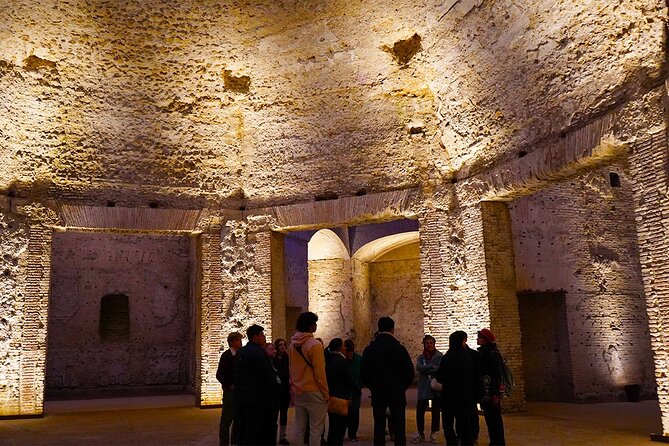
Domus Aurea is not a “walk around and guess” kind of stop. You’re stepping into an architectural world that went underground, and a lot of what remains is fragile, partial, and strange in the best way. You look at surfaces that were never meant for daylight, and the scale of the complex makes Nero’s ambition feel real.
What makes this tour format helpful is the short, guided orientation. You get the big picture first, then you enter with context for the frescoes, layouts, and the reasons the area changed hands after Nero. That matters because Domus Aurea is easy to experience as scattered rooms unless you know what you’re trying to understand.
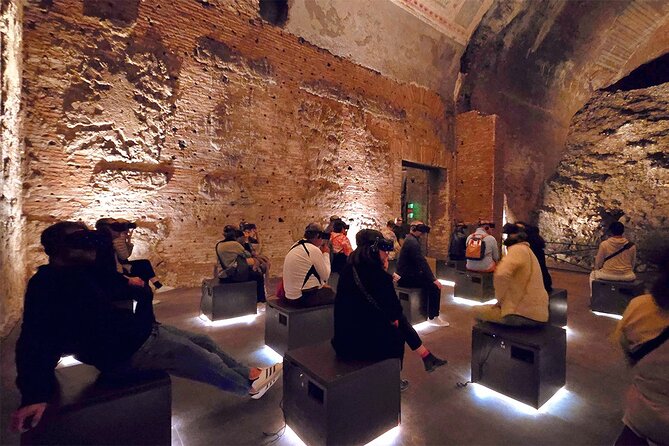
Then comes the practical magic trick: VR. Instead of only imagining how painted walls, ceilings, and spaces may have looked, the VR experience helps your brain connect the reconstruction to the physical ruins right in front of you.
You can also read our reviews of more tours and experiences in Rome.



Tickets you’ll be glad you prebooked
This tour is built for one main pain point in Rome: limited access. Domus Aurea does not always let people in on demand, and entry slots can be hard to secure. Prebooking is what gets you through the door.
You also get skip-the-line direct access. In plain terms, it reduces the “stand and wait while others cycle through” part of the experience. For a site with a controlled flow, direct entry is one less frustration.
Price check: at $84.19 per person for about 2 hours, you are paying for more than admission. You are paying for the guided interpretation and the VR add-on, plus the benefit of having entry handled for you. If you’re the kind of traveler who prefers a guided sequence over wandering alone, the value usually makes sense.
Meeting at Vle della Domus Aurea, and a small logistics tip
The tour starts at Vle della Domus Aurea, 00184 Roma RM, Italy and ends back at the meeting point. That “back to start” setup makes it easy to plan the rest of your day, especially if you are juggling multiple timed tickets.
Two practical notes to keep things smooth:
- Arrive a bit early. This is the kind of site where a few minutes can turn into stress.
- Use the exact meeting spot address on the street, not the site entrance, so you don’t waste time looking in the wrong place.
It runs near public transportation, so you can usually line it up with other stops in central Rome without an extra taxi trip.
What to wear: shoes, layers, and the underground reality
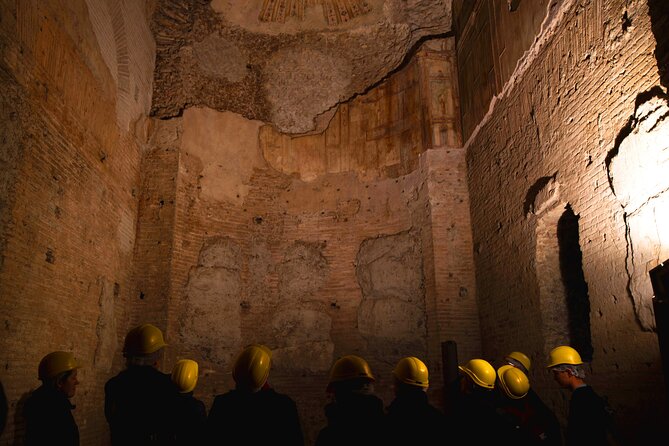
Domus Aurea is large and you will walk. A number of visitors specifically point out that it’s a big site and recommend comfy walking shoes. Even if you pace yourself, expect several stretches of uneven walking surfaces and stair steps.
Then there is the temperature. Because the palace areas sit underground, it can feel much cooler than Rome on the surface. One of the most specific tips you’ll hear is that it can be around 65 F (about 18 C) when the day outside is far hotter. Bring a light layer like a sweater or scarf. You’ll feel better once you drop into the cooler spaces.
If you wear glasses, consider how you’ll manage the VR headset. Some people report headset clarity issues that may be tied to how glasses affect the fit. If you’re sensitive to that kind of comfort, plan to adjust carefully when you get your headset.
Pre-visit outside talk: get your bearings fast
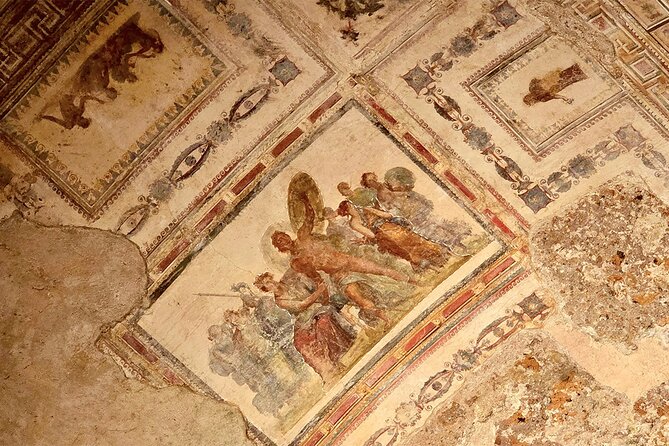
This tour often starts with a guide-led introduction that gives you the story you need before you walk into the Domus spaces. You should expect a focused overview of Nero and the Golden House. It’s designed to be short, structured, and easy to follow so you can recognize what you’re seeing as you go.
Here’s what the narrative brings that a casual entry would miss. Nero’s palace grows out of the tragedy that reshaped the city. About four years after the Great Fire of Rome, an enormous catastrophe destroyed much of the city, and Nero used the ruined areas to expand his palace on the Palatine Hill, building Domus Aurea.
You then connect that to why the palace never becomes a long-term success story for Nero. Discontent rises, Nero’s popularity collapses, and he dies by suicide in June 68 AD. After him, Vespasian shifts Rome’s priorities and builds the Colosseum in the place of Nero’s lake, using gladiator entertainment to win favor and move away from Nero’s legacy.
This outside talk is the glue. Even if you think you know Nero already, this framing helps you notice details that otherwise feel random.


A note on the “two guide” feeling
Some guests find the experience splits into stages: a short pre-lecture outside, then a separate guide takes over inside for the official tour. That is not a deal breaker, but it can change the pace and the level of freedom you feel during the interior portion. If you are expecting one continuous conversation the entire time, set your expectations for a handoff.
Entering Domus Aurea: East areas and the reopened West Wing
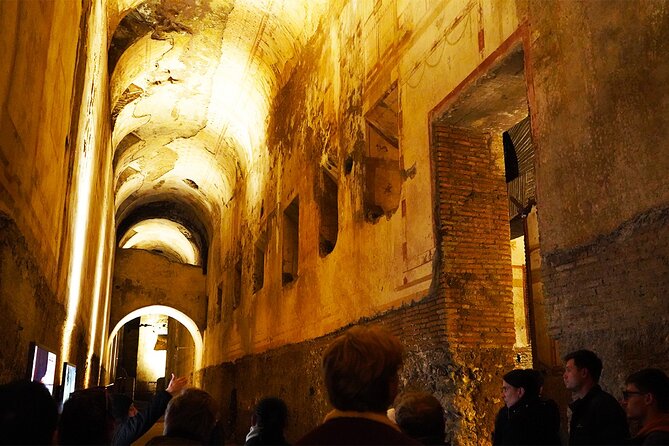
Inside, you are seeing part of a palace complex that was designed to impress. The structure connects to what’s around it in Rome, and that contrast is part of the shock. One standout theme you’ll feel in this tour is how the complex sits at a crossroads of eras and ruins, with elements that reference what came after Nero.
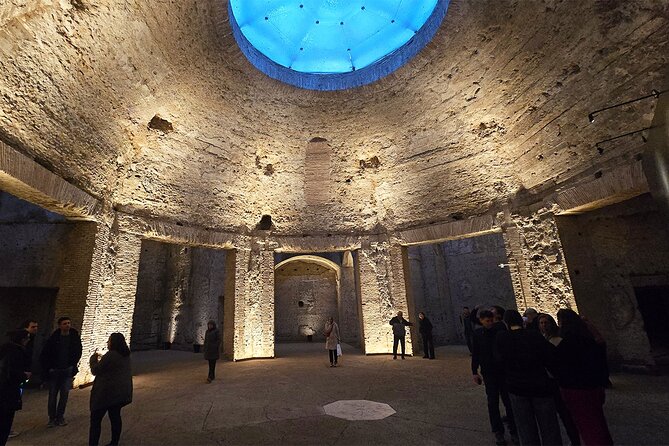
This particular tour includes time in both the East areas and the recently reopened West Wing. The reopened spaces matter because they let you feel the palace as more than a single room set. Instead, you get a fuller picture of the complex and its surviving elements.
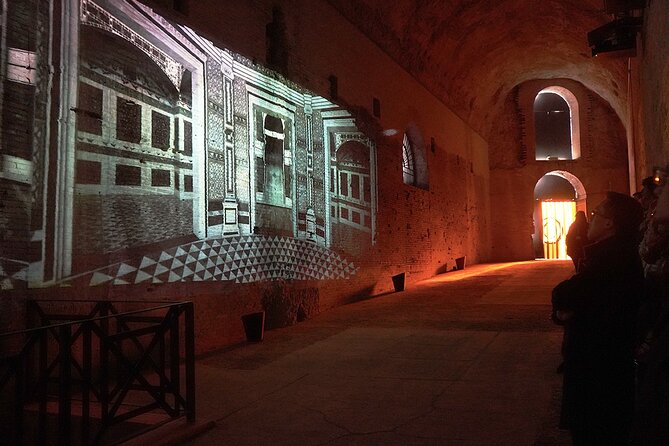
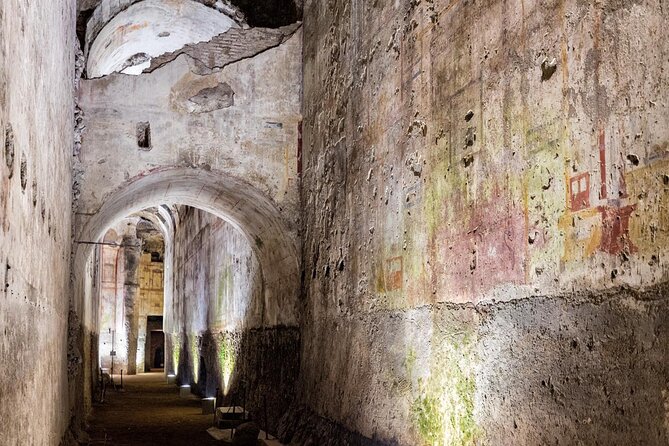
Expect a guided walkthrough through rooms and corridors where frescoes and decorative remnants play a big role. Several visitors describe the frescos as incredibly well preserved, and the overall feeling as like a mini Pompeii inside Rome. That comparison makes sense because you are looking at painted surfaces that were meant for luxury, not for storage or survival.
Practical reality check: your time indoors is also where the experience can feel scripted. A few guests describe parts of the interior tour as more structured than conversational. If you prefer lots of back-and-forth questions, come ready to listen and read the cues from your guide rather than expecting a relaxed free-form chat.
VR at Domus Aurea: how the palace comes back to life
The VR portion is one of the strongest reasons to choose this specific tour. Instead of relying only on imagination, you get a reconstruction that helps you visualize how the palace may have looked when it was functioning and decorated.
Visitors consistently call VR worth it, and that’s because VR changes the meaning of what you see. A decorative fragment becomes a clue. A layout becomes a promise of space and light. In a site where so much is now underground and incomplete, that visual leap is huge.
There are two small practical considerations to keep in mind:
- Some people say the VR experience feels like it could last longer. If VR is your main interest, you may want to treat it as a helpful primer rather than the whole show.
- Headset comfort and clarity can vary, especially if you wear glasses. If the image looks fuzzy, adjust the headset fit right away and give the setup a moment to settle.
Timing can also shape your experience. One guest mentioned that they would have preferred VR earlier so it could frame the ruins before the walk inside. If you’re someone who likes to visualize first and then observe, try to stay alert to when the VR happens in your specific group flow.
The story thread: from Nero’s party palace to the Colosseum era
A big part of the value here is that the guide does not treat Domus Aurea as a standalone curiosity. The tour ties it to Rome’s political roller coaster.
You start with catastrophe, then power, then backlash:
- The Great Fire leaves destruction in its wake.
- Nero turns the cleared areas into a grand palace.
- Popular support collapses.
- Nero dies in June 68 AD.
- Vespasian replaces the lake area with the Colosseum to win Roman approval and redirect culture toward gladiator games.
That last step is important for your takeaway. It explains why you find the Colosseum where you do, and why Roman society moves from Nero’s extravagant palace fantasy toward a public entertainment engine. Even if you know the Colosseum story, seeing it connected to Domus Aurea makes the whole timeline feel more coherent.
Price and value: what $84.19 really buys you
At about $84.19 per person for roughly 2 hours, this is not the cheapest way to see Rome’s ruins. But it is also not trying to be. You are buying a bundle:
- Prebooked, direct access to a controlled site
- A licensed English-speaker guide using history or archaeology expertise
- Small-group format (up to 22 people)
- Virtual reality reconstruction
So the question is simple: do you want the guided interpretation and the VR add-on, or do you prefer to explore on your own? If you want both interpretation and visualization, this price starts to feel like a reasonable deal.
If you only want the physical ruins and you’re comfortable navigating without a specialist, you might feel the cost more sharply. But even then, skip-the-line access can be a lifesaver when you’re working around ticket availability.
Who should book this Domus Aurea with West Wing and VR
Book this if you:
- Want a guided look at a complex, fragile site instead of a self-guided scramble
- Love the Nero era and enjoy connecting political history to architecture
- Like modern tools that help you picture what you cannot directly see
- Prefer smaller groups, with up to 22 people
You might think twice if you:
- Need lots of time to wander independently inside, because the tour format can include a handoff to official site guides
- Are very sensitive to accent clarity, since some guests found parts of the interior guiding harder to follow due to accent or delivery style
- Expect VR to replace the real on-site experience, rather than support it
Should you book this tour or skip it?
I’d book it if you’re trying to make the most of a limited time in Rome and you want Domus Aurea to feel understandable, not mysterious. The pairing of a historian or archaeologist-style intro with VR makes it easier to connect Nero’s story to what you’re actually seeing underground. Add in skip-the-line access to a limited-entry site, and the tour checks the boxes that usually matter most.
Skip it only if you’re strictly budget-focused and confident you can secure entry elsewhere without guidance, or if you are uncomfortable with a format that can feel split between an outside talk and official internal guiding. For most people, this is a smart way to see a unique Rome site and make the past visible.
FAQ
How long is the Domus Aurea tour with West Wing and VR?
It’s about 2 hours.
What is the meeting point for the tour?
The start point is Vle della Domus Aurea, 00184 Roma RM, Italy. The tour ends back at the same meeting point.
Is the tour skip-the-line?
Yes. It includes Domus Aurea skip-the-line tickets with direct access to the site.
What’s included in the price?
Included are Domus Aurea skip-the-line tickets with direct access, a licensed English-speaker guide (history or archaeology), and the VR experience. Snacks are not included.
Do I need to print tickets?
No. You’ll have a mobile ticket.
How big is the group?
The tour has a maximum of 22 travelers.
Will there be virtual reality during the tour?
Yes. You’ll get a VR reconstruction to see how the complex may have looked in its heyday.
What is the cancellation policy?
Free cancellation is available up to 24 hours in advance for a full refund.
More Tours in Rome

More Tour Reviews in Rome
Not for you? Here's more nearby things to do in Rome we have reviewed









Ancient Rome Tours, compared.
 ★ 4.7Colosseum: Underground and Ancient Rome TourFrom $16012,691 reviews
 ★ 4.4Colosseum, Ancient Rome Tour or Self AudioGuided TourFrom $392,866 reviews
 ★ 4.9Appian Way, Catacombs, & Roman Aqueducts E-bike TourFrom $851,421 reviews
 ★ 4.9Appian Way E-bike Tour with Catacombs, Aqueducts & FoodFrom $961,210 reviews
 ★ 5.0Appian Way Aqueducts Bike Tour (Catacombs & Lunch Option)From $78975 reviews
 ★ 4.7Appian Way, Aqueducts, and Catacombs TourFrom $64942 reviews
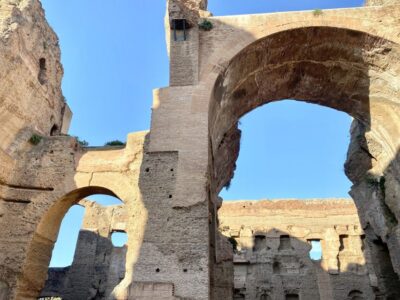 ★ 4.7Caracalla Baths & Circus Maximus — Private or SharedFrom $77835 reviews
 ★ 4.7Colosseum Arena Access and Ancient Rome Guided TourFrom $94774 reviews
Browse the lists this tour appears in