
Reviewed · ROME NIGHT TOURS
Rome By Night E-Bike Tour
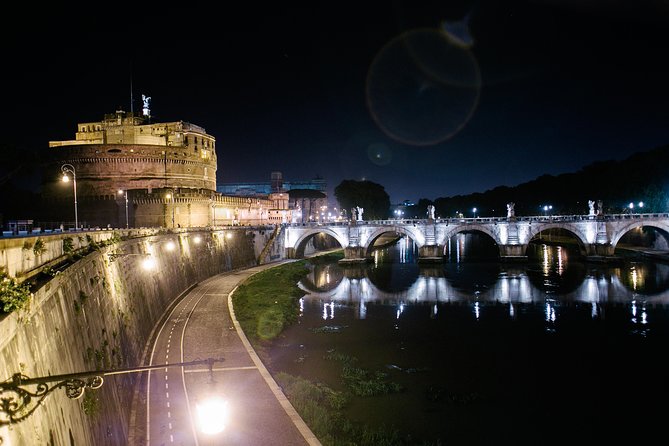
Night in Rome is different, and greener by bike. This Rome by Night E-Bike Tour strings together the biggest sights after dark, from the Colosseum glow to Forum ruins, with stops built around photo-friendly timing and an easy pace. You start near the Pantheon, then roll through lit piazzas and quieter streets without wrestling a map.
I love that this tour is designed for real sightseeing, not museum marathons. You get a small group, helmets included, and a guide who can explain what you are seeing while you coast between landmarks. I also like the way it mixes headline monuments with oddball stops like the Torre Argentina Cat Sanctuary, which makes the whole ride feel less cookie-cutter.
One consideration: this is not an inside-access tour. The operator notes they do not enter monuments or sights due to time restrictions, waiting lines, closing days, and entrance tickets, so it is best if you want the sights from street level and at key viewpoints, not ticketed entry.
Key Highlights I’d Circle on Your Rome Night Plan
- Small-group feel (max eight total) with a calmer ride pace for photos and questions
- E-bike help for Rome’s hills and longer distances at 7:00 pm
- Iconic lighting moments like the Colosseum and Forum after daytime crowds thin out
- Bernini’s Piazza Navona fountain stop plus the Pantheon exterior and other classics
- Unexpected stops like the cat sanctuary and the Temple area by the Tiber
- Back-to-basics logistics: near the Pantheon, end back at the start, helmet and bike included
Why Rome By Night Works Better on an E-Bike
Rome looks great in daylight. Rome looks theatrical at night. The main reason I like this format is simple: you trade heat and crush crowds for cool air and street-level views. At 7:00 pm, you are catching the city as it switches from business mode to evening stroll mode.
An e-bike also changes how you experience “distance” in Rome. You still feel like you are moving through the historic center, but you are not doing the stop-and-start grind of walking between far-apart landmarks. That matters most on a short 3-hour plan.
And you are not alone in figuring it out. A good guide steers you to the best angles, and your job stays mostly on pedaling and staying aware in traffic-heavy areas.
You can also read our reviews of more cycling tours in Rome


Meet Near the Pantheon, Gear Up, Then Roll
Your meeting point is Via dei Soldati, 27, and the tour ends back at the same place. You start at 7:00 pm, right in the heart of old Rome, close to the Pantheon. That central start is a gift. It means you are not carving out time for transfers or a long morning trek to reach the first stop.
You will ride as part of a small group, and the tour asks that participants know how to ride a bike. Helmets and the bicycle are included, which takes a big logistical worry off your shoulders.
One practical tip: night riding sounds easy until you hit uneven pavement, tour groups stopping for photos, or drivers moving unpredictably. The e-bike helps, but you still want to ride calmly, keep your line, and be ready to slow when the group stops.
The Colosseum at Night: Iconic Views Without Daytime Chaos
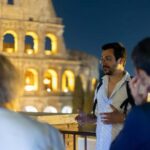
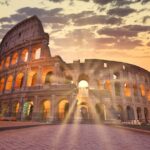
The first major anchor is the Colosseum, lit up in floodlights. This is where the tour earns its “night” name. The stop is brief and unhurried, with time for photos from viewpoints your guide selects so you can actually frame the monument.
What I’d watch for here is not just the building itself, it is the feeling. At night, the Colosseum reads less like a photo backdrop and more like an actual stage. Your guide’s stories about gladiators, emperors, and Roman spectacles help the scenes make sense as you look at the stone.
Important note on tickets: the Colosseum stop lists that admission ticket is not included, and the operator also says you do not enter monuments. So think of this stop as an exterior experience. You come for the lights, the atmosphere, and the explanations, not a timed entry.
Roman Forum After the Crowds: Ruins With Breathing Room
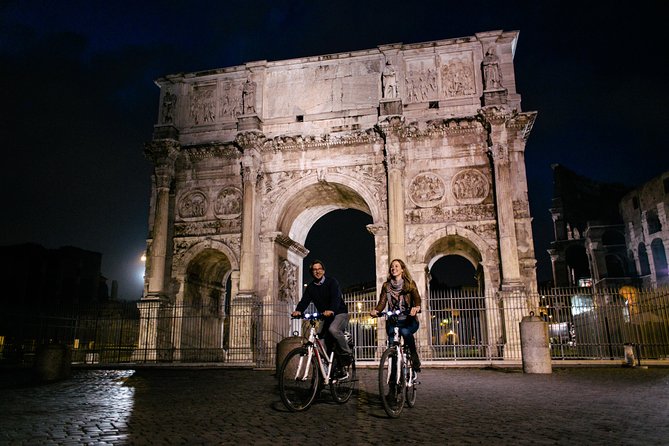
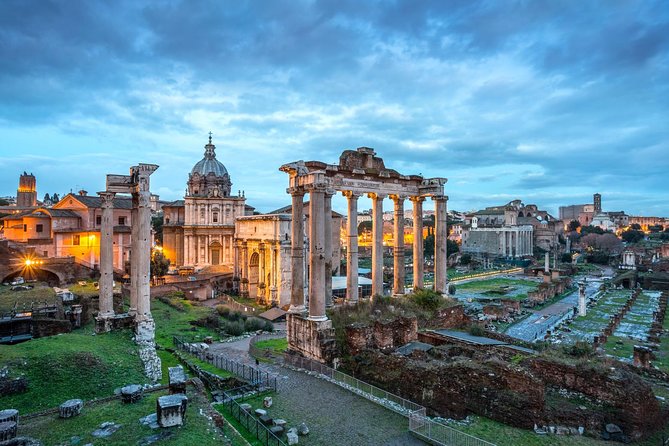
From the Colosseum, you move toward the Roman Forum, described as the heart of Ancient Rome. This is another stop where night timing helps. The tour is designed around seeing these sites when the midday crowds have dispersed.
The Forum is huge, so a guide really helps you avoid “I saw a lot, but I’m not sure what I saw” syndrome. You’ll get commentary you can connect to the architecture and layout while you are there, and you should come away with a clearer idea of what the ruins represented.
Your time here is short, so treat it like a guided orientation stop. That is usually where the tour model shines: it gives you the map in your head so that if you revisit later, you know what to look for.
Pantheon and Piazza Navona: Two Exteriors That Feel Like Must-See Films
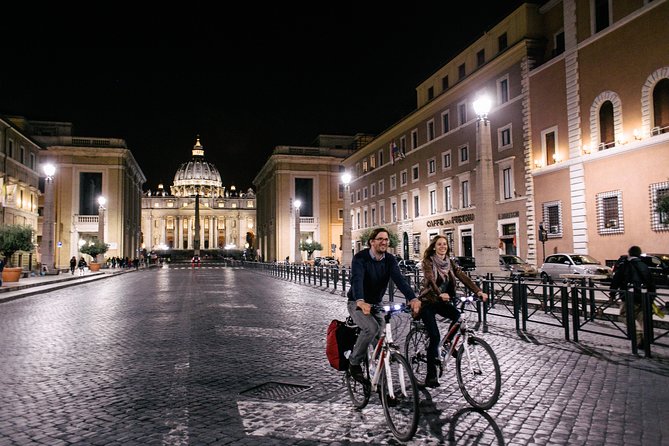
Then you hit two of Rome’s most recognizable shapes: the Pantheon and Piazza Navona.
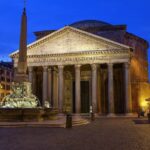
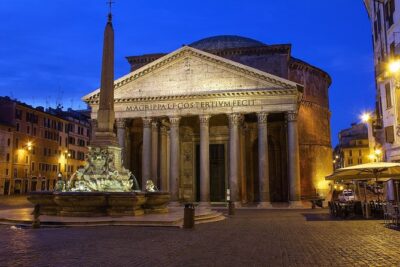
At the Pantheon stop, the tour notes it as Rome’s most famous and best preserved ancient temple. You get a short look, and your guide frames what you are seeing so it is not just a quick photo and a move along. The stop lists admission as free, but again, the overall tour approach is exterior viewing rather than entrance.
Next comes Piazza Navona, with special focus on Bernini’s Fontana dei Quattro Fiumi. This is one of those places where the night glow makes everything feel more dramatic and more intimate. The fountains and stacked facades look different after dark, and the pause time is long enough for you to actually enjoy the scene and not just snag a single snap.
If you are the kind of traveler who likes walking at your own pace during the day, this night bike ride works as the “see everything quickly” layer. Then, later, you can return on foot to linger.
You can also read our reviews of more evening experiences in Rome

Piazza del Campidoglio: Michelangelo’s Viewpoint Over the Forum
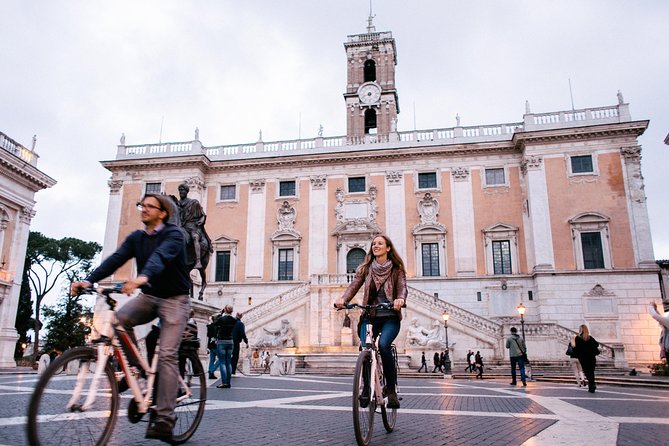
One of the more rewarding stops on this ride is Piazza del Campidoglio on the Capitoline Hill. The big draw here is perspective. You are looking out over the Roman Forum and rooftops from an elevated vantage, which makes Rome’s layers easier to read.
Michelangelo designed the square, and your guide explains why it mattered in ancient and Renaissance Rome. The bonus is photo quality. At night, the outlines of roofs and monuments create a stronger contrast, so pictures tend to look more “Rome-like” and less flat.
This stop is short, but it is a high-impact one. If you remember one viewpoint from the evening, make it this one.
Spanish Steps and Trevi Fountain: Quick Photo Ops Done Right
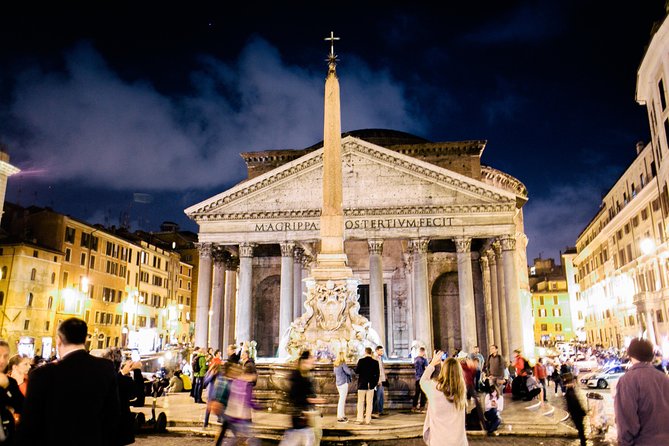
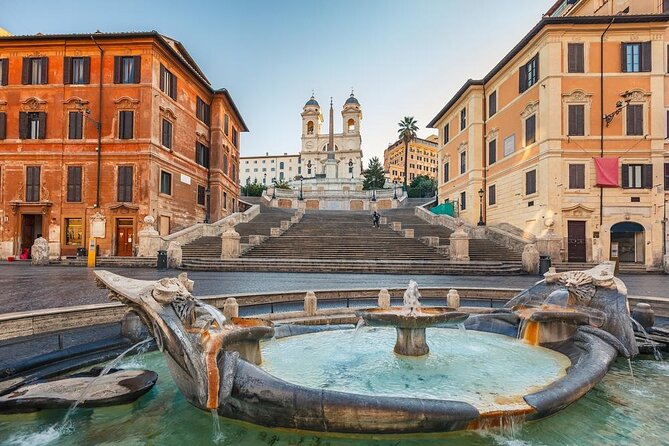
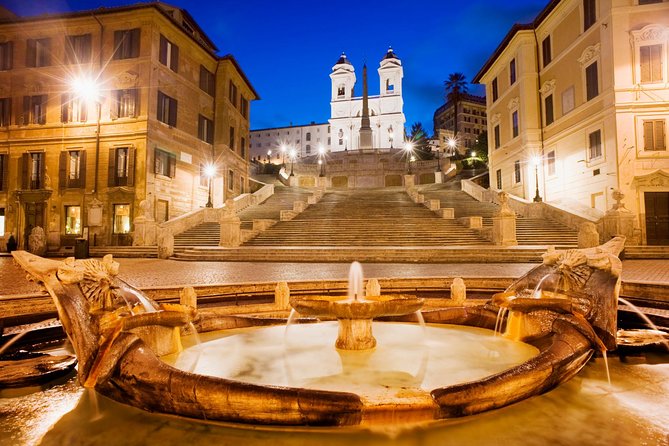
The highlights also call out photo ops at the Spanish Steps and Trevi Fountain, plus other major landmarks. Even if you have to be quick, this is the practical part of the tour that saves you time.
Why quick photo stops help: Rome’s top landmarks are crowded on purpose. Doing them after dark can be calmer, but you still want the right angle and a guide’s timing. This tour builds those snapshots into the ride so you do not have to plan each detour yourself.
If you want a full Trevi experience, like wandering slowly and grabbing gelato at the edge of the fountain crowd, you will still want another outing later. But for orientation and early trip momentum, this works.
Torre Argentina Cat Sanctuary: Cats, History, and a Pause You’ll Appreciate
Then you glide to the Torre Argentina Cat Sanctuary, one of Rome’s most unusual sights. Your guide talks about the archaeological area with Republican-era temples and its association with the assassination of Julius Caesar, then you see the protected cats cared for by local volunteers.
This is exactly the kind of stop that makes a night tour feel human. You are not just scanning monuments, you are watching something living and local happen in the middle of ancient stones. The stop is brief, but it is the sort of moment you remember because it is different from the standard skyline photos.
Tempio Maggiore and Campo de’ Fiori: Cultural Stops With Atmosphere
Near the Tiber River, there is a stop at the Tempio Maggiore di Roma. The guide explains the history of the Jewish community, and you get time to observe the synagogue’s architectural style, including its square dome. This is a peaceful, reflective change of pace in the middle of a busy evening route.
After that, you visit Campo de’ Fiori, described as a historic, lively square. Here your guide connects the area to the story behind Giordano Bruno, then helps you notice how the square has shifted from medieval marketplace life to evening social energy. You get a short window to take photos and watch real Roman night life.
If you enjoy history but you also enjoy the feeling of a place being used, this stretch is where the tour quietly earns points.
Temple Stops by the Tiber: Two Circular Marvels and a Calm Break
The itinerary includes two ancient temple stops that are easy to overlook if you are walking with your head down.
At the Tempio di Ercole Vincitore (Temple of Hercules Victor), you get a look at one of the best-preserved ancient temples in Rome. The stop is very short, so focus on the shape and proportions rather than trying to memorize every detail. Your guide provides the significance and why it is unique, then you move on.
Next is the Tempio di Portuno, near the Tiber River. Another brief stop, but this one often feels calming because of the setting. Your guide explains its role connected to ports and river trade, and why it survived so much intact. At night, these temples can feel almost like small islands of stillness between bigger landmarks.
These two stops are a good reminder that Rome is not only famous for the obvious. It is also full of well-preserved structures you would miss without a route.
Teatro di Marcello, Piazza Farnese, and the Octavia Portico
The route continues to the Theatre of Marcellus, explained as an impressive ancient structure that influenced the design of the Colosseum. You get time to notice how history layers right onto the older bones of the city. At night, this stop feels less like a history lecture and more like a visual puzzle.
Then comes Piazza Farnese, an elegant Renaissance square dominated by the Palazzo Farnese. The guide points out architectural details, including twin fountains made from ancient Roman basins. This stop has a quieter rhythm, which is a nice mental reset after temples and busier piazzas.
Finally, you pause at Il Portico di Ottavia, in the area tied to the ancient Jewish Ghetto. The guide explains the portico’s origins and how the area evolved across centuries. If you like seeing how different communities shaped Rome, this last stretch can be especially meaningful. You also get time to take photos in a setting that usually feels calmer than the headline monuments.
The Real Value: What You Get for $82.90
At $82.90 per person for about 3 hours, the big value is not just “you see sights.” It is the time-saving combination of an organized route, e-bike transport, and a guide who connects the dots between what you are seeing and why it matters.
You are also getting included gear: the bicycle and a helmet. That matters if you arrive without renting a setup on your own.
Just keep your expectations aligned with what is included. Admission tickets are not included for some stops, and the tour notes that it does not enter monuments. So the price is really for the guided exterior experience plus nighttime routing. If your top priority is going inside the Colosseum or other ticketed sites, you will need a separate plan for that.
Who This Tour Fits Best (and Who Should Skip It)
This tour is a great fit if you want:
- a first-night overview that helps you find your bearings fast
- a way to see the Colosseum, Forum, Pantheon, Piazza Navona, and key Tiber-area sights without spending hours walking
- a guided ride with frequent photo pauses, not a rushed “hit-and-go” sprint
It is less ideal if:
- you strongly want ticketed entry into major monuments
- you are not comfortable riding a bike (the tour requires it)
- you prefer long, free-form wandering with no structure
It can work for groups and families too. The tour notes children should be at least 12 and accompanied by an adult.
Guides and the Small-Group Advantage
The small-group size is a big reason this tour earns top marks. A maximum group of eight keeps the ride manageable, and it usually means you can ask questions without competing with a huge crowd.
In the feedback you see names like Marco and Luca tied to the same strengths: energy, patience for photo stops, and explanations that feel clear and practical. People also talk about smooth handling in tricky moments, including rain delays, and about how the e-bikes make navigating Rome streets feel easier than you might expect.
The guides also help you take better photos. Instead of everyone standing in random spots, you get guidance on where to stop and how to frame what is lit up.
Should You Book This Rome By Night E-Bike Tour?
Book it if you want an efficient, guided night ride through central Rome that hits the big landmarks plus a few memorable extras like the cat sanctuary. For many visitors, it is a smart first step, because it gives you an overview that makes the rest of your trip easier to enjoy.
Skip it if inside access is your priority, or if you are not comfortable riding a bike at night. Also, if your trip plans hinge on specific ticketed entries, plan those separately since this tour focuses on exterior viewing and viewpoints.
If you are deciding in one sentence: this is a high-value orientation and photo tour, best for seeing Rome after dark with less walking fatigue and more guided context.
FAQ
What is the price of the Rome By Night E-Bike Tour?
The price is $82.90 per person.
How long is the tour, and when does it start?
The duration is about 3 hours, and it starts at 7:00 pm.
Where is the meeting point, and where do we end?
You meet at Via dei Soldati, 27, 00186 Roma RM, Italy, and the tour ends back at the same meeting point.
What group size should I expect?
It is a small-group tour with a stated maximum of 8 travelers. The additional info also mentions a maximum of 6 people per booking.
Is the tour offered in English?
Yes, the tour is offered in English.
Do I need to know how to ride a bike?
Yes. Participants must know how to ride a bike.
Are helmets and bikes included?
Yes. Use of the bicycle and use of a helmet are included.
Do we enter monuments during the tour?
No. The operator states they do not enter monuments or sights due to time restrictions, waiting lines, closing days, and entrance tickets. The tour gives you an overview and takes you to all the sights.
Are admission tickets included for places like the Colosseum?
Admission tickets are not included for the Colosseum stop. Some other stops are listed as free, but the tour overall does not enter monuments, so plan for exterior viewing.
What happens if it rains or the weather is poor?
The tour operates in all weather conditions, so you should dress appropriately. The experience also notes that if it is canceled due to poor weather, you will be offered a different date or a full refund.
Is there free cancellation?
Yes. You can cancel up to 24 hours in advance for a full refund. If you cancel less than 24 hours before the start time, the amount paid is not refunded.
More Cycling Tours in Rome
More Tours in Rome






More Tour Reviews in Rome

Not for you? Here's more nearby things to do in Rome we have reviewed












Rome Night Tours, compared.
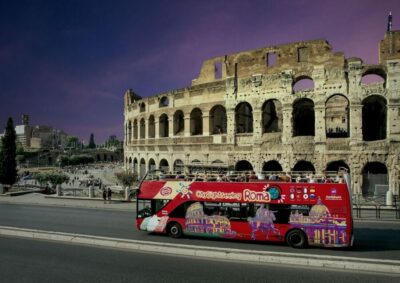 ★ 4.1City Highlights Open-Top Bus Night TourFrom $222,038 reviews
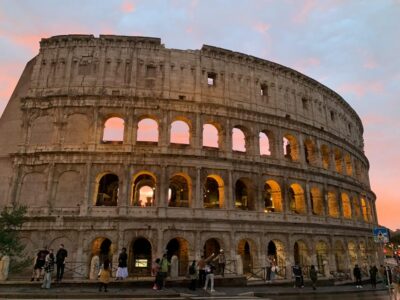 ★ 4.5Colosseum Sunset Tour with EntryFrom $491,230 reviews
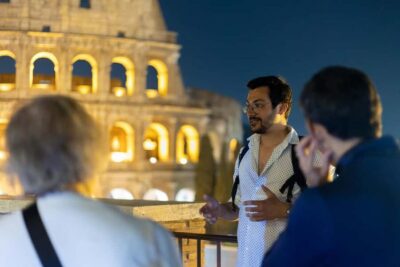 ★ 4.9E-Bike Night Tour with Food and Wine TastingFrom $891,131 reviews
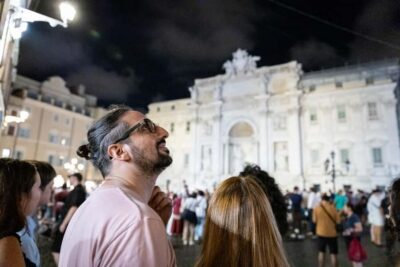 ★ 4.8Under the Moonlight Evening Walking TourFrom $28852 reviews
 ★ 4.5Night Tour of Rome with Local Pizza Dinner and Gelato ExperienceFrom $237780 reviews
 ★ 5.0Rome Bar Crawl: Interactive Night Tour with Games and KaraokeFrom $78769 reviews
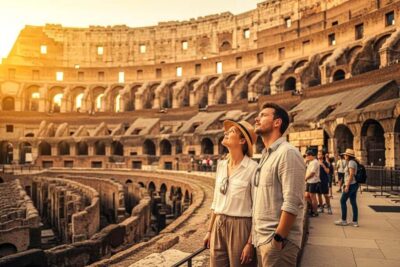 ★ 4.7Colosseum Arena Twilight Tour & Imperial Forum VisitFrom $78689 reviews
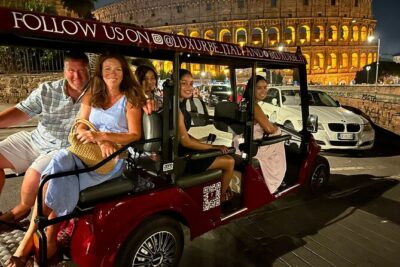 ★ 4.5Rome by Night: Golf Cart TourFrom $108688 reviews
Browse the lists this tour appears in