
Reviewed · MUSEUMS
Private Tour – Capitoline Museums
Rome has a way of rewarding patience. The Capitoline Museums make that payoff simple, guided, and fun. You get timed ticket access, plus a private guide who turns statues, bronze details, and frescoed rooms into actual stories about how Romans lived and ruled.
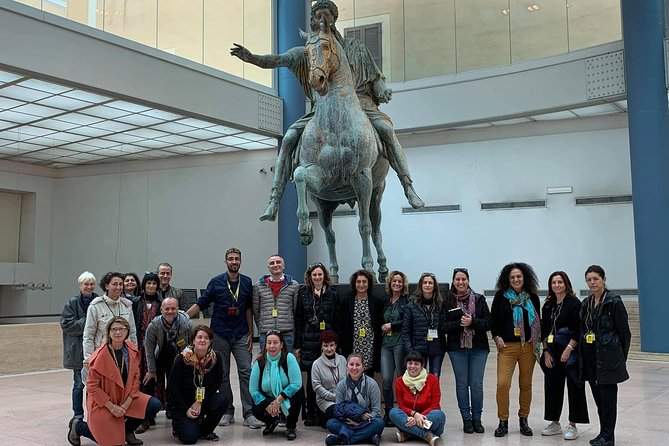
Two things I really like here are the private guidance and the fact that the itinerary mixes museum art with city design. In the museum, you are not just looking, you are understanding why certain pieces are where they are and what they meant. Then Piazza del Campidoglio gives you a quick hit of Renaissance planning, including the Marcus Aurelius copy outside, and the original you will already know to look for inside.
One practical consideration: you will have to leave bags and backpacks in the checkroom. So if you like traveling light, plan on it. If you do not, factor in a small extra stop before you settle in.
Key highlights to look for
- Oldest public museum feel: Musei Capitolini traces back to the late 1400s, and your guide frames it clearly.
- Private, not audio-only: you can ask questions, go at your pace, and focus on what grabs you most.
- Roman sculpture plus famous names: expect Roman antiquities alongside select Baroque works like Bernini statues.
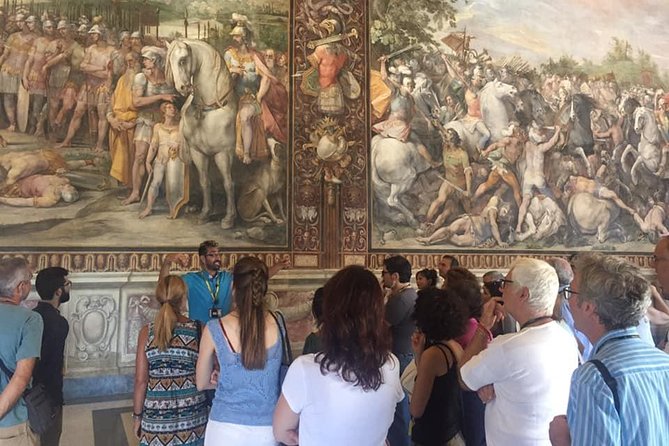
- Courtyards and frescoed palace spaces: the building is part of the experience, not just storage for artifacts.
- Michelangelo’s city square: Piazza del Campidoglio helps you connect art to the way Rome was reshaped.
- Marcus Aurelius context: the copy in the square links directly to the original inside the museum.
Why the Capitoline Museums feel like a smarter first Rome museum
If you only do one museum in Rome, the Capitoline Museums can be a strong choice. Part of that is age. The museum began in the late 1400s, created at the end of the XV century by Pope Sixtus IV, the same pope connected to the Sistine Chapel. That matters because you are not just seeing Roman-era objects. You are also seeing how later generations built a home for them, with power, taste, and curatorial pride.
Another reason I like it is variety. You get Roman antiquities, famous sculpture traditions, and a palace setting decorated with frescoes. That combination makes the visit feel less like a checklist and more like a guided walk through how Rome has been understood over centuries.
Most people arrive at the Capitoline thinking it will be mostly statues. Sure, there are bronze sculptures and major works worth studying. But with a good guide, the museum becomes about daily life and empire politics, not just artwork labels. Your guide is there to connect the visual clues to the bigger picture, so you can actually remember what you saw afterward.
You can also read our reviews of more private tours in Rome


Private guide value: what you gain beyond tickets
Tickets get you entry. A guide gets you the meaning.
In this private format, a professional guide leads you through the museum with an attention to stories and connections that are hard to pull together on your own. The best guides do more than point and describe. They help you build a mental map of Roman culture, so the objects stop feeling random.
The reviews are full of the same theme: energetic guides who keep the group engaged for the entire time. Names that show up often include Vincenzo, Massimo, Martina, Max, and Victoria. You will notice a pattern in how they work. They make explanations easier to follow, they ask and answer questions, and they tailor pacing for the group. One guide even picked up on personal interests, like stopping to connect with what someone was photographing, and another adjusted by helping someone who wanted to sit or stretch.
If you enjoy learning in plain language, this is the kind of tour where facts actually stick. You are not stuck with long monologues. The interaction is part of the experience, and it is one big reason people end up saying it was worth it even if they have visited Rome before.
Timing, tickets, and the small logistics that matter
This is about 2 hours 30 minutes total. The visit breaks into two clear parts. The museum portion runs about 2 hours, and then you shift to the outside square for about 20 minutes.
Tickets are included. That is helpful because the Capitoline Museums can involve planning around access and entry timing. With tickets handled, you spend your energy on what you came for, not on sorting out details.
A few logistics you should know up front:
- The tour starts at Piazza del Campidoglio, 00186 Roma RM, Italy.
- It ends back at the meeting point.
- It is offered in English.
- Hotel pickup and drop-off are not included, and private transportation is not included.
- It is near public transportation, so you can build it into your day without a complicated transfer.
The checkroom rule is not optional. Bags and backpacks must be left in the checkroom, so plan for a quick storage step. If you like to keep hands free for photos, travel with a small day bag that is easy to handle.
Stop 1 at Musei Capitolini: Roman sculpture, frescoed palace rooms, and real-life stories
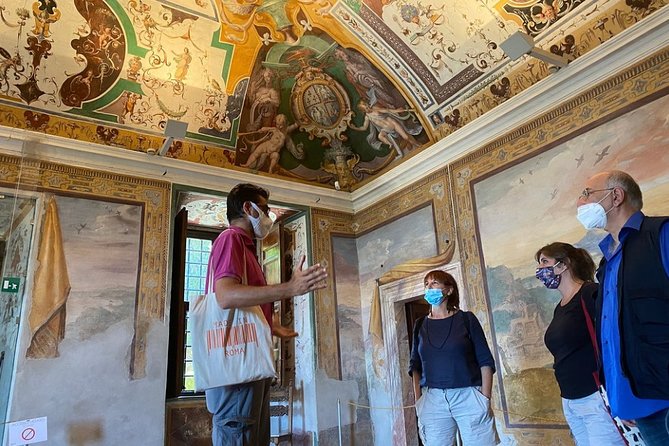
Musei Capitolini is the core of the tour, and it is where the guide earns their fee.
You are entering a museum that is housed in a palace decorated with frescoes, which changes the feel right away. The museum setting is part of the learning. Instead of seeing artifacts in a neutral hall, you are surrounded by the style of later Rome, the Rome that decided these Roman objects were worth displaying with grandeur.
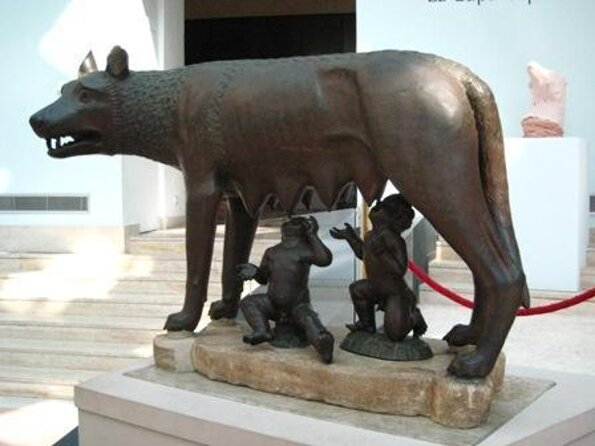
Inside, you will move through Roman antiquities, including bronze sculptures and other major works of Roman art. The tour is not just a random walk. The guide uses the pieces to explain themes: how authority was displayed, how Romans connected myth to politics, and how everyday life showed up in art.
One notable angle is the contrast between Roman-era objects and later artistic interventions. The tour mentions Bernini’s Baroque statues appearing among the collection. That matters because it helps you see how Rome kept talking to itself across time. Your guide can point out how the museum organizes power and style, even when the objects come from different periods.
The overall effect is that the museum visit becomes a story of Roman life and rule. The guide helps you interpret what you are seeing, so you come away with more than a memory of marble and bronze. You come away with context you can carry into other parts of the city, including the Forum area and the way Rome’s past is still used for storytelling today.
The quick hit at Piazza del Campidoglio and the Marcus Aurelius connection
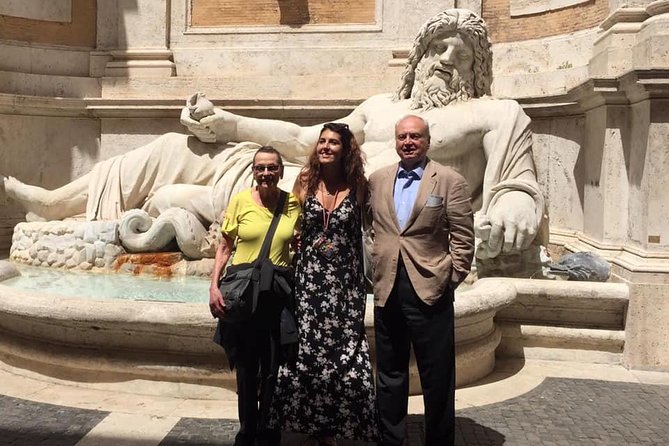
After the museum, the tour shifts to the city. Piazza del Campidoglio is a Renaissance work of urban reorganization designed by Michelangelo. Even if you do not know much about Renaissance design, the square feels planned. It is not just space, it is architecture with a purpose.
At the center of the square, you will see a copy of the Statue of Marcus Aurelius. The original is inside the museum, so this stop works like a visual preview and reinforcement. Your guide uses the connection to help you understand why replicas exist, and why the placement of this statue in the square matters for how Rome presents its imperial image.
You also get a chance to reset with a short break in open air. The tour time here is about 20 minutes, which is just enough to take in the shape of the square and spot key design features without dragging the day longer than it needs to be.
You can also read our reviews of more museum experiences in Rome


What you will learn, and why the best guides make it stick
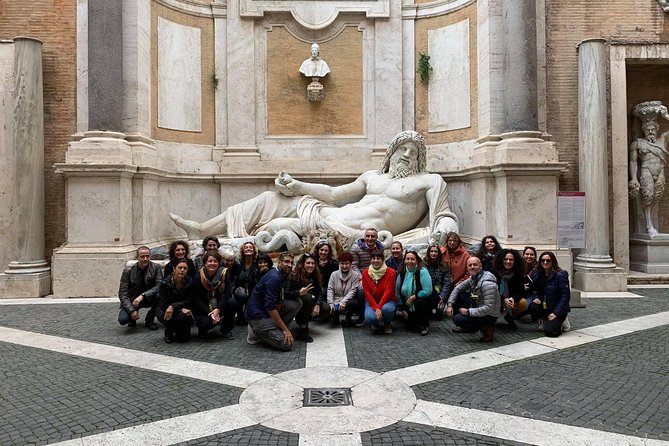
Here is the real value: you leave with a clearer understanding of Rome’s timeline and the meaning behind the objects.
From the guide styles described, the strongest tours tend to have a few habits:
- They keep energy high but still explain step by step.
- They use examples that make ancient material feel less distant.
- They welcome questions and adjust based on what your group wants.
For example, one guide, Martina, was highlighted for making room for questions and for using pop culture references while explaining the Roman view of the afterlife. Another, Victoria, was described as able to focus the tour on specific pieces you want to see. That kind of customization is a big deal in Rome, because not everyone wants the same themes.
You may also hear specific stories connected to major figures and artworks. One guide’s explanation included the rare bust of Commodus, and another described themes linked to the Vestal Virgins. Guides also helped people understand how the Forum’s design connects to what you are seeing in the city today. These are exactly the kinds of details that turn a museum stop into a lasting mental picture.
If you like learning through conversation, you are likely to enjoy this format. And if you are traveling with a teen or a friend who usually tunes out in museums, the guide approach described here suggests they can adjust to keep attention from slipping.
Price and value: what $157.22 per person buys you
At $157.22 per person for about 2 hours 30 minutes, this is not a bargain-basement museum tour. But it is also not priced like a one-off luxury experience either.
So where does the value come from?
You are paying for:
- Private tour format, meaning your time is not shared with strangers who may push the pace in a different direction.
- Professional guide and tickets included. Tickets matter because they remove friction and simplify planning.
- English narration, which is a real quality-of-experience factor when you are looking at complex art and history.
- A guided path through a major collection, plus a Renaissance square stop that links back to the museum.
The other pricing signal is that it is often booked about 81 days in advance on average. That suggests demand, which typically means the tour is a dependable choice rather than an afterthought.
If you are the type who enjoys museums but gets lost without context, the guide turns the money into time saved and confusion avoided. If you already know a lot about Roman art and history, you might still find value in the interpretation and the way the guide helps you connect pieces across the collection. If you mainly want to take photos and skim quickly, you might prefer a shorter, self-guided museum route, since you will not be getting full benefit from a guide.
Who this tour suits best (and who might want something else)
This tour is a strong match if you:
- Love Roman history and want the museum pieces to mean something.
- Prefer a guided format over wandering and hoping you interpret everything correctly.
- Want a lighter day than a full-on museum marathon, because it is about 2.5 hours.
- Travel with family members who benefit from clear explanations, including teens.
It may not be your best choice if you:
- Want a very long, independent museum experience where you can wander for hours without a set flow.
- Are sensitive to having to check bags and store backpacks before entering.
- Are looking for hotel pickup and private vehicle service, since neither is included.
Practical tips so you enjoy it more
A few small choices can make the tour feel smoother.
First, travel light enough to handle the checkroom rule easily. You will be asked to leave bags and backpacks there, so bring only what you need for the day.
Second, wear comfortable shoes. The museum walk plus the square stop adds up to a decent amount of standing and moving in a short time.
Third, show up a bit early at Piazza del Campidoglio. The tour starts there, and you will want time to orient before you begin.
Finally, if there is a specific sculpture, emperor, or theme you care about, mention it to your guide at the start. Several guides in this style are described as capable of focusing on what you want to see, which is a big part of getting value from a private visit.
Should you book this Private Tour – Capitoline Museums?
I recommend booking this tour if you want a Roman museum experience that is guided, structured, and easy to understand without turning into a lecture. The private guide element is the core reason it works, and the itinerary hits two smart angles: Roman art inside Musei Capitolini and Michelangelo’s Renaissance vision in Piazza del Campidoglio.
If you have visited Rome museums before and felt the pieces were hard to connect, this is exactly the kind of tour that helps you stitch the story together. Guides like Vincenzo, Massimo, Martina, Max, and Victoria are repeatedly described as energetic, engaging, and able to explain in clear terms, including with interactive Q&A.
But if you prefer to move at your own pace for hours or you hate any kind of bag storage step, you may feel constrained. In that case, you might still visit the Capitoline Museums, but choose a format that fits your travel style better.
FAQ
How long is the Private Tour – Capitoline Museums?
The tour runs about 2 hours 30 minutes (approximately), with about 2 hours at the museum and about 20 minutes at Piazza del Campidoglio.
Where does the tour start and end?
It starts at Piazza del Campidoglio, 00186 Roma RM, Italy, and ends back at the same meeting point.
Is the tour private?
Yes. It is a private tour/activity, and only your group participates.
What language is the tour offered in?
The tour is offered in English.
Are museum tickets included?
Yes. Tickets are included for the museum entry. The Piazza del Campidoglio stop is listed as free.
Do I need hotel pickup?
No. Hotel pickup and drop-off are not included.
Is transportation included?
Private transportation is not included.
Is there a checkroom for bags?
Yes. It is mandatory to leave bags and backpacks in the checkroom.
What is included in the price?
A professional guide, a local guide, the private tour, and tickets are included.
Is cancellation free?
Yes. Free cancellation is available if you cancel up to 24 hours in advance for a full refund.
Who can participate?
Most travelers can participate.
More Private Tours in Rome
More Tours in Rome
More Tour Reviews in Rome
Not for you? Here's more nearby things to do in Rome we have reviewed






Museums, compared.
 ★ 4.5Vatican: Museums & Sistine Chapel Entrance TicketFrom $38144,003 reviews
 ★ 4.3Vatican Museums & Sistine Chapel Tour with Optional BasilicaFrom $7967,413 reviews
 ★ 4.5Vatican Museums, Sistine Chapel & St Peter’s Basilica Guided TourFrom $2239,149 reviews
 ★ 4.3Vatican Museums, Sistine Chapel & Basilica TourFrom $13013,872 reviews
 ★ 4.4Vatican Museums & Sistine Chapel Skip-the-Line Entry TicketFrom $4313,838 reviews
★ 4.7Vatican Museums, Sistine Chapel & Basilica TourFrom $7213,217 reviews
Vatican Museums & Sistine Chapel Guided TourFrom $11812,117 reviews
★ 4.4Vatican Museums & Sistine Chapel Skip-the-Line Entry TicketFrom $4313,838 reviews
★ 4.7Vatican Museums, Sistine Chapel & Basilica TourFrom $7213,217 reviews
Vatican Museums & Sistine Chapel Guided TourFrom $11812,117 reviews
 ★ 4.2Vatican Museums & Sistine Chapel Skip-The-Line TicketFrom $4111,708 reviews