
Rome at night is a different city. This Vespa sidecar ride turns big sights into a moving, street-level experience, with headset narration so you don’t miss the story. One key drawback to know up front: the Pantheon is closed during this tour, so you will not enter.
I like that the whole thing runs at a human pace for a 3-hour evening, with frequent stops so you can actually look, not just pass by. I also like the payoff at the end: dinner includes a gourmet pizza tasting at Vico Pizza&Wine, right in the middle of real Rome life. The tour is also capped at 12 people, which helps keep it personal instead of chaotic.
Quick heads-up before you get excited: this is outdoor riding, and it needs good weather. If weather turns, your departure could change or you may be offered a different date.
Key things I’d book this for
- Vespa sidecar views on the move: you see monuments with a sense of speed and scale
- Live guide audio through headsets so you can hear history clearly
- Short, frequent photo stops that make big landmarks feel less rushed
- Small group size (max 12) for a smoother evening flow
- Gourmet pizza tasting included at Vico Pizza&Wine
- No Pantheon entry on this run, even though you get the area and views
Why a Vespa sidecar evening is the smart way to hit Rome’s top sights
Rome’s most famous monuments can feel like a checklist. From a Vespa sidecar at night, the checklist becomes a story. Streetlights hit the stone, squares feel calmer, and you get that sense of the city moving around you.
You also cover ground fast without the stress of navigating traffic or parking. You sit back, relax, and let the drivers do the work. That is a big deal in Rome, where “getting there” can eat hours.
The best part is the pacing. The tour is built around brief stops for closer looks, not long bus-style sightseeing marathons. In about 3 hours, you can see major highlights that normally require separate transit and separate tickets.
You can also read our reviews of more food & drink experiences in Rome
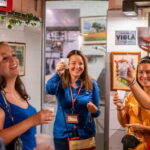
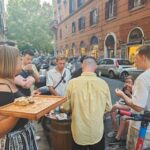
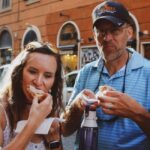
Piazza della Repubblica meeting point, then helmets on and headsets ready
The tour starts at P.za della Repubblica, 41 around 7:00 pm, and the route ends back at the same meeting point. You’ll get a mobile ticket, so you are not hunting for paper confirmations.
Before you roll out, the team provides homologated CE helmets. Each helmet comes with a sterilized disposable head cover, which is practical for hygiene and comfort. You also get headsets, so the guide’s narration stays clear even when you are moving through busy streets.
This setup matters more than it sounds. When you can hear the guide well, every stop feels intentional instead of random photo ops. You also spend less time guessing what you are looking at.
Your ride setup: sidecar seating, swapping, and weight limits
Every driver can accommodate two passengers, one in the sidecar and one behind the driver. If you book one seat, you will share the vehicle with another person, because the ride works as a two-person pair.
If your group needs it, you may swap positions during stops so you can experience the sidecar. Just know it is a practical solution to make seating fair, not a guarantee of constant sidecar time.
A few physical limits are clearly stated, so check these before you book:
- Back of the saddle: maximum 118 kg / 260 lb
- Sidecar: maximum 110 kg / 242 lb
- Maximum height: 1.90 m
- Children must be minimum 5 years old
- If a child is too short to sit behind the driver, they must sit in the sidecar
- Pregnant travelers are not permitted
If you are unsure where you fit within the height or weight rules, it is worth double-checking before travel. With seating on a scooter setup, the rules are not flexible.
Stop 1: Piazza della Repubblica and Fontana delle Naiadi
You start at Piazza della Repubblica, a major Roman square shaped during the city’s redevelopment after Rome became Italy’s capital. The space is striking for one reason: it is built around a large roundabout, with the fountain acting like the visual center.
The Fontana delle Naiadi is the star here, and the architecture around it does a great job of showing how Rome keeps stacking eras on top of each other. Expect a quick introduction and then enough time to look up, spot details, and orient yourself for the rest of the ride.
Value for first-timers: this stop helps you learn Rome’s “shape” early. You see how squares open up like stages, then you move on while that mental map is fresh.
Stop 2: Quirinale Hill views at Palazzo del Quirinale
Next up is the Palazzo del Quirinale on the Quirinal Hill, the highest of Rome’s seven hills. This is not just a pretty building. It is one of the official residences of the President of the Italian Republic, and it has a long record of being used by major figures through Rome’s political changes.
The tour time here is short, but it works because the palace sits in a vantage area. Even a brief stop helps you understand why the hill location matters, and why it feels elevated compared to flatter neighborhoods.
If you love architecture, this is a good moment to slow down and notice the scale. It is the kind of view you normally only get from a distance.
You can also read our reviews of more evening experiences in Rome
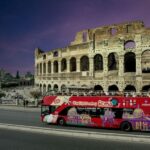

Altare della Patria (Vittorio Emanuele) and the Tomb of the Unknown Soldier
From the Quirinale area, the route brings you to Piazza Venezia for the Monumento Nazionale a Vittorio Emanuele II, also known as Altare della Patria. This is an imposing monument tied directly to Italy’s unification story, inaugurated in 1911.
What makes this stop special is what it contains beyond the outside view. Inside, there is an institute and museum focused on the Risorgimento. Since 1921, the monument holds the tomb of the unknown soldier, with an eternal flame that is always guarded by two soldiers.
Even if you do not go inside, this is a powerful pause point. It shifts the night from postcard Rome to something more emotional and historical.
Pantheon time: no entry, still worth the pause
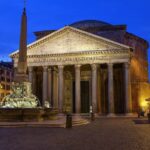
Here is the main disappointment to plan around: the Pantheon will be closed during the tour, so you will not enter. You do get time at the stop, though, which means you can still see the building and capture that classic look.
The practical benefit of a non-entry situation is that you do not lose your evening to ticket lines. The tradeoff is obvious, and it matters: if the Pantheon interior is a must-do, you will need a separate day plan.
If you are visiting for the overall flow of sights by Vespa, you will still get plenty from this stop. If you came specifically for the dome and interior light, treat this as an exterior preview.
Trevi Fountain at night and the photo loop that actually works
Then it is on to Trevi Fountain, one of the most famous fountains in Rome. It measures about 20 meters wide by 26 meters high, and it sits at the end of the Aqua Virgo aqueduct.
The best thing about hitting Trevi on a Vespa evening tour is timing. You get it in night light, which changes how the stone and water feel. You also get an organized window to see it without trying to herd yourself through peak-hour chaos.
Expect a brief, focused stop for photos and quick viewing. If you want to throw the coin in the fountain, this is your moment, but the bigger win is just seeing it without turning the evening into a queue.
Spanish Steps and Piazza del Popolo: Rome’s grand stair and grand gateway
The route includes the Spanish Steps (Scalinata di Trinità dei Monti), connecting Piazza di Spagna and the Church of Trinità dei Monti. This is one of those Rome places where the famous shape does most of the work for you. People sit, chat, and use the steps as a viewpoint, and you get to do the same for a short time.
After that comes Piazza del Popolo, located at the northern gate of the city on the old Porta Flaminia. What I like here is the layout. Three major streets split from the square: Via del Babuino on the left, Via di Ripetta on the right, and Via del Corso straight ahead, one of the city’s main routes.
Even with limited time, these stops give you a sense of Rome as a set of entry points and corridors, not just isolated landmarks.
St. Peter’s Square at night: Bernini’s stage setting
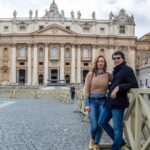
Next is St. Peter’s Square (Piazza San Pietro) in Vatican City, at the feet of St. Peter’s Basilica. This is one of the most recognizable squares in the world, designed by Bernini in the 17th century and able to hold over 300,000 people.
At night, the square feels less like a monument and more like a stage. You can get the full effect of the space, especially since the tour timing is built for nighttime views rather than daytime crowd battles.
The value here is not only seeing the basilica area. It is seeing it as part of a single evening circuit, where you go from Roman civic power to Vatican grandeur without extra logistics.
Terrazza del Gianicolo: a calmer hilltop breather with big views
Then you shift away from the big monuments to Janiculum Hill (Gianicolo) and its Terrazza del Gianicolo. The hill is often considered Rome’s eighth hill, and it is a peaceful break close to the center.
This is where the ride gives you something different: a chance to step into calmer streets and then climb to a viewpoint. The paths and sculptures tied to historical figures, including Giuseppe Garibaldi, add meaning to the scenery.
If Rome’s famous sights feel too intense back-to-back, this stop helps you reset. It is a short “exhale” built into the route.
Through the neighborhoods: Jewish Ghetto passages to Santa Maria Maggiore
After the hill, the tour moves into a drive through the neighborhood’s bohemian atmosphere and typical trattorias. The route specifically passes by the Jewish Ghetto, giving you a sense of Rome as living neighborhoods, not only museums and monuments.
The evening ends with a visit area near Basilica di Santa Maria Maggiore, described as one of the four major basilicas and considered among the largest churches dedicated to the Virgin Mary in Rome.
The practical reason this works at the end is simple. You end with a major sacred landmark after a lot of outdoor sights. It helps the night feel complete, not abrupt.
Dinner gourmet pizza at Vico Pizza&Wine: the included payoff
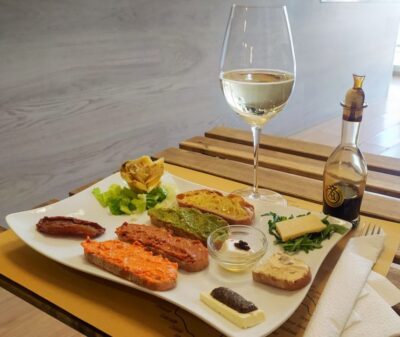
This is not a token snack. The tour includes dinner gourmet pizza tasting at Vico Pizza&Wine. In real terms, that means you are getting fed without planning a separate dinner reservation.
Pizza and wine show up in the experience, and the included meal is part of what makes the $181.41 price feel more reasonable than a pure sightseeing-only scooter tour. You are paying for a full evening program: guide, headsets, helmets, drivers, route management, and the dinner component.
One more note for food needs. The tour data says that for celiac disease, gluten-free pizza is not available. If you have dietary restrictions, share them in the booking form. Also, the data mentions that an afternoon tour includes a gelato stop at a completely gluten-free gelateria, but that is separate from this evening pizza dinner.
Value check: is $181.41 worth it for 3 hours in Rome?
At $181.41 per person for about 3 hours, you are not just buying transportation. You are buying:
- a licensed guide with history and beauty narration
- headsets for clear storytelling
- CE helmets with disposable covers
- professional drivers (you do not drive)
- designated stops for closer looks
- and included dinner pizza tasting at Vico Pizza&Wine
If you were to recreate this yourself, you would still need transport and a guide that keeps the flow tight. On top of that, dinner would be extra. This is why the price can make sense, especially for a first-time Rome evening or if you want a structured plan without thinking too hard.
The fair caution is time. A 3-hour tour means you will not linger at every monument like a dedicated sightseeing day. If you want long museum sessions or extended interior visits, you will need a separate plan for that.
Should you book the Rome 3-hour evening Vespa sidecar tour with pizza?
I think you should book if you want an evening plan that feels Roman, not generic. This works well for couples, small groups, and solo visitors who like guided storytelling and prefer their landmarks connected by movement.
It is also a great choice if you value the small group size and the included meal. Getting pizza tasting at Vico Pizza&Wine means your night has a built-in finish, which helps when you are tired after a long day.
You might skip it if Pantheon entry is non-negotiable for you. Since the Pantheon is closed during this tour, you only get the outside experience. Also, if you have seating constraints, weight limits, or you are pregnant, this may not be a match.
If your goal is to see Rome’s biggest icons lit up at night, hear the story in English through headsets, and end with pizza, this tour is a strong yes.
FAQ
How long is the Rome Vespa sidecar evening tour?
The tour lasts about 3 hours, and travel time is included in that total duration.
Where does the tour start and end?
It starts at P.za della Repubblica, 41, 00185 Roma RM, Italy, and it ends back at the same meeting point.
Do I drive the Vespa?
No. Professional drivers handle the driving. Your job is to sit on board and enjoy the ride.
Is the Pantheon included?
No entry is included on this tour. The Pantheon will be closed during the tour, so you will not enter.
What is included with the pizza tasting?
The dinner includes a gourmet pizza tasting at Vico Pizza&Wine, and the experience includes guide narration, headsets, sterilized disposable helmet covers, and the guided ride.
Is gluten-free pizza available for celiac disease?
Gluten-free pizza is not available for guests with celiac disease on this tour. The data notes that an afternoon tour includes a gelato stop at a completely gluten-free gelateria.
Are children allowed, and how do seating rules work?
Children must be at least 5 years old and must be accompanied by an adult. They can seat behind the driver only if they are taller than 150 cm. Otherwise, they must sit in the sidecar.
More Food & Drink Experiences in Rome

More Tours in Rome

More Tour Reviews in Rome
Not for you? Here's more nearby things to do in Rome we have reviewed



Food & Drink, compared.
 ★ 4.8Trastevere or Jewish Quarter Street Food TourFrom $513,839 reviews
 ★ 4.9Trastevere & Campo de Fiori Street Food Walking TourFrom $512,768 reviews
 ★ 4.8Guided Food Tour in TrastevereFrom $1122,266 reviews
 ★ 4.8Food Tour with Unlimited Food and Barolo WineFrom $861,883 reviews
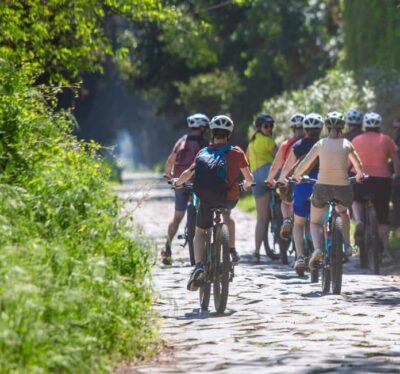 ★ 4.9Appian Way E-bike Tour with Catacombs, Aqueducts & FoodFrom $961,210 reviews
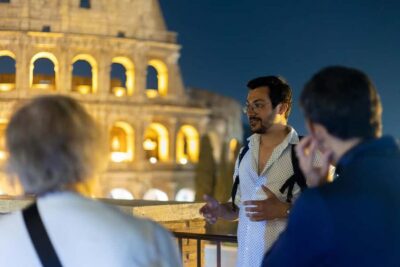 ★ 4.9E-Bike Night Tour with Food and Wine TastingFrom $891,131 reviews
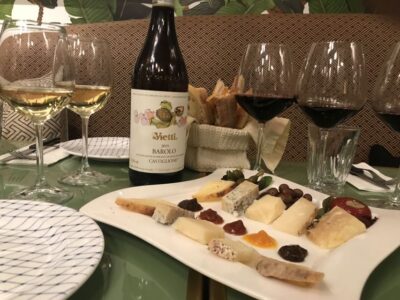 ★ 4.9Trastevere Guided Food and Wine Tour with 20+ TastingsFrom $1461,022 reviews
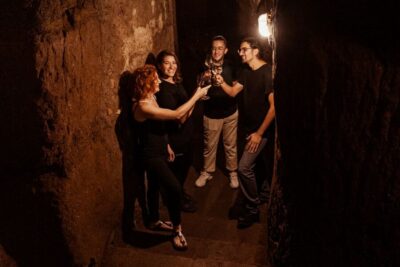 ★ 4.9Pasta Making with Wine Tasting and Dinner in FrascatiFrom $35979 reviews
Browse the lists this tour appears in