
Reviewed · VATICAN TOURS
Early Vatican Museums Tour: The Best of the Sistine Chapel
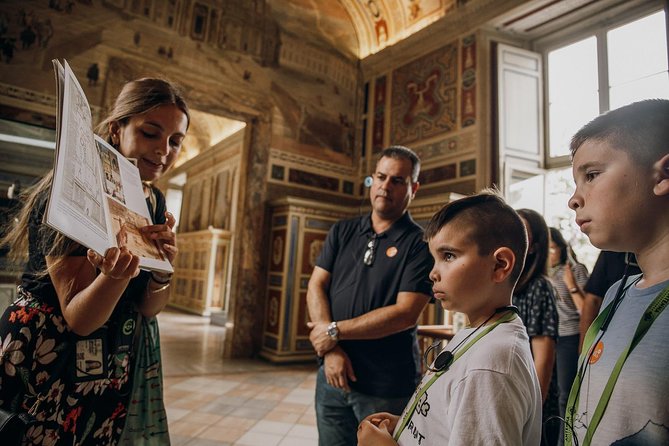
Morning at the Vatican feels like cheating. This early tour helps you see the Vatican Museums and Sistine Chapel before the day turns into a crowded sprint, with a guide keeping you focused on the best stops. You also get a small group pace, so questions do not get lost in the shuffle.
Two big things I like: skip-the-line entry for the Vatican Museums and a guide who steers you through the collection efficiently. I also like that the timing lets you finish in late morning, so you can keep exploring Rome without feeling wiped out.
One consideration: the Vatican’s access rules can change for Papal events, so your Sistine Chapel or St. Peter’s Basilica experience may shift on certain days.
Key takeaways before you book
- Early access helps you breathe, especially in the Vatican Museums right after opening
- A focused guided route keeps you from wandering for hours in a place this large
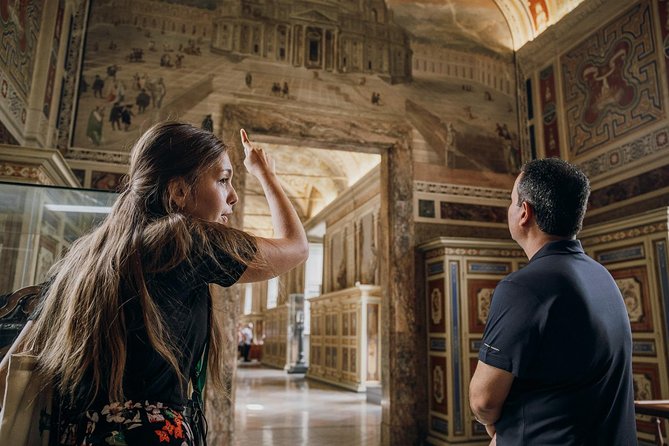
- Raphael Rooms at low crowd levels mean you can actually see details, not just silhouettes
- Sistine Chapel timing matters, with a closed-door note during Papal Conclave periods
- St. Peter’s Basilica is AM included, but the special passage can be closed and an alternate gallery may replace it
- Max group size is 15, which usually turns the visit into a calmer, more personal experience
Early entry from the start: what changes in the Vatican
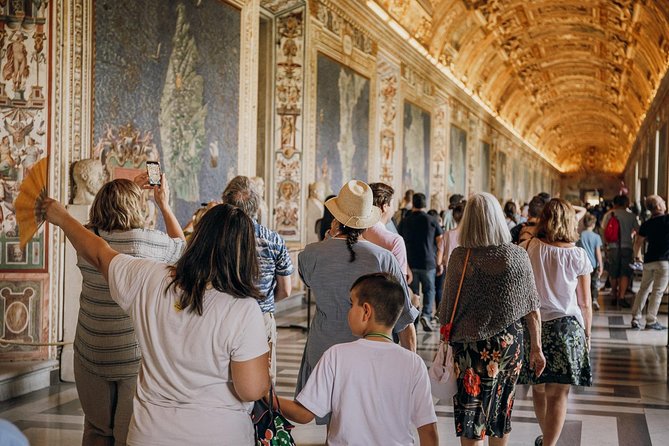
The Vatican can feel like an art museum and a traffic jam had a baby. This tour’s main advantage is that it targets the calmer hours, when the Museums are just getting going and the Sistine Chapel is not yet packed like a subway at rush hour. The difference is not subtle, it is the whole vibe.
The tour runs about 3 to 4 hours, and you get a guided plan designed for top highlights rather than aimless roaming. That matters because the Vatican Museums are huge, and without a plan you can end up speed-walking through famous rooms while missing the best details.
You should also know the tour ends at St. Peter’s Basilica, so it is built to flow into the rest of your Vatican day. Even better, finishing late morning often means you can pivot to other sights while your energy is still decent.
You can also read our reviews of more museum experiences in Rome
Your morning flow: Museums to Raphael to the Sistine Chapel
The day is structured around a simple logic: see the Museums first, then hit the “must-see” Raphael and Sistine areas while crowds are lighter, then close with a St. Peter’s Basilica visit (on the AM option).
You start at Antico Caffè Candia, Via Candia 153, Rome, and then move into the Vatican site. From there, you get a guided walk through the Museums with included admission, plus photo stops.
The pacing is built for a moderate walking pace, and it is not presented as a long endurance challenge. Still, you are walking inside big complexes, so wear comfortable shoes and expect some stairs and crowded corridors, especially near major landmarks.
Vatican Museums with skip-the-line and a short list that hits
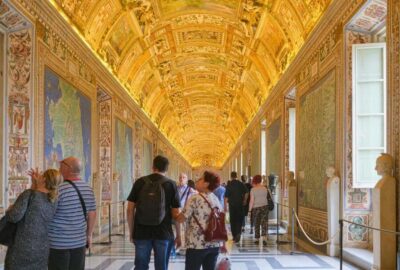
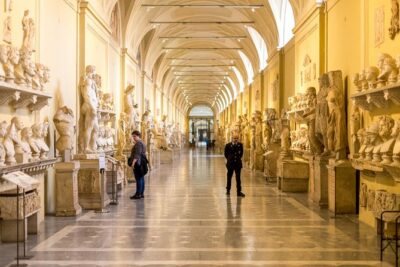
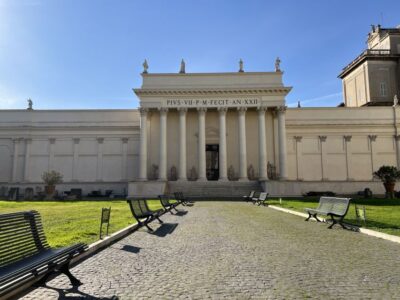
The Vatican Museums stop is about 2 hours, with admission included and a guide leading you to the major works. The most practical part of this format is that you get the “greatest hits” route, with stops selected to match what most people actually want to see in their limited time.
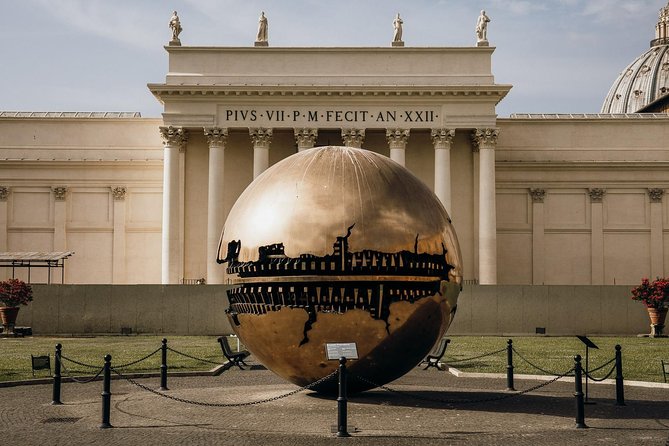
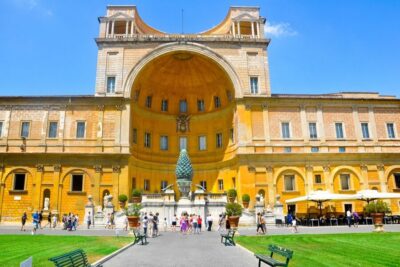
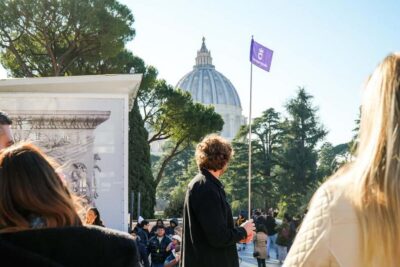
Here is a standout detail you likely would miss if you visited on your own: the Pinecone Courtyard and the bronze globe designed for the Vatican by artist Arnaldo Pomodoro. Even if you are not an art nerd, the globe is one of those objects that makes the Museums feel more than just a long hallway of paintings.
This is also one of the places where early timing really pays off. When the Museums have just opened, the rooms are quieter, and your guide can slow down for explanations. That is the difference between seeing art and understanding why people obsess over it.
Stanze di Raffaello: the Raphael Rooms when you can actually look
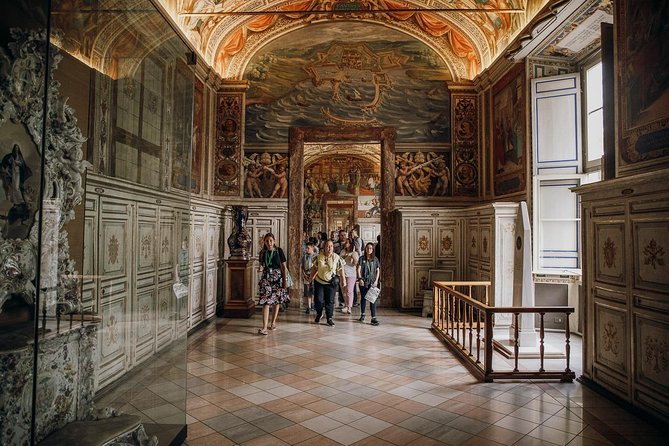
Next comes the Stanze di Raffaello, also with admission included. For the early tour, you get about 30 minutes, and the payoff is that the Raphael Rooms are busy later, just like the Sistine Chapel, but usually calmer at opening time.
Your guide focuses on the frescoes and points out something especially cool: Raphael’s way of building faces from his contemporaries. In particular, you get a guided moment where your guide points to where Raphael worked in the faces of Leonardo da Vinci and Michelangelo into the frescoes. That is the kind of detail that is very hard to spot without a guide.
The main drawback here is time. Thirty minutes can feel short in the Raphael Rooms, but it also prevents the “wandering fatigue” that sets in. If you are the type who wants a longer, slower art crawl, you may want to return to the Raphael Rooms later on your own.
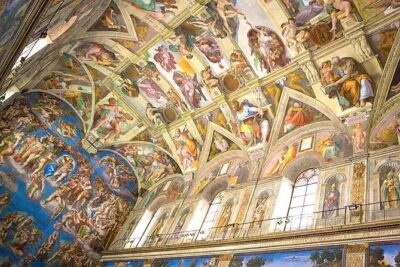
Sistine Chapel: why 30 minutes can feel like an hour of magic
You then move into the Sistine Chapel, again with admission included for about 30 minutes. The whole point of the early entry approach is that this is the room everyone wants, but it is not designed for hundreds of shoulder-to-shoulder visitors.
With the lighter crowds, you get a better chance to actually take in the ceiling frescoes instead of just craning your neck between elbows. You also have a guide helping you understand what you are looking at, which makes those famous images land harder.
Important real-world note: access can change for Papal events. The Sistine Chapel (and the door with access to St. Peter’s Basilica) will be closed from April 28 to mid-May for the Papal Conclave. The Vatican Museums stay open, and your guide will shift to an alternative itinerary to keep your morning meaningful.
Also, the tour includes a specific window. Thirty minutes is enough for a first-time visit, but if you are the kind of person who likes to stare at one corner until your brain reboots, you might wish you had more. The tradeoff is that you are gaining time by avoiding the thickest crowds.
St. Peter’s Basilica after the Sistine: skip the line, but know the caveats
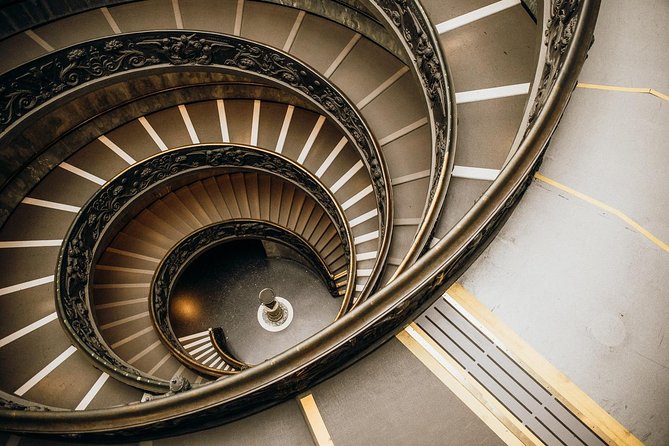
For the early tour, the final major stop is St. Peter’s Basilica, about 1 hour, with admission included and a skip-the-line benefit. The route includes access via a special passage intended to bypass long external lines that build outside.
The big advantage is practical: you reduce waiting and get more time standing in front of the art and architecture. Your guide will also steer you through the sacred space, pointing out major works such as Michelangelo’s Pietà and Bernini’s altarpiece, plus stories behind them.
Now for the part you should plan around: the special passage between the Sistine Chapel and St. Peter’s Basilica is subject to unexpected closures. It is also noted as closed on Wednesdays, and on those days the plan shifts to exploring the Pinacoteca Gallery instead.
Add one more timing warning: starting December 2024, access to St. Peter’s Basilica may be limited due to Jubilee Year 2025 events and ceremonies. Those closures are determined by the Vatican, so they are outside the tour operator’s control.
If your heart is set on St. Peter’s specifically, I suggest you keep a little flexibility in your schedule. Even if your tour ends at the Basilica area, access patterns can change day to day.
Guides and group size: how the experience stays calmer
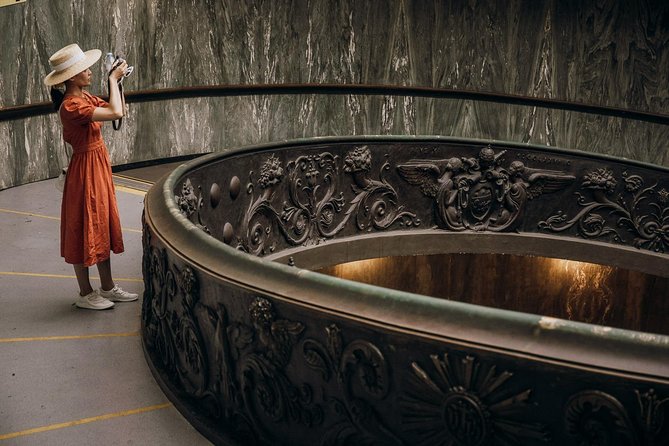
The tour caps at 15 travelers, which is a huge deal in a place where the “real” bottlenecks are narrow hallways and major rooms. A small group does more than reduce noise. It gives your guide room to talk, check in, and move you efficiently without constantly stopping and restarting.
This is also a tour where the guide matters a lot. Several guides tied to this experience are known for mixing storytelling with clear direction, including names like Ilaria, Valentina D., Julia, Sabina, Marco, Luigi, Vita, Jiovani, and Jeb. The consistent theme in the guide styles is organization, humor, and the ability to keep the group moving at a pace that does not feel rushed.
You should also like a structured visit. This is not a “wander at will” tour. Your guide picks the stops, sets the timing, and helps you see what is most important rather than making you decode the Vatican like a scavenger hunt.
What to wear and bring so you do not get turned away
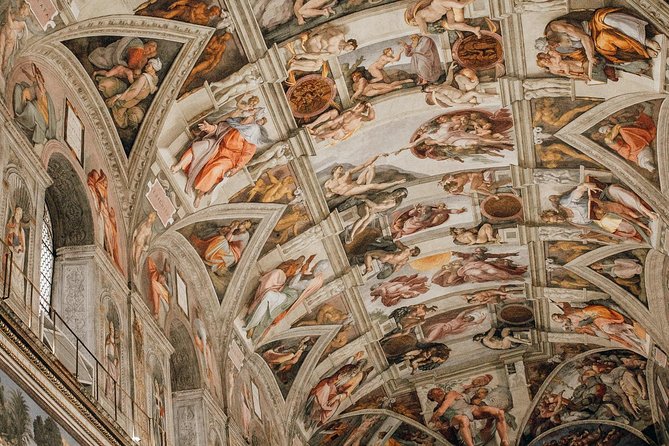
This is a religious site, so basic dress rules apply. You must cover your shoulders and knees, regardless of gender. If you show up in clothing that does not meet those rules, you risk being denied entry.
Bring ID. Everyone in the group, including children, must have ID on the day of the tour. Also, the full names of all participants must match the names on the ID or passport, and name changes are not permitted.
Wear shoes that can handle indoor walking. Even when the pacing feels manageable, the Vatican requires lots of steps, plus waiting in lines for entry points. Comfortable footwear is not optional here.
Price and value: what you pay for (and what you avoid)
At $114.70 per person, you are not just buying museum tickets. You are paying for a guide who selects the top works and an entry arrangement that includes skip-the-line access for the Vatican Museums. For the AM option, you also get skip-the-line for St. Peter’s Basilica.
Is it expensive? Yes, Rome can be pricey. But the value comes from saving two things: time and mental energy. The Vatican is a “too much to do” destination, and a guided route helps you avoid the common DIY problem of seeing only a fraction of what matters.
If you like art, this is also a better deal than it sounds, because your guide helps you connect images to context. The same fresco looks different when you know what you are seeing and why it matters.
Where value can slip: if access rules change due to Vatican events, parts of the plan can shift. When that happens, you might feel the tour cost more than you expected, especially if your goal was specifically the Sistine Chapel or the Basilica segment.
Who should book this early Vatican Museums tour
This is a great fit if you:
- want to avoid the worst crowd crush in the Museums and in the Sistine Chapel
- enjoy a guided route that focuses on big masterpieces rather than a total “see everything” marathon
- want to end in late morning so you can keep sightseeing the same day
- prefer a small group experience where you can ask questions
It might be less ideal if you:
- want a full, slow, unstructured Vatican wandering day
- are only interested in one room and do not care about the Museums context
- need guaranteed access to specific sections regardless of Vatican closures (those rules can change)
The best mindset is to treat this as a “smart plan” for a complicated site. You get structure and early timing, and you still stay flexible when the Vatican decides what is possible that day.
Should you book the Early Vatican Museums Tour?
If you want the Vatican without the stress, I would book it. The combination of early entry, a small group size, and a guide route that hits the most important rooms makes this one of the more efficient ways to experience the Museums and the Sistine Chapel in a single morning.
Just be aware of the two big moving parts: Vatican event closures and the possibility that the special passage to St. Peter’s can shift or close. If you are traveling during a period when Papal events are in play (including the Papal Conclave window in late April to mid-May) or if you travel on a Wednesday, plan mentally for itinerary changes.
FAQ
How long is the early Vatican Museums tour?
It runs about 3 to 4 hours. The Vatican Museums portion is about 2 hours, followed by shorter guided stops and time in the Sistine Chapel.
What is included in the tour price?
The tour includes a skip-the-line ticket for the Vatican Museums, an expert guided tour, and a small group of up to 15 people. For the AM option, it also includes skip-the-line access for St. Peter’s Basilica.
Does the tour include the Sistine Chapel?
Yes. The tour includes time in the Sistine Chapel to admire the ceiling frescoes.
Is St. Peter’s Basilica included in this early tour?
Yes, for the Early Vatican Museums tour option. The tour ends at St. Peter’s Basilica and includes about 1 hour inside the Basilica.
What if the Sistine Chapel or access to St. Peter’s is closed?
The Sistine Chapel and the door with access to St. Peter’s Basilica are noted as closed from April 28 to mid-May for the Papal Conclave. Also, the passage between the Sistine Chapel and St. Peter’s Basilica can be closed on Wednesdays and on other days due to unexpected closures, with an alternative such as the Pinacoteca Gallery.
What should I wear and bring for entry?
You must cover shoulders and knees. Everyone, including children, must bring ID, and the full names on the booking must match the ID or passport exactly.
Is hotel pickup included?
No. Hotel pick-up or drop-off is not included. The meeting point is Antico Caffè Candia on Via Candia.
More Museum Experiences in Rome

More Tours in Rome
More Tour Reviews in Rome
Not for you? Here's more nearby things to do in Rome we have reviewed




Vatican Tours, compared.
 ★ 4.5Vatican: Museums & Sistine Chapel Entrance TicketFrom $38144,003 reviews
 ★ 4.3Vatican Museums & Sistine Chapel Tour with Optional BasilicaFrom $7967,413 reviews
 ★ 4.5Vatican Museums, Sistine Chapel & St Peter’s Basilica Guided TourFrom $2239,149 reviews
 ★ 4.3Vatican Museums, Sistine Chapel & Basilica TourFrom $13013,872 reviews
 ★ 4.4Vatican Museums & Sistine Chapel Skip-the-Line Entry TicketFrom $4313,838 reviews
★ 4.7Vatican Museums, Sistine Chapel & Basilica TourFrom $7213,217 reviews
★ 4.4Vatican Museums & Sistine Chapel Skip-the-Line Entry TicketFrom $4313,838 reviews
★ 4.7Vatican Museums, Sistine Chapel & Basilica TourFrom $7213,217 reviews
 ★ 4.5Skip-the-Line Group Tour of the Vatican, Sistine Chapel & St. Peter’s BasilicaFrom $3012,779 reviews
Vatican Museums & Sistine Chapel Guided TourFrom $11812,117 reviews
★ 4.5Skip-the-Line Group Tour of the Vatican, Sistine Chapel & St. Peter’s BasilicaFrom $3012,779 reviews
Vatican Museums & Sistine Chapel Guided TourFrom $11812,117 reviews
Browse the lists this tour appears in