
Reviewed · ANCIENT ROME TOURS
Appian Way, Catacombs and Aqueducts Park Tour with Top E-Bike
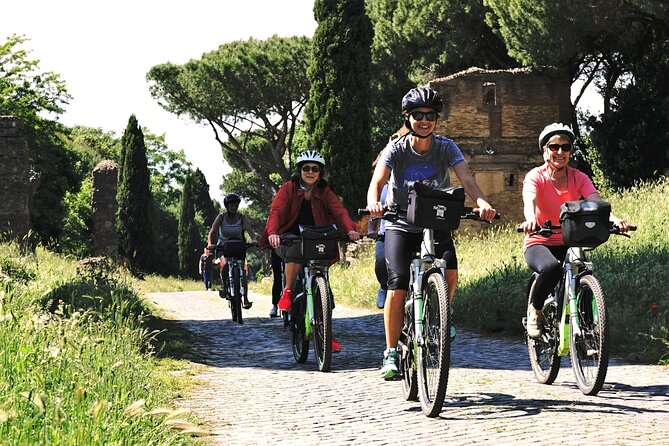
If you want ancient Rome without a 10-mile walk, this tour fits. The trick is the e-bike, which lets you cover real distance on real stone paths and still enjoy the ruins. You also get a small group feel, with a guide calling out what matters as you move.
I like that you can choose your length: the 4-hour route covers the Appian Way highlights, while the 6-hour option adds a guided catacombs visit plus extra major sights like the Aqueduct Park viewpoint. One possible drawback is that this is not a casual stroll, because you’ll ride intermediate terrain with some city traffic links and bumpy off-road sections.
Key highlights to know before you ride
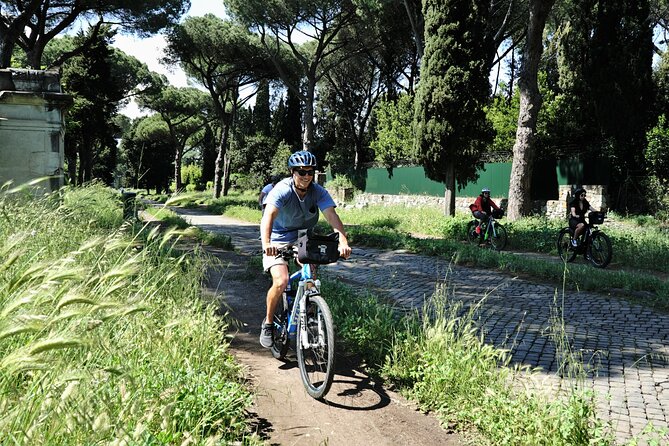
- E-bike assisted riding helps you handle distance and uneven ground without turning the day into a leg day
- Small group size (max 10) means you’re not lost in the crowd and your guide can keep an eye on everyone
- Two itinerary options let you trade time for major add-ons, especially the catacombs and additional ruins
- A smart mix of city streets and park paths keeps traffic limited, with about 60 percent of the route off-road
- Helmets provided and mandatory, plus a planned route meant to reduce stress on busy sections
From Via Labicana to Porta San Sebastiano, the day’s first big reveal
Your tour starts at Via Labicana 49 and ends back there. You’ll leave Rome’s center and head toward the monumental Porta San Sebastiano in the Aurelian Walls, a gate built in the 3rd century. It’s a great “okay, we’re really doing this” moment, because the transition from modern city energy to ancient scale happens fast.
What I like about this first stretch is that it sets the tone. You start with something dramatic and still easy to understand, then you shift into the long, slow mood of the Appian Way. It also helps you get used to the e-bike before you hit the more historic walking-light-but-ride-heavy parts.
You can also read our reviews of more cycling tours in Rome


The Appian Way Park stretch, why Via Appia Antica feels different
Once you reach Via Appia Antica, you start noticing how the street changes over time. The road goes from a more ordinary Roman street into a section that’s preserved so you can really read what you’re seeing. And unlike many Rome tours that just point, this one gets you moving through the park setting.
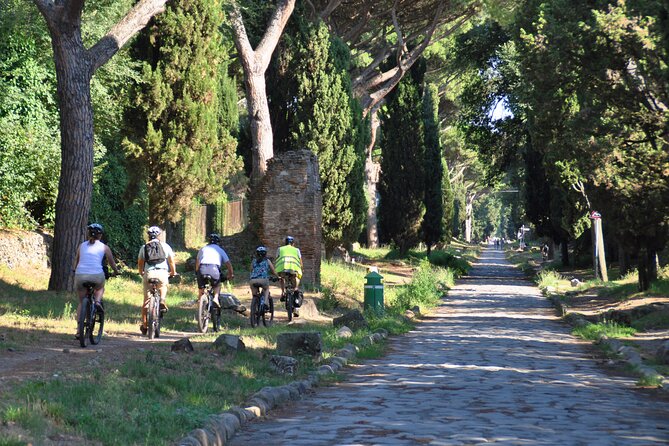
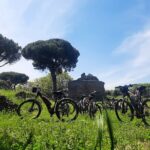
The scenery matters here. You’re not just looking at ruins through a bus window, you’re riding alongside them as the landscape shifts into green suburbs with large sheep herds grazing nearby. That combination is part of why so many people call it the best way to see the Appian Way area, because the ride itself becomes the experience.
A practical tip for the Appian Way sections
Plan for brief pauses rather than long stops. You’ll pass multiple key points, but you won’t be standing around for ages. If you want photos, wear grippy shoes and keep your camera or phone accessible, because you’ll be balancing riding flow with quick picture moments.
Catacombs of San Callisto and the Wednesday twist
The catacombs are the big reason many people choose the 6-hour version. In that longer itinerary, you get a 45-minute guided visit of the catacombs, where you’re looking at massive underground burial spaces designed for complexity and ritual. The catacombs are free to enter for this tour, but the guided element is what adds meaning and keeps the visit from becoming guesswork.
Here’s how the options differ:
- In the 4-hour tour, you get a short pause for the Catacombs of San Callisto area, and it can be time-limited by the schedule.
- In the 6-hour tour, you get the real guided catacombs visit.
Now the schedule gotcha. On Wednesdays, the 4-hour tour skips the San Callisto stop. On Wednesdays, the 6-hour tour changes and visits the Catacombs of San Sebastiano instead. Also, if you’re traveling on Easter Sunday (April 5, 2026), the 6-hour tour does not run because the catacombs are closed.
If you get claustrophobic
Catacombs are enclosed by nature. Even with a guide and a set timeframe, you should take your comfort level seriously. If tight indoor spaces make you uneasy, consider the 4-hour version or ask at the start how they’ll manage the timing at the entrance area.
A few more Rome tours and experiences worth a look




Circus of Maxentius, Cecilia Metella, and the “how big is that?” moments
After the Appian Way stretch, you start hitting major ancient structures that are easier to connect to Roman power. At the Circus of Maxentius, you’re looking at remnants of a 4th-century complex with a villa, mausoleum, and circus. This is one of those stops where your brain goes from road and park to imperial Rome without needing a lecture.
Next comes Mausoleo di Cecilia Metella e Castrum Caetani. This is a funerary monument from the 1st century, known for being one of the largest and best-preserved structures along the Appian Way. The guide focus here matters, because the story turns a big stone shell into something personal tied to family memory.
These are short stops, but they work. They prevent the day from going one-note, and they also give you quick landmarks that help you orient the bigger geography of the Appian Way area.
Villa dei Quintili and Terme di Caracalla, what you gain with 6 hours
If you choose the 6-hour tour, you unlock two very different add-ons that change the feel of the day.
First is Villa dei Quintili and Santa Maria Nova. This is a sprawling 2nd-century private villa complex linked to wealthy brothers in the Roman imperial world. A villa stop can sound like a detour until you realize it tells you how the elite lived: not just empire, but daily life and leisure on a grand scale.
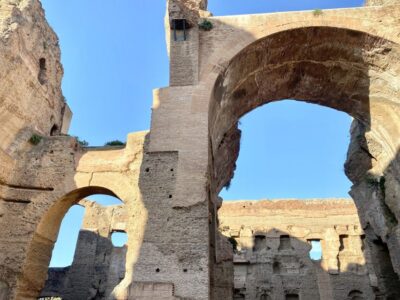
Then there’s Terme di Caracalla. You’ll see the thermal baths from a strong vantage point and learn why baths were central to social life in ancient Rome. Baths aren’t just “where people washed.” They were hubs, a mix of relaxation, conversation, and public culture.
If you’re wondering which option to book, the simplest math is this. The 4-hour tour is best if you want the Appian Way plus the key catacombs pause. The 6-hour tour is best if you want a fuller arc that includes guided underground history and expands into villas and baths.
Parco degli Acquedotti, aqueduct views that actually make sense
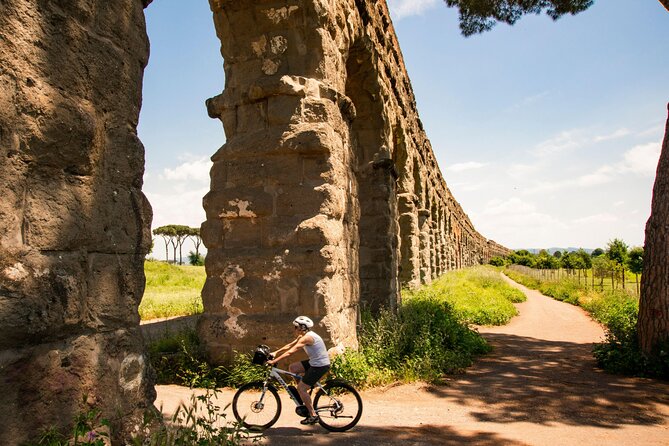
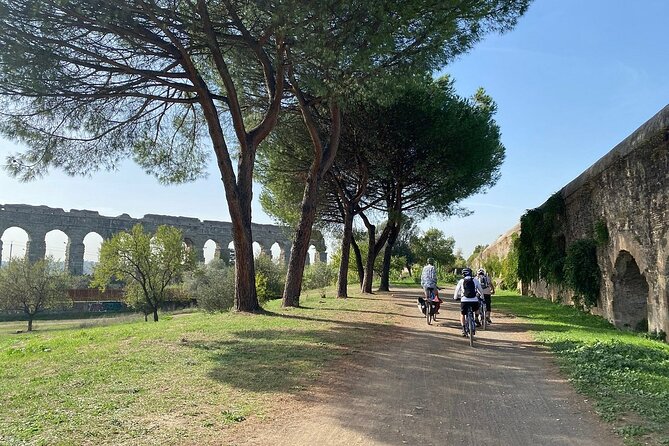
The Parco degli Acquedotti stop is where the day starts clicking into place. Aqueducts can feel like distant tech until you see the scale of the arches and the system’s logic. You’ll hear how Rome built underground and arch-borne water supply for the city, and you’ll be looking out at the structures from an angle that helps you understand how water moved.
This part is also a mental break. After catacombs and ruins, your eyes get room to breathe. The aqueduct park sections are the kind of outdoor environment that makes biking feel like more than transportation.
How the ride really feels: traffic, bumpy paths, and comfort level
This tour covers about 17 miles (27 km). Roughly 60 percent of that route is off-road, and the remaining 40 percent includes city streets used to connect the parks. Some traffic is unavoidable in the city links, but the route is carefully chosen and designed to limit stress.
The terrain can be bumpy at times. Even with anti-puncture tires, the ride includes uneven surfaces that will shake loose your expectations if you’re imagining smooth boardwalks. If you have back or neck issues, take that seriously. Some riders explicitly advise steering clear if those areas are sensitive.
Also, this isn’t a “first time on a bike ever” day. You should be self-confident on a bike. There are narrow bike paths at some points, and you’ll need to manage timing with the group.
Why the small-group setup matters here
When the path narrows, spacing and attention become safety. The tour keeps groups to a maximum of 10, and that’s not just for friendliness. It also helps the guide manage the flow so you’re not darting around strangers while trying to read Roman stonework.
Pacing, battery expectations, and how to avoid a photo-botched day
The itinerary is structured around short stops. That works well if you’re the type who likes to move, learn, and keep your energy. It can feel slower than you expect if you wanted a faster, freer ride, because the group pace is part of the safety system, especially in tighter sections.
On the e-bike side, the electric assist is the big equalizer. Many people say the e-bikes make it accessible for riders who do not bike regularly. The assist also means you can stay comfortable while still getting the benefit of distance you would not manage by foot.
Photo timing is your job, not the guide’s. Since you’ll be riding and stopping in quick sequences, take your photos when you arrive at a stop, not while you’re rolling. It’ll save your nerves, and it’ll stop you from doing that classic Rome thing where you’re almost framing the shot, then you realize you dropped your phone in your jacket pocket.
What’s included, what costs extra, and where the value really is
You’re paying $102.79 per person for a half-day style experience that combines transportation, guiding, and key admissions. What’s included is the e-bike setup with anti-puncture tires, helmet, and a front bag plus a biodegradable water bottle. The route also includes a guided catacombs visit in the 6-hour version.
What’s not included is food and drinks. That matters because Rome parks can be practical deserts for snacks depending on where you stop. The route offers opportunities to buy drinks and small food items during breaks, but you’ll want to plan for it.
Gratuities are optional, as usual.
Is it worth it?
For most people, yes, because you’re not just buying tickets. You’re buying the ability to cover the Appian Way and aqueduct parks without the day collapsing into fatigue. Add the small group size and the guide expertise, and it becomes a high-value way to see “hard-to-reach by foot” Rome territory.
If you’re deciding between 4 and 6 hours, think about one question. Do you want the full guided catacombs experience and extra major sites like Villa dei Quintili and Terme di Caracalla? If yes, go 6-hour.
Who this tour suits best
This tour is ideal if you want outdoor Rome plus major landmarks, and you don’t want to spend your vacation in long lines and slow transfers. It’s also a strong choice for families with older kids, because the tour can provide a child extension for ages 5 to 8, while kids 9 and above can ride autonomously on an appropriately sized e-bike.
It’s less ideal if you are new to biking or not self-confident on a bike. You’ll be riding in some city streets, and you’ll encounter narrow spaces and uneven ground. If you want guaranteed smooth surfaces or zero traffic, you might feel tense instead of relaxed.
Booking call: should you book this Appian Way e-bike tour?
I’d book it if you want the Appian Way and aqueduct parks as an experience you can actually finish with energy left for dinner. The e-bike makes the area practical, the route keeps traffic limited, and the small group format helps you feel in control.
I’d skip it or choose the shorter option if catacombs or enclosed spaces make you uncomfortable, or if your bike confidence is low. Also, if you know you are sensitive to bumpy rides, you may want to think carefully before committing.
If you’re the kind of traveler who likes moving through a place, not just standing and staring, this is one of the better ways to see Rome beyond the usual highlights.
More Cycling Tours in Rome
More Tours in Rome






More Tour Reviews in Rome
Not for you? Here's more nearby things to do in Rome we have reviewed










Ancient Rome Tours, compared.
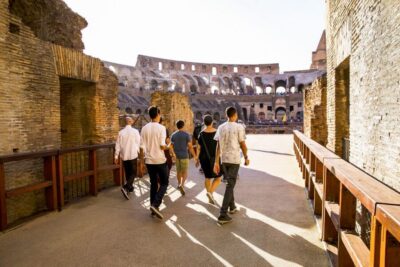 ★ 4.7Colosseum: Underground and Ancient Rome TourFrom $16012,691 reviews
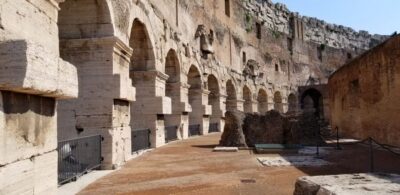 ★ 4.4Colosseum, Ancient Rome Tour or Self AudioGuided TourFrom $392,866 reviews
 ★ 4.9Appian Way, Catacombs, & Roman Aqueducts E-bike TourFrom $851,421 reviews
 ★ 4.9Appian Way E-bike Tour with Catacombs, Aqueducts & FoodFrom $961,210 reviews
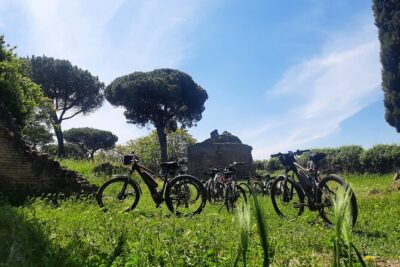 ★ 5.0Appian Way Aqueducts Bike Tour (Catacombs & Lunch Option)From $78975 reviews
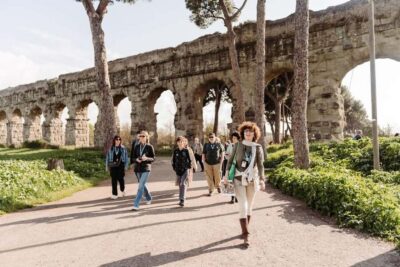 ★ 4.7Appian Way, Aqueducts, and Catacombs TourFrom $64942 reviews
 ★ 4.7Caracalla Baths & Circus Maximus — Private or SharedFrom $77835 reviews
 ★ 4.7Colosseum Arena Access and Ancient Rome Guided TourFrom $94774 reviews
Browse the lists this tour appears in