
Reviewed · ANCIENT ROME TOURS
Appian Way Aqueducts Bike Tour with Catacombs & Lunch
Rome by bike makes the Appian Way feel close.
This tour is interesting because you pedal a power-assisted e-bike through Roman countryside sights, not just museum stops. I especially love the small group and the way the guide points out details you would miss on your own. One drawback to plan for: you must ride well, and the original cobbles can get bumpy, especially if it is very hot.
Your reward is a classic Rome combo, aqueducts plus the catacombs, with breaks in big parks where you can breathe and take photos. If you like architecture, ancient engineering, and a route that feels like a real day outside the city core, this is a great fit. The main thing to watch is comfort on uneven ground and timing, since the ride is about 5 hours.
Key things that make this tour worth your time
- Electric biking that actually helps, so inclines feel manageable without killing the fun
- Catacombs visit is guided, including tickets arranged for you before you go in
- Small-group attention with a maximum of 12 people, so the guide can keep you together
- Appian Way variety from gates and cemeteries to parks, villas, baths, and a surviving circus
- Included lunch or aperitif served near the aqueduct landscape (morning lunch, afternoon aperitif)
How the Appian Way Aqueducts Bike Tour Works (5 hours, small-group e-bikes)
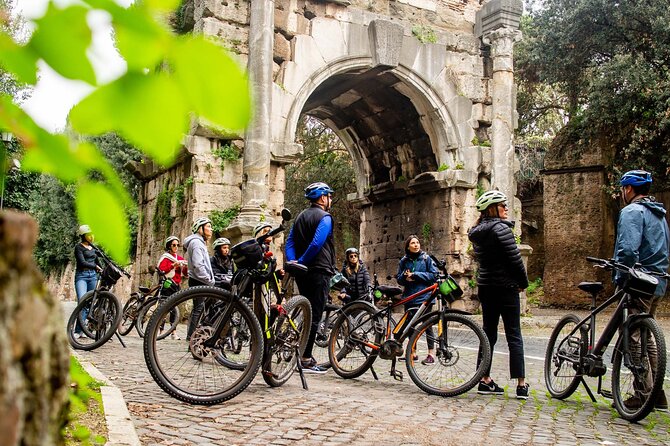
This is a half-day style Rome ride, about 5 hours total, back to the start point. You meet at Roma STARBIKE on Via dei SS. Quattro, 58, and then you are out cruising the quieter side of Rome along the Via Appia Antica area.
The group stays small, capped at 12 travelers, and that matters. On a route like this, it is not just about seeing sites, it is about staying together and getting clear explanations at each stop. Guides you may encounter, like Iman and Lorenzo, are repeatedly praised for keeping things organized, calm, and safe, while still making the stories fun.
You will use a high quality e-bike with a helmet plus practical add-ons like a phone holder and handlebar holder. The tour is offered in English, and you get a mobile ticket.
You can also read our reviews of more cycling tours in Rome


Porta San Sebastiano: Start at the Aurelian Walls and the pilgrimage graffiti
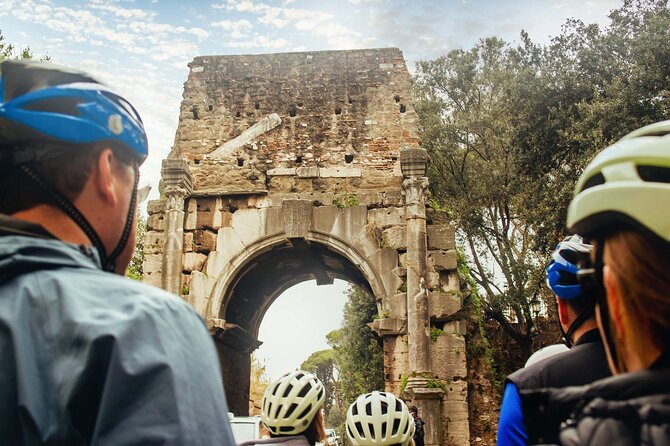
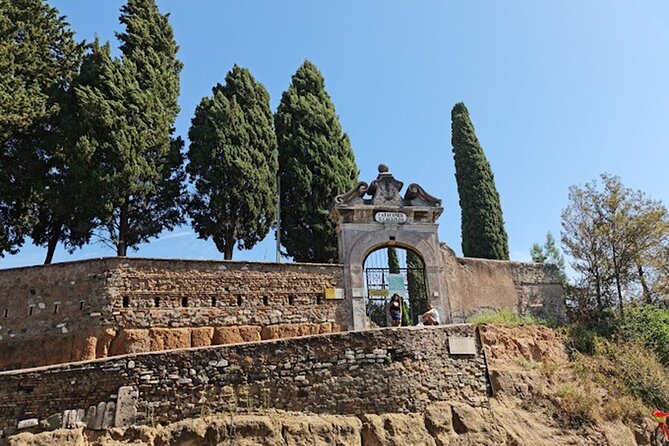
The day begins at Porta San Sebastiano, an imposing southern gateway built into the Aurelian Walls around 275 AD. It is also where the historic Via Appia Antica begins, so the start feels more like stepping into a timeline than just lining up for photos.
This stop is short, about 15 minutes, and the admission ticket is free. Still, it is a smart opener because it sets the tone: you learn how this area worked when Rome’s roads were the city’s lifelines, not just scenic walks.
There is also an unexpected visual detail. You can spot medieval graffiti, a reminder that pilgrims kept moving through this corridor long after the original Roman era.
Catacombs of San Callisto: Underground Rome with built-in guidance
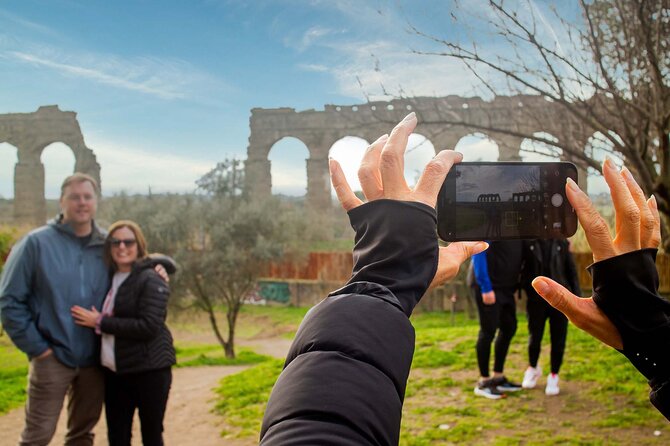
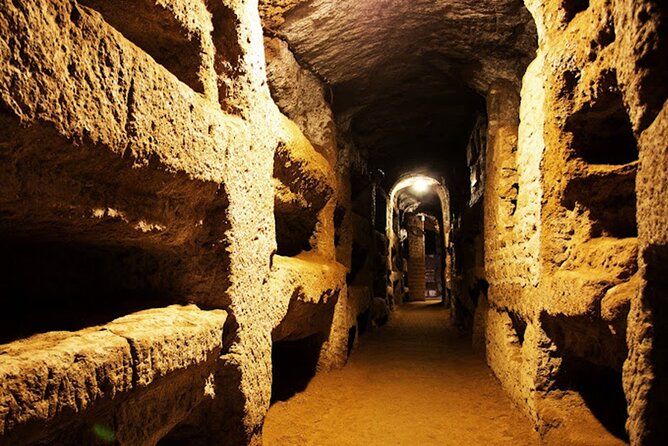
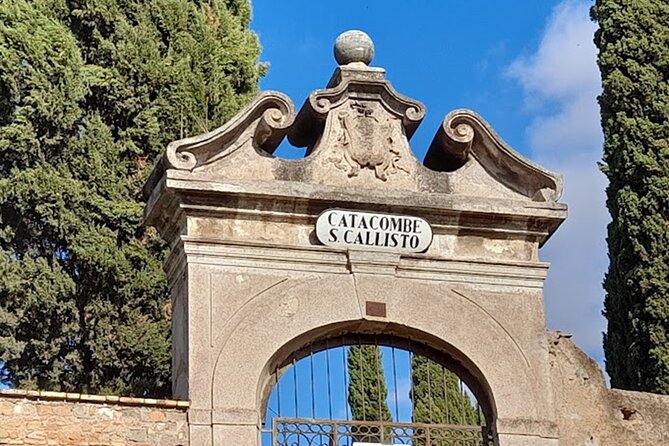
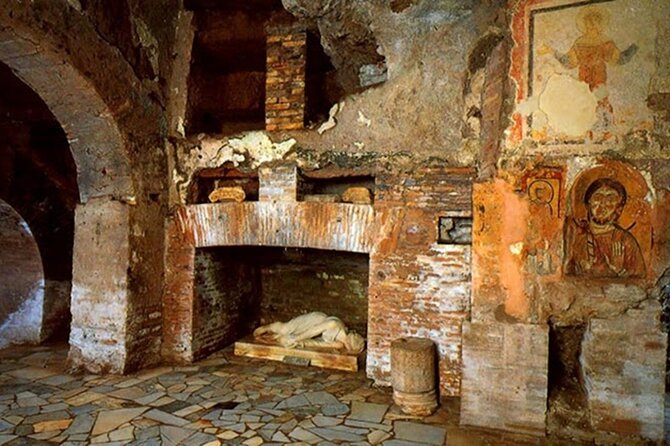
Next comes Catacombe di San Callisto, the official funerary complex of the Church of Rome. This is Rome under Rome, with corridors stretching to about 20 km underground, and it is the largest underground cemetery in the city.
This stop runs about 50 minutes, and the key benefit is that the catacombs admission is included. You also get the guided visit inside the catacombs, with tickets sorted in advance so you are not wasting time at the entrance.
The scale is the headline. The site is named after deacon Callixtus I, and the background story is deep: more than 50 martyrs, 16 popes, and about half a million Christians were buried here. In practical terms, it helps to come in with curiosity, since the guide’s job is to make the layout and symbolism make sense.
One more thing to know: it is underground. So bring a light layer if you run cold easily, and keep an eye on your footing as you descend and walk through corridors.
Caffarella Park, Egeria, and Cecilia Metella: Rome’s countryside stops
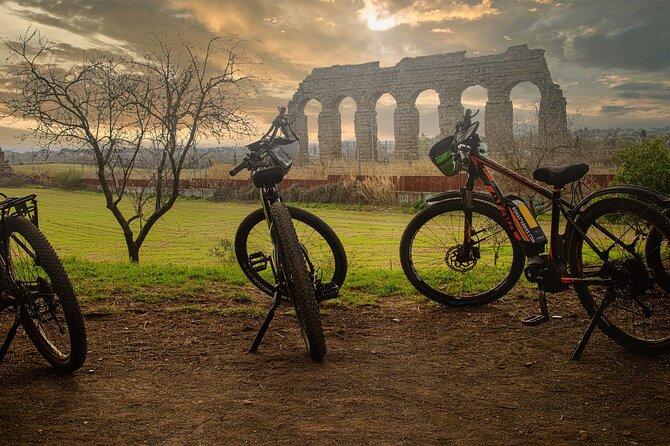
After the underground start, the tour switches to open air with a trio of stops that feel like a breather.
Parco Della Caffarella comes first. This park is part of the Appia Antica Regional Park and is one of the largest green spaces not only in Rome but across Europe. Expect paths and groves with remains of ancient structures tucked into the landscape, so you are not stuck looking at ruins from a single angle.
Then you visit Ninfeo di Egeria, a small but memorable sacred spot tied to the story of Egeria and Numa Pompilius, the second king of Rome. The legend says Egeria burst into tears when her beloved died, and that grief is linked to a spring. Even if you are not a mythology person, it is a nice mental change of pace after cemeteries and architecture.
Finally, Mausoleo di Cecilia Metella and Castrum Caetani delivers a big visual punch. Cecilia Metella’s mausoleum dates to the 1st century BC and is considered the best preserved on the Via Appia Antica. You can also see remnants of the medieval Caetani household and the perimeter walls of the church of San Nicola.
These stops add variety without adding extra logistics. They are timed so you can watch the route scenery change while still keeping the overall day moving.
Aqueduct Parks Lunch or Aperitif: Eating between Roman waterworks
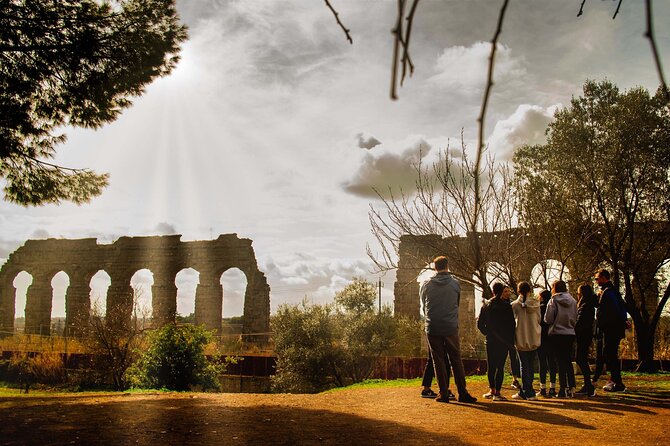
Now you hit the part that makes this tour feel like a full day, not just a string of stops: food, plus a change of scenery.
You pause in the Park of the Aqueducts, where lunch is planned on the 5-hour tour. The tour includes lunch plus water in the morning, and the restaurant serves Italian specialties. On afternoon departures, lunch is replaced by a tasty aperitif instead.
This is one of those details worth checking when you book. If you are going in the morning, you should expect a proper meal setup. If you are going later, plan to treat the aperitif as your main food break for the day.
Also, keep your expectations realistic. One rider flagged that the lunch can feel basic, even if it is included and convenient. In my view, that is the tradeoff you often make with tour meals, since the priority here is the route and the included catacombs experience.
A few more Rome tours and experiences worth a look


Parco degli Acquedotti and the aqueduct water network: engineering you can see
After lunch or aperitif, you continue by e-bike through Parco degli Acquedotti, part of the Appia Antica area. This is where the name really pays off.
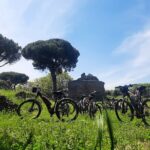
You ride along an immense green space once crossed by Rome’s water system, and you can still see aqueduct remains. Some sections are well preserved, and interestingly, some parts are still in operation. That last detail matters because it turns the aqueducts from dead monuments into living infrastructure you can understand.
You also hear how the system connects to routes like the Via Latina, described as Rome’s oldest road, and how that water network shaped everyday life. The guide’s role here is practical: instead of random ruins, you get a sense of how the aqueducts moved water through distance, gravity, and engineering choices.
For a photo lover, this section is a gift. You can frame aqueduct structures with park greenery, and you do not feel trapped in a crowded sightseeing bottleneck.
Villa dei Quintili, Caracalla Baths, and Maxentius Circus: finishing with icons
The final stretch builds toward big Roman landmarks you might not connect with the Appian Way unless someone explains it.
You first stop at Villa dei Quintili and Santa Maria Nova, around the fifth mile of the Appian Way. Villa dei Quintili belonged to the brothers Sesto Quintilio Condiano and Massimo Valerio, both consuls in the 2nd century AD. The story gets darker: they were killed by Commodus I, who confiscated the villa and turned it into imperial property.
Then comes Terme di Caracalla, the Baths of Caracalla. They were built by the emperor himself, and for about a century they were the largest public baths ever built. Today, much of the structure is still standing. Water mattered here too, since a branch of the Aqua Marcia brought water through the Antoninian aqueduct, with small remains you can see around Porta San Sebastiano.
Last is the Circus of Maxentius, a rare survivor of a Roman circus experience on the Via Appia Antica. You can see the spina, and you learn about the Agonale obelisk, which was moved during the Renaissance to the Fountain of the Four Rivers in Piazza Navona. That connection alone makes it feel worth remembering later when you walk past Piazza Navona.
These ending stops work well because they widen your mental map of Rome. Instead of thinking of ancient Rome as only downtown, you start seeing it as a network.
Bumps, biking skills, and what the e-bike can and cannot fix
The e-bike does real work here, especially with Rome’s terrain. In the route’s toughest moments, you will still feel cobbles, because that is part of the Appian Way experience.
One key heads-up: you must know how to ride a bike well. The tour assumes comfortable control, not beginner learning. The e-bike helps with hills, but it does not remove the need for balance, braking, and smooth handling.
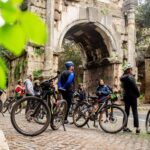
Expect uneven pavement at times. There is even mention of an original stretch of cobbles around 1 km that can feel bone rattling. The good news is that the guide typically prepares you ahead of the rough section, so you know what is coming and you can choose to ride slowly or push a bit if you need to.
If it is hot, plan for that too. One rider called out intense heat around 100 degrees, and the advice is simple: bring water, pace yourself on breaks, and protect your head.
Price, value, and who this tour fits best
The cost is $107.41 per person, and the value comes from what is bundled in, not just from a bike ride.
You get:
- a high quality e-bike plus helmet and holders
- a guided catacombs visit with admission included
- lunch plus water on morning departures, or an aperitif on afternoon departures
- all bike equipment and a small-group guide format
Plus, most other site stops have free admissions listed, meaning your money is focused on the guide experience and the catacombs component rather than a long list of separate ticket purchases.
This tour is best for you if you want a Rome day that feels different from the standard city center circuit. It suits people who like outdoor walking, photography, and learning how ancient Rome worked as a system. It is also a smart choice for first-time e-bike users, as long as you can ride a bike confidently.
It may not be ideal if:
- you cannot ride a bike well
- you are very sensitive to saddle discomfort on uneven ground
- you want a shorter, low-effort outing
Should you book the Appian Way Aqueducts Bike Tour?
Book it if you want the real payoff of the Appian Way, aqueduct scenery, and the Catacombs of San Callisto in one organized half-day, with small-group guidance and an e-bike doing the heavy lifting. The route makes sense if you like variety, since you mix gates, underground cemeteries, parks, villas, baths, and a surviving circus.
Skip it only if biking itself sounds like a hassle, or if you are not comfortable with cobbled surfaces. If you do book, show up ready to ride well, and bring sun protection. You will get a Rome that feels spread out, calmer, and more human than the usual rush.
FAQ
How long is the Appian Way Aqueducts Bike Tour?
The tour lasts about 5 hours.
Is lunch included, or do I get an aperitif instead?
Lunch plus water is included for the morning, and on afternoon departures the meal is replaced by an aperitif.
Is the Catacombs visit included?
Yes. The tour includes a guided visit of the Catacombs of San Callisto, with admission included.
Do I need to know how to ride a bike?
Yes. You must know how to ride a bike well.
Is there a weight limit?
Yes. The maximum weight is 120 KG, or 265 pounds.
Is there equipment included for the bike ride?
Yes. You get a helmet and practical gear like a mobile phone holder and handlebar holder, plus a high quality e-bike.
Are child seats or trailer bikes available?
A child seat is included until 25 kg. For children age 6 to 10, validity depends on height being less than 4/7 feet (143 cm), because they use a trailer bike.
What group size and language should I expect?
The tour is offered in English and has a maximum of 12 travelers.
More Cycling Tours in Rome

More Tours in Rome


More Tour Reviews in Rome
Not for you? Here's more nearby things to do in Rome we have reviewed







Ancient Rome Tours, compared.
 ★ 4.7Colosseum: Underground and Ancient Rome TourFrom $16012,691 reviews
 ★ 4.4Colosseum, Ancient Rome Tour or Self AudioGuided TourFrom $392,866 reviews
 ★ 4.9Appian Way, Catacombs, & Roman Aqueducts E-bike TourFrom $851,421 reviews
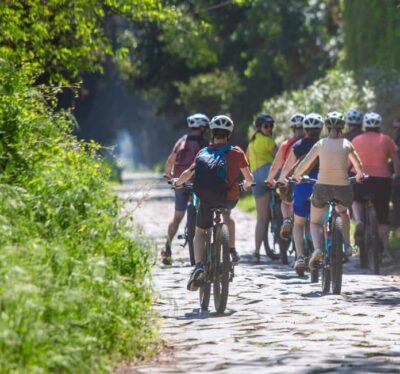 ★ 4.9Appian Way E-bike Tour with Catacombs, Aqueducts & FoodFrom $961,210 reviews
 ★ 5.0Appian Way Aqueducts Bike Tour (Catacombs & Lunch Option)From $78975 reviews
 ★ 4.7Appian Way, Aqueducts, and Catacombs TourFrom $64942 reviews
 ★ 4.7Caracalla Baths & Circus Maximus — Private or SharedFrom $77835 reviews
 ★ 4.7Colosseum Arena Access and Ancient Rome Guided TourFrom $94774 reviews
Browse the lists this tour appears in