
Reviewed · ANCIENT ROME TOURS
Ancient Rome’s Ultimate Night Walk
Rome is more honest at night.
This Ancient Rome night walk strings together Rome’s big power shifts from Antiquity to modern government, and it does it at a comfortable 2.5-hour pace. I especially love the way you get Michelangelo’s Campidoglio and the Roman Forum views in one simple route. One thing to keep in mind: the tour depends on good weather, so rain can change the plan.
You also finish with a friendly touch, a complimentary nightcap in the city center, which makes the last stretch feel less like checking boxes and more like hanging out with Rome. The small group size, capped at 15, helps the guide keep the story moving and the pace human. If you hate walking at night or get stuck in the rain, it may feel like more hassle than payoff.
Below is what you can expect, stop by stop, and how to decide if this is your kind of Rome night.
Key things to know before you go
- Small group at up to 15 people, so the guide can actually keep attention and answer questions.
- English-speaking tour with a clear narrative linking Antiquity to modern landmarks.
- Michelangelo’s Campidoglio is a visual anchor, not just another piazza.
- Via dei Fori Imperiali is the spine for Forum area views and context.
- Every listed stop is ticket-free, including the Hadrian columns at Piazza di Pietra.
- Complimentary nightcap at the end, so you get a built-in finish in the city center.
Why this Ancient Rome night walk feels more grounded
Daytime Rome can be loud, hot, and rushed. This tour leans into something different: you walk the same neighborhoods you’ve seen in photos, but the mood shifts at night. Even without extra admissions, the guide can connect the dots so you stop feeling like you are looking at unrelated monuments.
What I like most is the tour’s approach. Instead of treating Rome like a museum list, it follows a thread. You start with modern Italy and go backward and forward in time across seats of power, religious authority, and civic life. That makes the stone feel like it has a job, not just a backstory.
Also, the duration is short enough to stay fun. About 2 hours 30 minutes is a sweet spot for getting real context without turning your evening into an endurance event. You will still walk, so wear shoes you can live in, but you should not feel wiped out.
You can also read our reviews of more walking tours in Rome

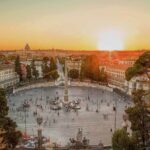
The route, the pace, and how long each moment lasts
This starts at Via dei Serpenti, 89 (00184 Roma RM) at 7:00 pm, and ends at Piazza Colonna. The tour is designed as a compact evening circuit, moving between piazzas and viewpoints rather than deep-ticket attractions.
Expect quick stops, most around 15 minutes, with one shorter pause at Piazza di Pietra. That format is helpful if you want to see several major places in one evening. It also means the guide’s storytelling matters. If you tune in, the time moves fast and the route feels satisfying.
A practical upside: it is described as near public transportation, so if your plans change or you want an easy escape route, you are not trapped far from transit. The group limit of 15 also helps with flow, since narrower streets and piazzas can bottleneck bigger tours.
Piazza Venezia: Italian unification plus the feeling of a monument
Your evening begins at Piazza Venezia, a place that ties modern Rome to the way Italians talk about nationhood. You spend about 15 minutes here, focusing on the story of Italian unification and the monument symbol linked to that history.
This is a smart opener. If you start with Rome’s ancient stuff too quickly, it is easy to miss how the city keeps reusing space and symbolism. The unification story gives you a baseline. Then, as the tour keeps moving, you notice how layers of power keep replacing each other without fully erasing what came before.
One caution, though, is that piazzas can be busy and the best photo angles can be contested. Go with the mindset of learning, not just shooting. If you keep your eyes on the guide’s prompts, you will get more out of the stop than you would wandering alone.
Piazza del Quirinale: where power shifts from church to state
Next up is Piazza del Quirinale, also about 15 minutes. This stop focuses on the current seat of the Italian president and what the area used to be, a main papal residence before it became inhabited by the Italian royal family.
This is a great reminder of something Rome always does well: it turns geography into politics. A building is never just architecture here. It is a headline written in stone, passed from one authority to the next.
The pacing works well because you get enough time to absorb the meaning without feeling like you need to read every plaque. If you enjoy the overlap between politics and religion, you will likely find this stop especially satisfying, because it explains the transformation instead of just pointing at a façade.
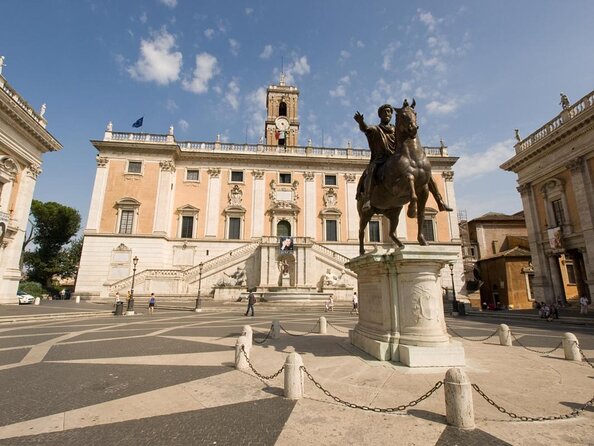
Piazza del Campidoglio: Michelangelo’s design and how to see it
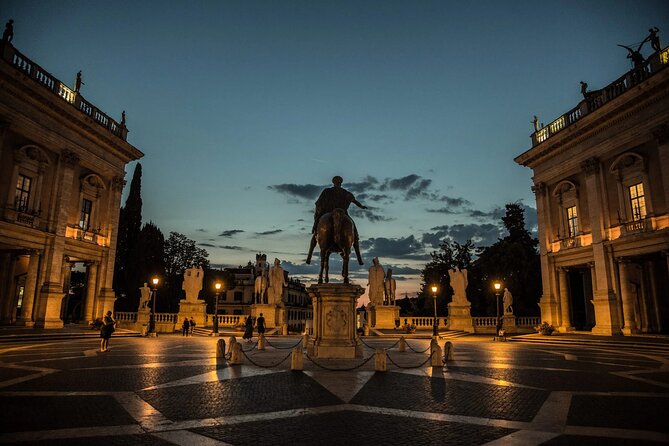
Then you hit Piazza del Campidoglio, your best visual moment for many people on this route. You get about 15 minutes, centered on the piazza designed by Michelangelo for the seat of the Roman mayor.
Campidoglio is one of those places where the layout matters as much as the view. The guide’s narrative can help you read the space. Instead of treating it like a wide square you stand in, you start noticing how the design frames meaning. That is what makes a guided stop here so much more valuable than a quick glance.
There is also an emotional payoff. Even if you only know a few things about Rome, Campidoglio tends to look like a stage. Rome has always been good at making power feel ceremonial, and this is a clear example.
If you are sensitive to crowding, arrive ready to wait a moment for your preferred angle. But if you love architecture and planning, this is the stop you will remember.
You can also read our reviews of more evening experiences in Rome
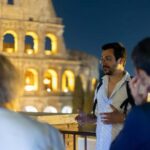
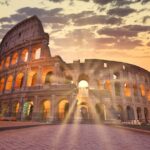
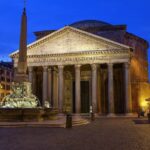

Via dei Fori Imperiali: connecting the Forum to the Western world story
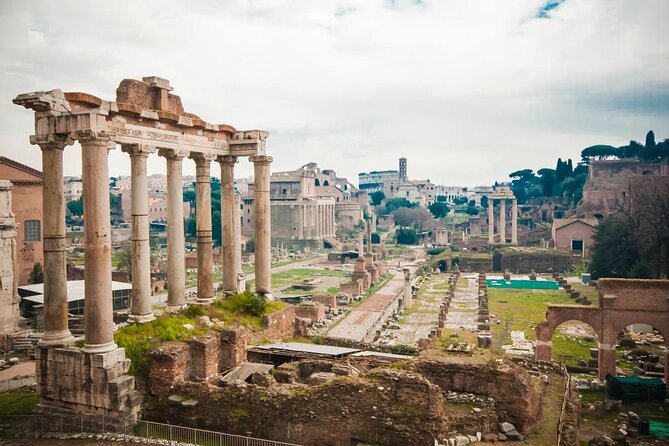
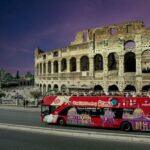
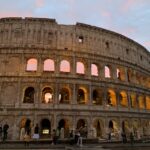
After Campidoglio, the tour intersects Via dei Fori Imperiali, where you view the Ancient Roman Forum area. This is another 15-minute segment, focused on the Forum’s role as a once central “caput mundi,” or hub of the Western world.
The value here is not just seeing ruins. It is understanding placement. The Forum can be confusing when you only look from one spot because Rome is spatial. Streets, elevations, and sightlines matter.
Via dei Fori Imperiali helps because it gives you a corridor of context. You watch the story unfold spatially, like you are moving along Rome’s main narrative spine rather than hopping randomly between ruins.
One drawback to consider: ruins can look different at night depending on lighting and crowds. If your expectations are based on bright daytime clarity, shift your mindset. Think of this stop as orientation and context, not a full-length archaeological visit.
Piazza di Pietra: Hadrian’s columns still holding their ground
The tour then goes to Piazza Di Pietra for about 5 minutes. This is short on purpose, because the highlight is specific: the façade of the local Camera di Commercio still has original columns of the Temple of Hadrian.
This quick stop can be satisfying if you like “saved pieces” of the past. It’s a reminder that Rome’s ancient material is not just in isolated ruins. It can also be reused as visible structure within modern walls and institutions.
Because the time is brief, your strategy should be simple. Look closely at the columns and let the guide explain what you are seeing in plain terms. If you try to multitask here, you will likely miss why this stop matters.
Piazza Colonna: modern government with an ancient backbeat
Next is Piazza Colonna, another 15-minute stop. Here the narrative focuses on the history of prominent Roman families tied to the Catholic Church, and it also points out that this area is the seat of the Italian prime minister.
This is another spot where the guide’s interpretation changes your experience. You start looking at the piazza as a meeting point between eras, not just a square with a government building.
At night, this kind of stop can feel slightly cinematic, because the symbolism is the point. You are walking through the city’s power geography, from ancient civics to modern state institutions. The more you follow the guide’s thread, the more the places connect in your mind.
The complimentary nightcap and where to go next
The tour ends back in the city center with a complimentary nightcap. That is not just a perk, it is a pacing tool. It gives you a natural landing point after the walking and stops, and it turns the ending into a small social moment rather than a sudden cutoff.
Afterward, you will likely want to keep the evening going in the neighborhood. Since the tour ends at Piazza Colonna, you are positioned near other central sights and dining options. Even if you keep it simple, grabbing a drink or a quick bite nearby can help you stretch out the feeling of the evening instead of rushing to a new transport plan.
Price and value: is $84.33 worth it?
At $84.33 per person, this is not a budget walk. So I look at value in practical chunks.
Here is what you are paying for:
- A structured route through major sites with English narration
- A compact time window of about 2.5 hours, so you do not lose your entire night to transit
- A small group, max 15, which usually means a more coherent experience
- Ticket-free stops on the route, including the Forum area viewing and the Temple of Hadrian columns
- A complimentary nightcap, which adds a concrete final benefit
If your idea of value is a self-guided wandering plan, you could probably stitch together these places on your own. But if you want the city’s layers explained in the right order, with a guide keeping the story straight, this price starts to make sense.
For me, the sweet spot is when you are short on time and want the “how does Rome connect?” feeling. That is where guided night walking can pay off.
Who this tour suits best, and who might skip it
This works especially well if you:
- Like the big picture, Antiquity to modern government, not just random ruins
- Want a night option that avoids the worst daytime crush
- Prefer a guided walk that keeps moving, with stops long enough to absorb meaning
You might skip or choose a different option if:
- You hate being outside in uncertain weather, since it requires good weather
- You want long, in-depth museum time rather than quick context stops
- You need a fully flexible itinerary, because this is scheduled as a set evening route with a start time of 7:00 pm
If you are the type who gets bored at purely scenic stops, lean into the guide’s narrative. This tour is strongest when you listen.
Book it or pass: my decision guide
I would book this if you want one efficient evening that gives you a clear mental map of Rome’s power story. Piazza del Campidoglio plus the Forum area viewpoint along Via dei Fori Imperiali is a strong pairing, and the route makes those stops feel connected instead of scattered.
I would hesitate if your schedule is fragile or if you expect heavy rain, because the tour is weather-dependent. In Rome, nights can turn quickly, so having Plan B energy matters.
If you do book, show up ready to walk and listen. This is a tour where attention is the upgrade you control.
FAQ
How long is the Ancient Rome night walk?
It is approximately 2 hours 30 minutes.
What time does the tour start, and where does it meet?
The start time is 7:00 pm, and the meeting point is Via dei Serpenti, 89, 00184 Roma RM, Italy.
Where does the tour end?
The tour ends at Piazza Colonna.
Is the tour offered in English?
Yes, it is offered in English.
Is there an admission fee for the stops?
The listed stops are marked as ticket free.
How big is the group?
The tour has a maximum of 15 travelers.
What happens if the weather is bad?
The experience requires good weather. If it is canceled due to poor weather, you will be offered a different date or a full refund.
More Evening Experiences in Rome
More Walking Tours in Rome


More Tour Reviews in Rome






Not for you? Here's more nearby things to do in Rome we have reviewed












Ancient Rome Tours, compared.
 ★ 4.7Colosseum: Underground and Ancient Rome TourFrom $16012,691 reviews
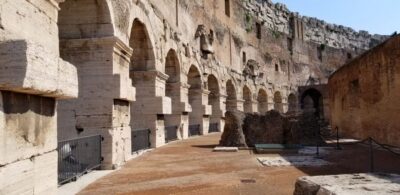 ★ 4.4Colosseum, Ancient Rome Tour or Self AudioGuided TourFrom $392,866 reviews
 ★ 4.9Appian Way, Catacombs, & Roman Aqueducts E-bike TourFrom $851,421 reviews
 ★ 4.9Appian Way E-bike Tour with Catacombs, Aqueducts & FoodFrom $961,210 reviews
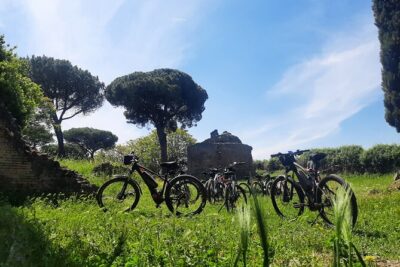 ★ 5.0Appian Way Aqueducts Bike Tour (Catacombs & Lunch Option)From $78975 reviews
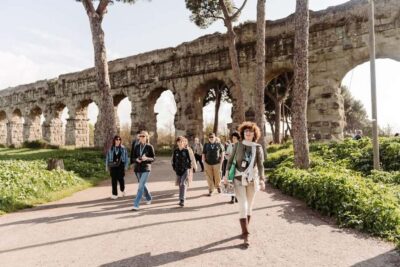 ★ 4.7Appian Way, Aqueducts, and Catacombs TourFrom $64942 reviews
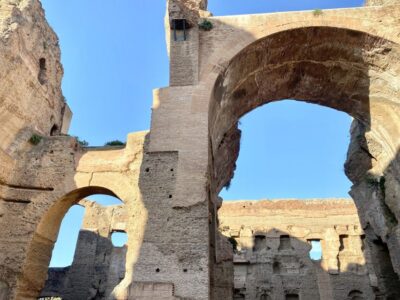 ★ 4.7Caracalla Baths & Circus Maximus — Private or SharedFrom $77835 reviews
 ★ 4.7Colosseum Arena Access and Ancient Rome Guided TourFrom $94774 reviews
Browse the lists this tour appears in