
Reviewed · ANCIENT ROME TOURS
Appian Way Aqueducts Bike Tour (Catacombs & Lunch Option)
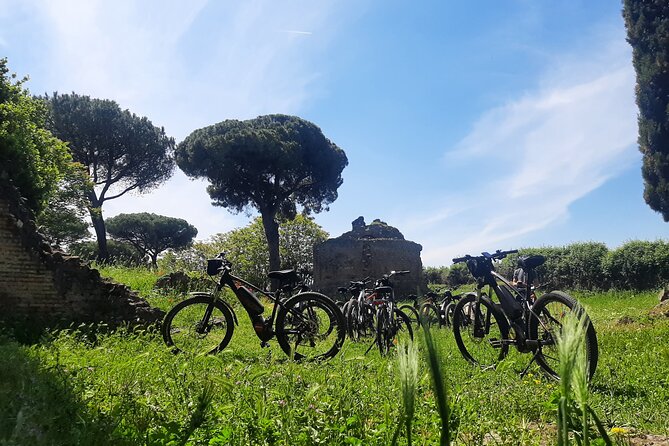
Rome has a way of surprising you, even on a bike. This small-group e-bike tour steers you out past the Colosseum area and into the quieter green belt of the Appian Way, with ancient walls, aqueducts, and big views. I love how the ride uses electric assist so you can keep moving without frying your legs on hills and uneven ground. The other thing I like is the focus on real Roman geography, not just quick photo stops.
One consideration: you need to be comfortable riding a bike well, because the route includes rougher surfaces and some traffic at the start.
Quick hits you will care about
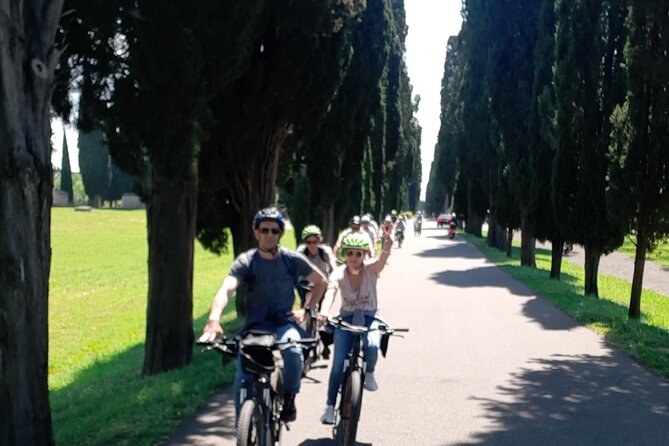
- E-bikes with real help: electric assist reduces the burn, but you still pedal on a several-hour ride.
- Small group, max 12: easier pacing, more time for questions, and fewer bottle-necks at stops.
- Ancient road plus park time: you get history at Porta San Sebastiano and Via Appia Antica, then actual breathing space in Caffarella Park.
- Optional 5-hour upgrade: the longer version adds Catacombs of St. Callixtus plus lunch and an afternoon aperitif.
- Aqueducts up close: the Parco degli Acquedotti stretch is built for seeing Roman engineering in context.
- Terrain varies: expect cobblestones, tight patches, and dirt, so plan for a more active day.
The Appian Way by e-bike: what you are really buying
For $78.60, you are not paying just for transport. You are paying for a guided route that stitches together a long ancient corridor, several major monuments, and the green spaces that make this part of Rome feel different. The tour is built around an e-bike, so you get motion and cover distance, but still stop often enough to actually look.
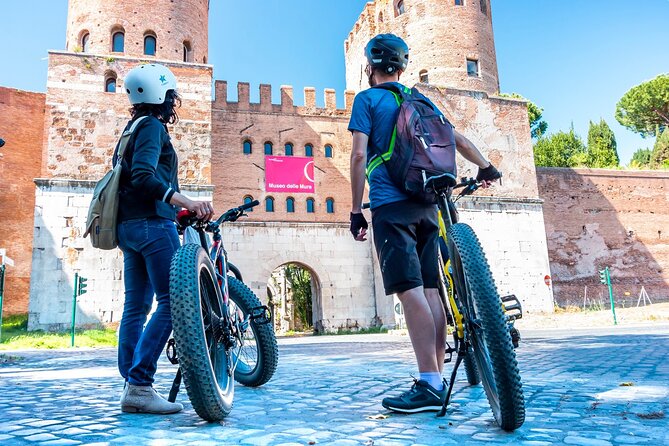
This is also a smart way to see the Appian Way because the route naturally includes contrast. You start in the city near the Colosseum area, then you pass through the Aurelian Wall gateway at Porta San Sebastiano and move into Parco della Caffarella, where the mood shifts fast. That switch from crowds to quiet is one of the main reasons people rave about this tour.
You can also read our reviews of more cycling tours in Rome


Where you start near the Colosseum, and how the bikes work
You meet at Roma STARBIKE – Rome eBike Tours & Experiences, at Via dei SS. Quattro, 58. It is a short ride from the Colosseum area, so you are not starting across the city.
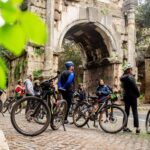
At arrival, you get your helmet and a proper fit on your e-bike. The bikes include a mobile phone holder and handlebar holder, which is genuinely useful when you want directions, not just photos. The tour is offered in English, and it is run as a small group (maximum 12).
Do note the equipment and physical expectations are real. The tour info says you must know how to ride a bike well and you should have moderate physical fitness. Reviews back up that the learning curve is fastest for people who are already comfortable on a bike. If you are rusty, pick your day carefully and consider the shorter option.
Porta San Sebastiano and the Aurelian Walls: your first Roman wow moment
The first major stop is Porta San Sebastiano, the grand southern gateway connected with the Aurelian Walls. This wall system dates to around 275 AD, and the gate marks the start of the historic Via Appia Antica.
What makes this stop work is that it gives you a mental map. You are not just seeing ruins, you are standing at a hinge point in Rome’s layout. Porta San Sebastiano is also surrounded by medieval graffiti, a reminder that pilgrims and travelers have been moving through this corridor for centuries. That layer of time hits differently when you arrive by bike instead of a bus drop-off.
The stop is brief, about 15 minutes, so use it to orient yourself. If you ask your guide one good question here, you will likely understand the rest of the route much faster.
The 5-hour upgrade: Catacombs of St. Callixtus in the right time window
If you choose the 5-hour version, you add a guided visit to Catacombe di San Callisto. This is the official funerary complex connected to the Church of Rome, and it is described as the largest underground cemetery in the city, with corridors reaching about 20 km.
This stop is listed as about 50 minutes, with admission included. The tour is not just a cold walk underground. The guide context matters here, because the catacombs connect to early Christian burial history, including references to martyrs and popes associated with the site.
Practical tip: if you are sensitive to enclosed spaces, plan your pacing. You will be underground for a chunk of time, then you get back onto the daylight route through parks and aqueduct areas.
Pedaling Via Appia Antica: Regina Viarum, and why the road feels special
After the gate, you ride along Via Appia Antica, often called Regina Viarum, the queen of roads. This is one of those places where the engineering makes the story click.
You get time to look at the ancient road corridor and hear how it was planned. The origin story often centers on Appius Claudius, described as the Blind, and how the road was intended to move Roman troops south. Over time, it extended farther, eventually connecting to Brindisi as Rome’s major port.
The ride time here is about 50 minutes, and that is a sweet spot. Long enough to feel the road under you and notice surroundings, but short enough that you still feel fresh for the park sections after.
One more reality check: Appian Way surfaces can be rough. Cobblestones in this zone can be large and uneven, and there may be some tight patches where you need quick bike control. The e-bike help is real, but it does not eliminate the need for steady handling.
A few more Rome tours and experiences worth a look

Parco della Caffarella: the Rome you did not plan for
Then comes a big shift into nature: Parco della Caffarella. This park is described as one of the largest green areas not only in Rome but also in Europe, and it is part of the Appia Antica Regional Park.
This is not a generic park stop. You are riding through history mixed into the landscape, with paths and groves that sit close to remains of ancient buildings. The guide often weaves in how this area functioned historically, so it stops being a pause and becomes another layer of understanding.
It is about 50 minutes. That means you will have time to enjoy the air and slow down, which helps a lot on days that start with city riding tension. If Rome street traffic makes you tense, this is the part that lets you exhale.
Ninfeo di Egeria and the Cecilia Metella area: myths and power next to each other
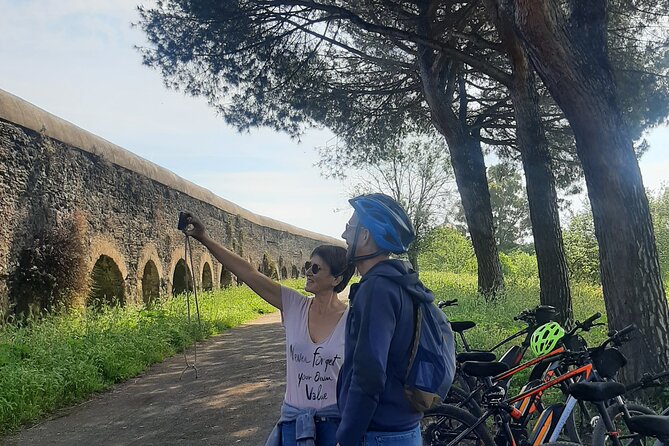
Two stops in this section give the tour a nice rhythm: a myth-based pause, then a power-and-burial monument.
First is Ninfeo di Egeria, a sacred site tied to the story of the nymph Egeria and Numa Pompilius. The tour info frames it as a love story where Egeria’s grief becomes a spring. Even if you know little Roman mythology, this stop works because it is short and story-driven, about 20 minutes.
Then you move to Mausoleo di Cecilia Metella and Castrum Caetani in the Parco Archeologico dell’Appia Antica. This is a 1st-century BC pagan mausoleum, described as the best preserved one on the Via Appia Antica. You also see the medieval house of the Caetani family and the perimeter walls of the church of San Nicola, which are the surviving edges of later Rome layered on top of earlier power.
The stop is about 20 minutes. Use this time for a slow look. The shapes here are big, and they show you how Rome reused space across eras.
Parco degli Acquedotti: lunch, aqueduct views, and the engineering that still matters
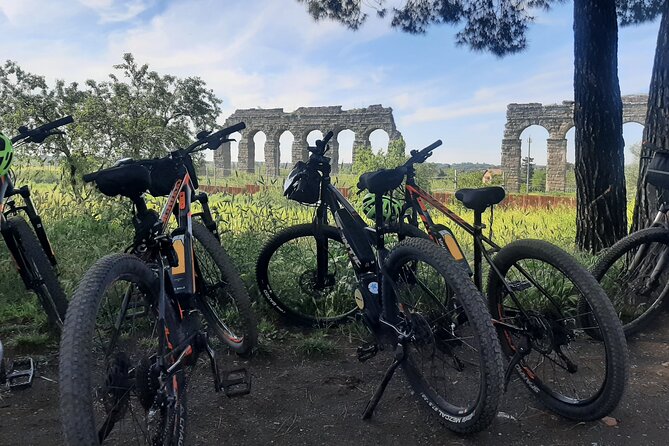
The aqueduct park is the heart of the tour for many people. It is also where the title makes sense beyond marketing.
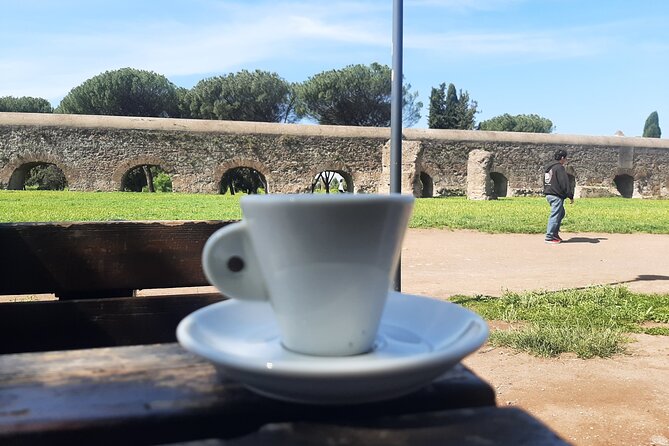
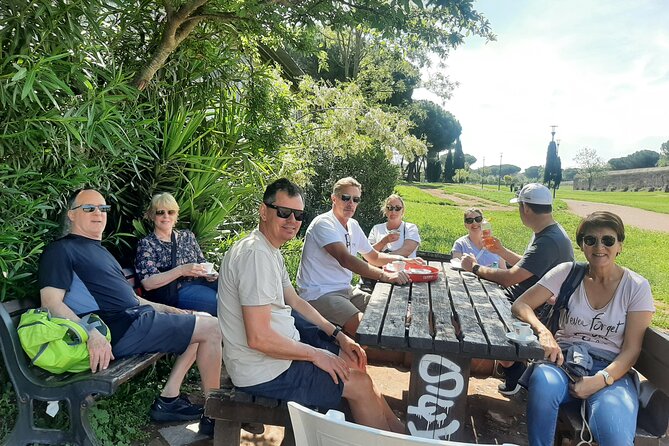
On the 5-hour version, you stop at Parco degli Acquedotti for lunch under the Claudio aqueduct. The tour includes lunch and also an aperitif in the afternoon in that longer itinerary. Reviews point out that lunch feels like a simple sit-down meal, not just something rushed. That matters, because you are not likely to want to grab a sandwich and pedal right away after hours of riding.
On the ride details side, the tour later returns to the aqueduct area again, even on the shorter option, for about 20 minutes more. This part highlights the water network of ancient Rome through aqueduct remains, and the tour info notes that some structures still remain in operation. That single fact changes your perspective. You are not only looking at ruins, you are seeing why Rome’s systems were built to last.
If you are a photo person, this is your best stretch. If you are not, it is still your best stretch because you can stand with your guide and actually understand what you are looking at, instead of guessing.
Circus of Maxentius and Terme di Caracalla: finishing with two big ruins
The last portion leans back toward monumental Rome, even though you are still in the Appian corridor.
You visit Circus of Maxentius, described as the best example of a Roman circus to survive. You can still see the spina, the central barrier, and the guide points out that the Agonale obelisk was moved later and is now associated with a fountain at Piazza Navona. This kind of detail is gold on a guided tour, because it explains why something you saw in the city connects to something you are standing on now.
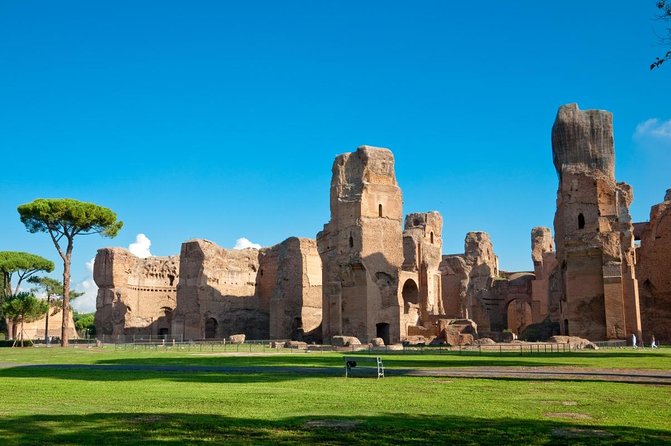
Next is Terme di Caracalla, the Baths of Caracalla. Built by the emperor of the same name, they were for about a century the largest public baths ever built, and today much of the structure remains. The tour info also mentions water delivery, including a branch of the Aqua Marcia brought water through the Antoninian aqueduct.
You get about 15 minutes at the baths. It is enough time to understand the scale and see the key remains, without turning the return into a slog.
Then you pedal back, dropping off your e-bike and helmet at the bike shop, and the activity ends back where you started.
Small-group pacing, guide styles, and how to get the most out of the ride
A theme in the experience is the guide quality and the group management. When you ride in Rome, city streets can feel awkward at first, even on an e-bike. Guides handle this by briefing you and keeping you together, often with patient check-ins.
Some guides are named across bookings, including Lorenzo, Alex, Chris, Ava, Iman, Ricardo, and Paolo. The pattern with these names is consistent: clear riding instructions, safety focus, and enough storytelling that you feel like you are learning while moving. One detail that stands out in the feedback is how guides manage nervous riders. If you feel your confidence slipping during the street transition, ask your guide to point out what to watch for. That one step can make the difference between enjoying the ride and fighting it.
Who should book, and who should pick a different Rome plan
This is a great fit if you want:
- A break from crowds, with green space that actually changes your mood
- A guided history route that includes aqueducts, Roman road engineering, and major ruins
- A ride length that feels like a half-day with momentum, about 4 to 5 hours
It is not a great fit if:
- You have not ridden a bike in a long time, or you feel shaky with balance on uneven surfaces
- You are sensitive to a more active day with rougher ground and the possibility of a sore seat area
- You expect a casual stroll. This is cycling for several hours, with some uneven patches and cobblestones
If you are traveling with kids, the included child seat is listed until 25 kg. The child ticket rules also include height limits since a trailer bike may be used. That means you should double-check age and height fit before booking.
Also remember the tour has a weight limit of 120 kg, so plan accordingly.
Price and value: is $78.60 worth it?
At $78.60 per person, you are essentially buying three things bundled together:
- E-bike rental plus helmet and the gear setup that makes the ride doable
- A guide-led itinerary that strings together multiple major sites along a coherent corridor
- Entry and time costs at the right places, with catacombs included only on the 5-hour route, plus lunch and aperitif on that longer day
Most of the stops are outdoors and noted as free admission in the itinerary, so the value comes from guidance, time saved in planning, and getting the route logic right. If you tried to copy this yourself, you would spend time figuring out bike logistics, route transitions, and what each site means. Here, a guide does that for you while you ride.
For comfort, you are still dealing with the real Roman surfaces. The e-bike and suspension help a lot, but bring realistic expectations about seats, cobblestones, and pacing.
FAQ
FAQ
How long is the Appian Way Aqueducts Bike Tour?
It runs about 4 to 5 hours, depending on which option you choose.
What is included in the price?
The tour includes a high quality e-bike, helmet, and holders for a mobile phone and handlebars. It also includes a child seat (up to 25 kg) and, on the 5-hour version, lunch and an afternoon aperitif. Catacomb entry and a guided visit are included only in the 5-hour version.
Does the 4-hour tour include the Catacombs?
No. The catacombs visit is included only in the 5-hour tour.
Which tour version includes lunch and aperitif?
Lunch and an afternoon aperitif are included only in the 5-hour version, with the aqueduct park stop planned for that meal.
Where do we meet and where does the tour end?
You meet at Roma STARBIKE – Rome eBike Tours & Experiences on Via dei SS. Quattro, 58, and the tour ends back at the meeting point.
Is the tour offered in English?
Yes, the tour is offered in English.
How many people are in the group?
This activity has a maximum of 12 travelers.
Do I need to know how to ride a bike?
Yes. The tour requires that you know how to ride a bike well.
What happens if weather is bad?
This experience requires good weather. If it is canceled due to poor weather, you will be offered a different date or a full refund.
Should you book if you want a very easy day?
Keep in mind it is described for travelers with moderate physical fitness, and you must be comfortable riding a bike for several hours with mixed terrain.
Should you book this Appian Way e-bike tour?
If your ideal Rome day includes aqueducts, ancient roads, and countryside energy without a full-day commitment, book it. The e-bike setup and small group size make it a strong choice for people who want to see more than the usual central highlights.
I would book the 5-hour version if you want the full package, including Catacombs of St. Callixtus plus lunch and the aperitif. I would pick the 4-hour option if you are newer to biking or you want to keep your effort lower while still getting the Porta San Sebastiano to Appian Way to aqueducts core.
Just be honest about one thing: if you do not feel steady on a bike, or you hate cobblestones and uneven ground, this tour will feel like work. If you are okay with an active half-day and want Rome’s quieter side with great guide energy, this is one of the best ways to get there.
More Cycling Tours in Rome

More Tours in Rome


More Tour Reviews in Rome
Not for you? Here's more nearby things to do in Rome we have reviewed






Ancient Rome Tours, compared.
 ★ 4.7Colosseum: Underground and Ancient Rome TourFrom $16012,691 reviews
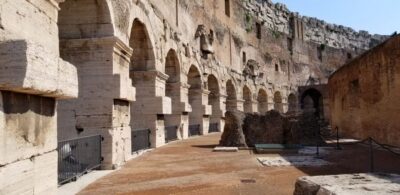 ★ 4.4Colosseum, Ancient Rome Tour or Self AudioGuided TourFrom $392,866 reviews
 ★ 4.9Appian Way, Catacombs, & Roman Aqueducts E-bike TourFrom $851,421 reviews
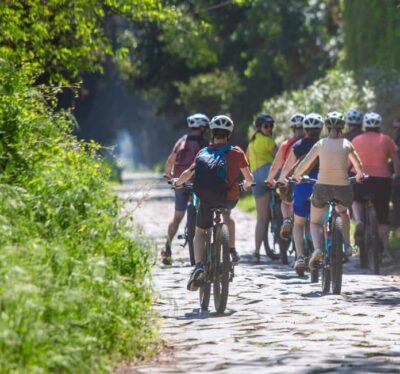 ★ 4.9Appian Way E-bike Tour with Catacombs, Aqueducts & FoodFrom $961,210 reviews
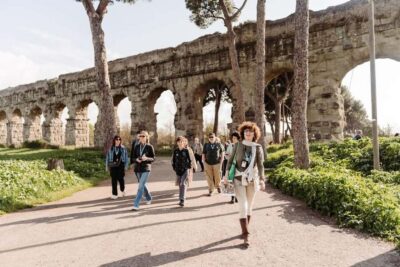 ★ 4.7Appian Way, Aqueducts, and Catacombs TourFrom $64942 reviews
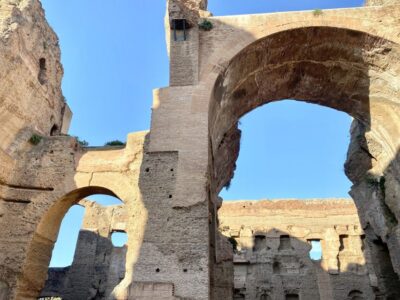 ★ 4.7Caracalla Baths & Circus Maximus — Private or SharedFrom $77835 reviews
 ★ 4.7Colosseum Arena Access and Ancient Rome Guided TourFrom $94774 reviews
 ★ 5.0Appian Way, Catacombs and Aqueducts Park Tour with Top E-BikeFrom $102735 reviews
Browse the lists this tour appears in