
Reviewed · DAY TRIPS FROM ROME
Tivoli: Entrance Ticket to Villa Adriana & App Audioguide
Hadrian built a palace for his escape. A ticket to Villa Adriana in Tivoli lets you wander a UNESCO World Heritage park built for imperial downtime. I love how much you can see without needing a full-day, Rome-only script, especially with big set pieces like the Maritime Theatre.
Two things I especially like: you get direct access to the ruins with skip-the-line entry, and the included digital audioguide helps you make sense of what you’re looking at as you walk. One consideration: this is not a guided tour, so you will be doing the explaining yourself via the audioguide, which may feel lighter if you want a live human to answer your questions.
Key things to know before you go

- Hadrian’s estate across a 1-square-kilometer site with remains of more than 30 buildings
- Maritime Theatre highlights, including a pool with an artificial island
- Canopo and the Serapeum grotto give you classic water-and-stone moments
- Mosaics show up in key areas, including the hospital area
- Self-guided pacing means you control how long you linger at each ruin
Villa Adriana in Tivoli: what this UNESCO ticket gets you
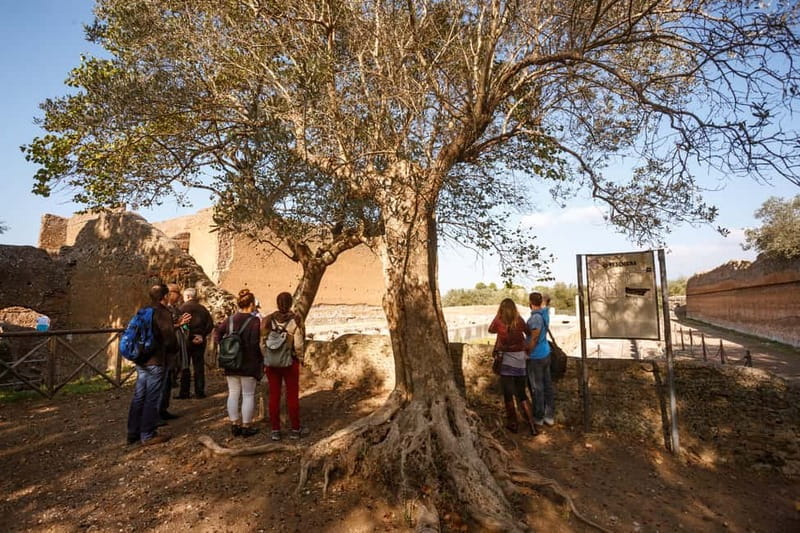
Villa Adriana sits in Lazio, east of Rome, and it’s basically a huge outdoor “model of power.” Emperor Hadrian built it as a country retreat, and that original idea matters because the site doesn’t feel like one single monument. It feels like an entire world inside the walls.
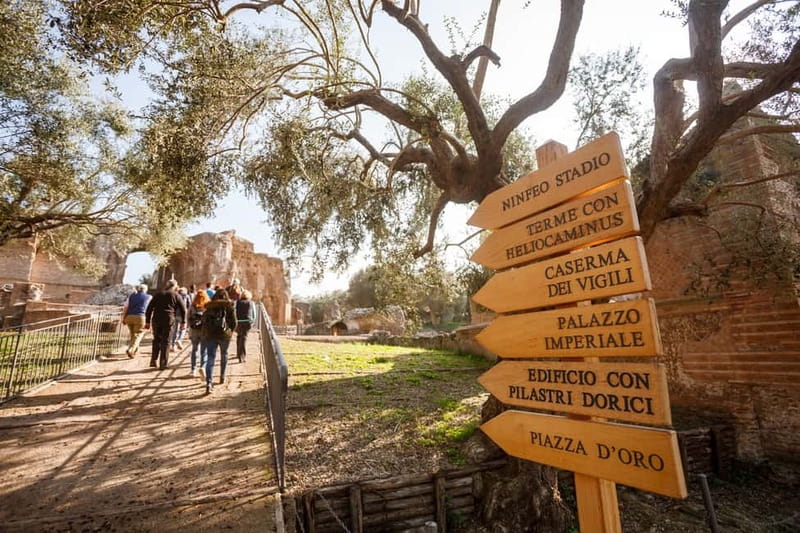
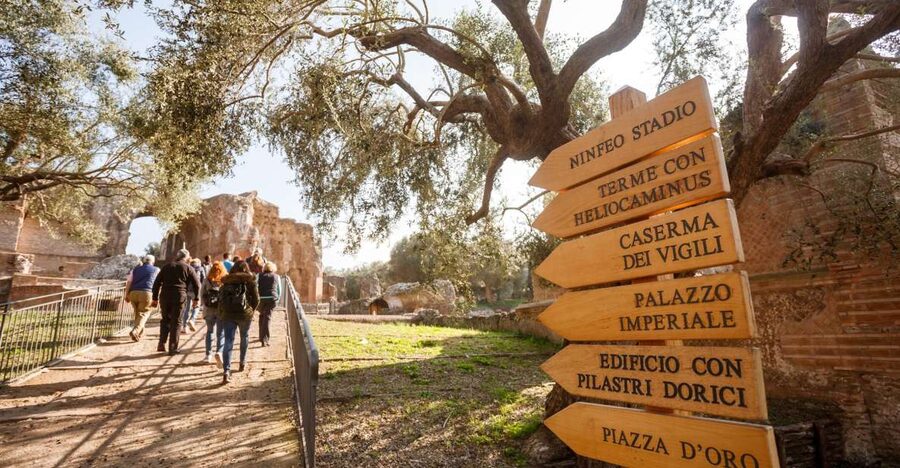
Your ticket gets you into the archaeological ruins at Villa Adriana, which is now a UNESCO World Heritage Site. The grounds cover about 1 square kilometer, and you can see the remains of more than 30 buildings. What makes that number feel real is how the site unfolds as you walk. You’re not just checking boxes like a list. You’re moving through different types of spaces Hadrian collected under one umbrella: theaters, pools, bath areas, and garden-like features with classical statues and water systems.
Also, you get a big added layer of mystery here. Much of the area still has not been excavated, so it’s fair to think about what might be waiting underground. That’s not a gimmick. It’s part of the emotional pull of a place that was built, used, and then largely left to time. Even when you’re standing in front of visible remains, you’re seeing just the top layer of the story.
If you want a visit that feels like Roman architecture studying itself, you’ll probably enjoy this. If you want modern comfort, this is less your thing. The site is ruins and open ground, so plan around real-world walking time.
You can also read our reviews of more tours and experiences in Tivoli.

Maritime Theatre and Canopo: the two “wow” stops to plan around
At Villa Adriana, the top moments are the ones that show Hadrian’s love of engineering and spectacle. The star for many visitors is the Maritime Theatre.
The Maritime Theatre is described as a round portico with a barrel vault supported by pillars. But it’s the inside details that make it click. You can visualize a lounge and a library tucked into the structure, plus heated baths. There are also three suites with heated floors, along with features like a washbasin and an art gallery. The Maritime Theatre also has a large fountain, and inside the portico you’ll find a pool with an artificial island. This is the kind of place where the ruins still feel designed, like someone cared about how you would look and move around the space.
Then there’s Canopo, another highlight. It’s a huge rectangular pool encircled by sculptures. A pool does not sound like a big selling point until you’re standing near one and realizing it’s part of the architectural language. At Villa Adriana, water is not just decoration. It’s part of how the spaces work, how they cool, and how they create views and reflections.
If you only have a short visit, I’d treat the Maritime Theatre and Canopo as your anchors. Everything else can support them. If you have more time, you can let the order be flexible, because you’ll keep catching interesting corners as you move between zones.
Baths, mosaics, and Antinous statues: how the site shows daily life

Villa Adriana is sometimes framed as an imperial playground, but it’s also a place where you can read daily life through art and design. That’s where the mosaics and statues matter.
You’ll see mosaics from Roman bath areas, and one review specifically calls out mosaics remaining in the hospital area as brilliant. Even if you don’t know what each room originally served, mosaics act like visual breadcrumbs. They survive when other decoration doesn’t, so they help you understand how important these spaces were, even when they’re broken.
Another emotionally striking detail is the presence of marble statues connected to the time of Hadrian. The site notes the marble statues of Antinous, Hadrian’s deified lover. Seeing a figure like Antinous referenced in the context of the villa helps you connect two things at once: the Roman world was political, and it was personal. Religion, art, and status all braided together inside a single retreat.
And then there are the basics you might not think about until you’re there: the ruins aren’t just flat stone. The grounds include water features, classical statues, and more. The fact that the site has many partially preserved elements means you’re often looking at relationships between features, like water next to architectural lines, or sculpture placed to shape a view.
This is one of those places where a little bit of listening (via the digital audioguide) can turn confusion into recognition. You’ll still be looking at ruins, but you’ll start to understand what Hadrian was trying to choreograph.
How the digital audioguide changes your walk
Your ticket includes a digital audioguide, and that matters more than it sounds. Villa Adriana is large enough that without guidance, you can end up doing a slow walk where everything feels equally interesting and equally vague. The audioguide helps you slow down on purpose, so key buildings feel like chapters rather than scattered leftovers.
Since the experience is self-guided, the best approach is to use the audioguide like a set of lifelines. Start early with the big monuments, then let it bring you back to details you might miss. The Maritime Theatre and other named features are the kind of spots where audio explanations can help you picture what used to be functional, not just decorative.
One fun extra is that you can also send a Pemcard digital photo as a real postcard to anywhere in the world. The information provided includes an instruction link for downloading your digital postcard. It’s a small payoff, but it’s a smart use of your time at a photo-heavy site, because you’ll want something to remember it by later.
The biggest practical shift is this: you’re not waiting for a group to move. You can linger at mosaics when you feel the itch to look closer, then move on when you want to catch the next major feature.
A realistic visit plan: timing, walking, and what to prioritize
Your ticket is valid for 1 day, and starting times depend on availability. In plain terms, you pick an entry window, exchange your voucher at the ticket office, and then you’re free to explore within that day.
One review recommends allowing at least 2 hours. I think that’s a sensible baseline because Villa Adriana covers a lot of ground, and the best parts are spread out. If you’re the type who stops for photos often, you might want to plan more than two hours so you don’t feel rushed.
Here’s a simple way to structure your time without making it complicated:
- Start with the named “architecture moments” first, like the Maritime Theatre.
- Then move to the water features, including Canopo and the Serapeum grotto.
- Work mosaics into the middle of your walk, because you’ll want a break from long sightlines and mosaics reward close attention.
- Leave a little flexibility at the end for whatever you lingered on earlier.
The Serapeum also appears in the details as an artificial grotto. If you enjoy weird, theatrical spaces that feel designed for staging, this is the kind of stop that can break up a more linear route.
One more note: you will pass a security check before entering, and it is not permitted to bring rucksacks, suitcases, or large bags. If you’re planning to carry a bag, keep it minimal. This doesn’t kill the experience, but it can change how you arrive.
Price and value for $19: self-guided freedom vs a live guide
This ticket is listed at $19 per person, which is fairly strong value if you want an organized entry plus interpretation. You’re paying for three things: admission, skip-the-line entry, and a digital audioguide.
What you are not paying for is a live guide. The package does not include a guided tour, and transportation is not included either. That means the value equation depends on your style.
- If you like to walk, read cues, and listen at your own pace, you’ll get your money’s worth because you can spend more time where you’re curious.
- If you love museum-style narration and want someone to answer questions on the spot, you might find the self-guided approach thinner.
The good news is that the included audioguide is built for exactly this kind of ruin wandering. With it, you can treat the site like a guided story that you pause and replay by simply moving at your own speed.
Who tends to suit this best? People who enjoy Roman architecture, mosaics, and the idea of Hadrian as an experimental builder. It also works well for travelers who want something different from Rome itself, while still staying close enough to feel like part of the same trip.
Should you book this Villa Adriana ticket?
Yes, you should book it if you want a high-value, self-guided day in an UNESCO site tied to Hadrian, with major highlights like the Maritime Theatre, Canopo, Serapeum grotto, and mosaics you can actually get close to.
Skip it only if you know you want a guided tour with a human narrator and you struggle without real-time explanations. If that describes you, you might prefer a tour format where someone leads the whole route and fills in gaps as you go.
If you do book, my practical advice is simple: plan for at least two hours, keep your bag situation minimal for security, and use the audioguide to turn the biggest monuments into your itinerary anchors. That combo makes Villa Adriana feel less like ruins you pass through, and more like Hadrian’s world you can follow step by step.
FAQ
What is included with the Villa Adriana entrance ticket?
You get Villa Adriana entry and a digital audioguide.
How much is the ticket?
The price is listed at $19 per person.
How long is the ticket valid?
The ticket is valid for 1 day. Starting times depend on availability.
Where do I exchange my voucher?
You should exchange your voucher at the ticket office of the Villa Adriana.
Is transportation included?
No. Transportation is not included.
Is a guided tour included?
No. A guided tour is not included.
Is there a skip-the-line benefit?
Yes. The ticket includes skip the ticket line.
Do I need a printed voucher?
Yes. A printed voucher is required.
Are large bags allowed?
No. It is not permitted to enter with rucksacks, suitcases, or large bags. You will also need to pass a security check.
Can I send a digital postcard from the experience?
Yes. The information provided mentions downloading a Pemcard digital photo that you can send as a real postcard, using the instructions at the provided link.
More Self-Guided Tours in Tivoli
More Tour Reviews in Tivoli
Not for you? Here's more nearby things to do in Tivoli we have reviewed

Day Trips from Rome, compared.
 ★ 4.6From Rome: Pompeii, Amalfi Coast, and Sorrento Day TripFrom $797,031 reviews
 ★ 4.6From Rome: Pompeii, Amalfi Coast and Positano Day TripFrom $996,620 reviews
 ★ 4.6From Rome: Pompeii Day Trip with Optional Vesuvius and LunchFrom $885,067 reviews
 ★ 4.4Amalfi Coast & Positano Day Trip with Coastal CruiseFrom $1342,511 reviews
 ★ 4.5From Rome: Villa D’Este and Hadrian’s Villa Tivoli Day TourFrom $772,060 reviews
 ★ 4.4From Rome: Day Trip to Pompeii with TicketsFrom $1111,161 reviews
 ★ 4.4From Rome: Sorrento & Pompeii Day Trip with Guide or TicketFrom $1071,131 reviews
 ★ 4.6From Rome: Bagnoregio & Orvieto Day Trip with Wines & LunchFrom $931,075 reviews
Browse the lists this tour appears in