
Reviewed · VATICAN TOURS
Rome: Vatican Museums & Sistine Chapel Private Evening Tour
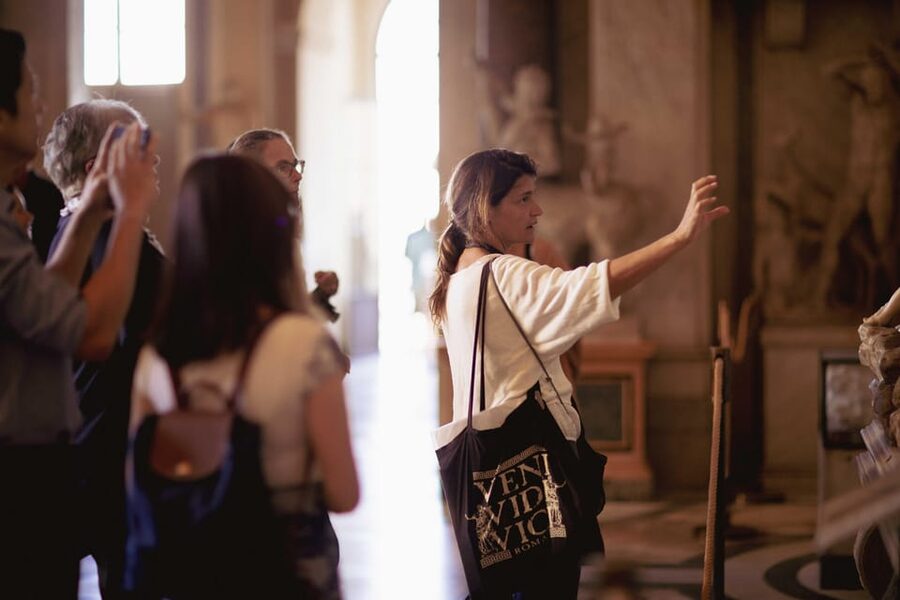
Evening at the Vatican feels like backstage. You get skip-the-line entry plus guided focus on the Vatican Museums and Sistine Chapel, when the light turns softer. I also like the evening atmosphere in the chapels and courtyards, which makes the art feel more personal than rushed.
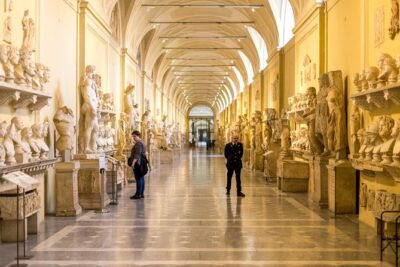
The tour is private, so your guide can pace things to your group. I especially like how the route hits the big names, then slows down for the stuff most people miss, like the Greek and Roman statues and the right viewpoints in the museum galleries.
One drawback to plan for: the Sistine Chapel has strict rules. No flash, no photography inside, and silence is required, so if you want to chat while you look around, this part may feel limiting.
Key highlights worth planning around
- Skip-the-line access with a separate entrance to cut the worst of the wait
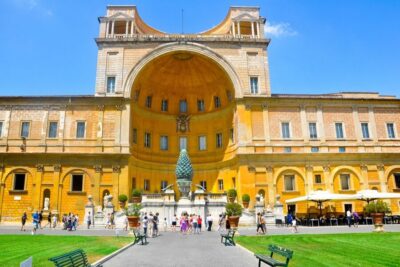
- Courtyard time in the evening, including the Courtyard of the Pigna and the Octagonal Courtyard
- Belvedere highlights like the Belvedere Torso and major Vatican sculpture stops
- Map and Raphael Rooms focus with time aimed at what you can actually see and enjoy
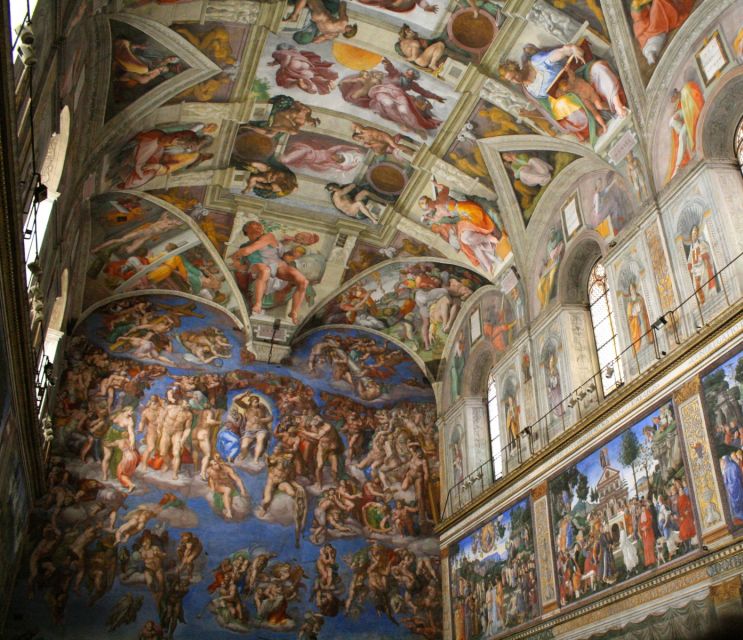
- Sistine Chapel viewing in quieter conditions with evening light through arched windows
- Private guide attention from people who know where to stand and what details matter
Why an evening Vatican tour changes everything
A Vatican visit can feel like a sprint, even when you are excited. The crowds are thick in daytime, and you end up spending real energy just moving from room to room. An evening schedule helps because you are still seeing the same masterpieces, but at a calmer pace.
This tour also leans into atmosphere, not just checklists. You move through iconic spaces like the Pinecone Courtyard and the Octagonal Courtyard before the Sistine Chapel, so the evening feels built in rather than added on at the end. The museum galleries can be much easier to read visually when you are not fighting the daytime crush.
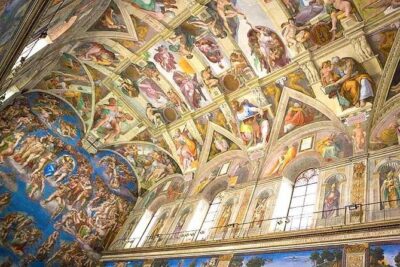
And then there is the Sistine Chapel. The tour is timed so you see the ceiling under more gentle, late-day light, with that glow reflecting from the arched windows.
You can also read our reviews of more private tours in Rome

Getting in smoothly: meeting point, timing, and ID
Meet at Café Vaticano, Viale Vaticano 100, across the street from the Vatican Museums entrance. You are asked to arrive 15 minutes early, which is smart if you do not want to start stressed.
Plan for the required entry items. You must bring a government-issued ID, and everyone must show it regardless of age. If you forget, you could lose time, and there is no good substitute.
Also note the rules that affect your comfort. Backpacks are not permitted in the Museums, and you should plan to travel light. This is especially important on an evening tour, since the whole point is to move efficiently through galleries without getting slowed down at bag checks.
Courtyards first: Courtyard of the Pigna and Belvedere Cortile
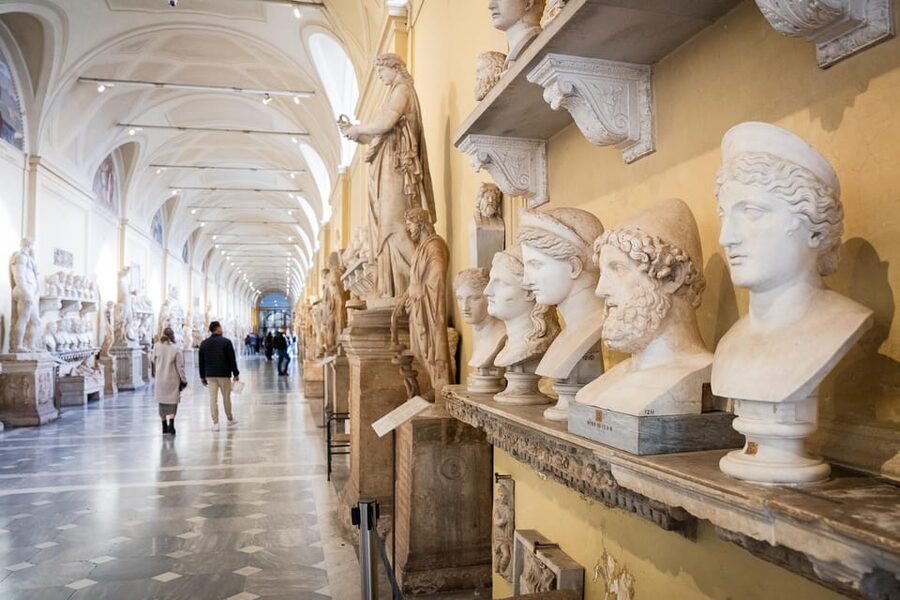
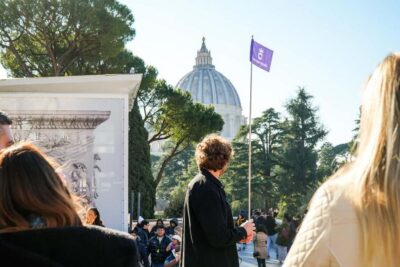
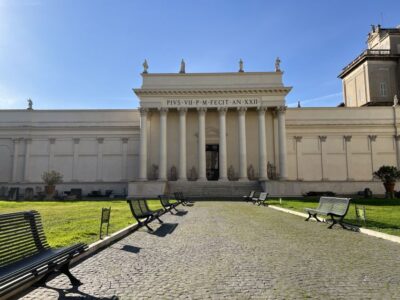
The itinerary begins with courtyard stops that set the tone right away. The first big one is the Courtyard of the Pigna, where you will get a guided visit and time to take in the space. Even if you have seen photos, courtyards in the Vatican have their own scale, and the evening light makes it easier to notice architectural details.
Next comes the Cortile del Belvedere. This is where the Vatican’s sculpture and palace context start to make sense, because it is not just rooms. It is a whole complex designed to connect art, power, and patronage across different eras.
These early stops matter because they help you “read” what comes next. You are not walking into galleries cold, unsure of what you are looking at. Instead, your guide sets up the story with the buildings and sculpture court layout first.
Gallery of Tapestries and Gallery of Maps: what to look for
After the courtyards, you move into some of the museum spaces that many people skim because they want to hurry to the Raphael Rooms and the Sistine Chapel. The nice thing here is that the itinerary gives these galleries time with guidance.
Gallery of Tapestries (Raphael’s circle)
You will visit the Gallery of Tapestries guided, including works designed by students connected to Raphael. The value here is less about memorizing names and more about seeing how the tapestries fit into the broader art system of the Renaissance. Your guide can point out what makes the designs significant and what to notice when viewing from the best angles.
If you tend to rush, this is a good reset. You can slow down and actually see how the figures are composed, even without getting lost in technical art history.
You can also read our reviews of more museum experiences in Rome




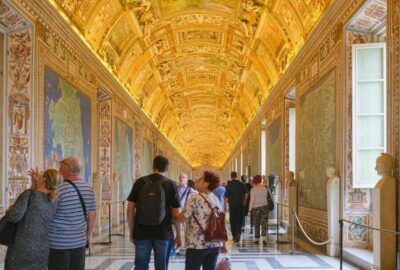
Gallery of Maps (40 painted panels by Ignazio Danti)
Next is the Gallery of Maps with 40 painted topographical map panels created by Ignazio Danti. This part is surprisingly rewarding because it shows a different side of Vatican collecting and storytelling. Instead of only sculpture and fresco cycles, you get a visual tool built for understanding the world as it was imagined at the time.
Even if maps are not your thing, it helps you connect art to knowledge. You end up thinking about who commissioned these, why the Church cared about geography, and how that ambition shows up in the display.
Raphael Rooms: where your guide helps you see what you missed
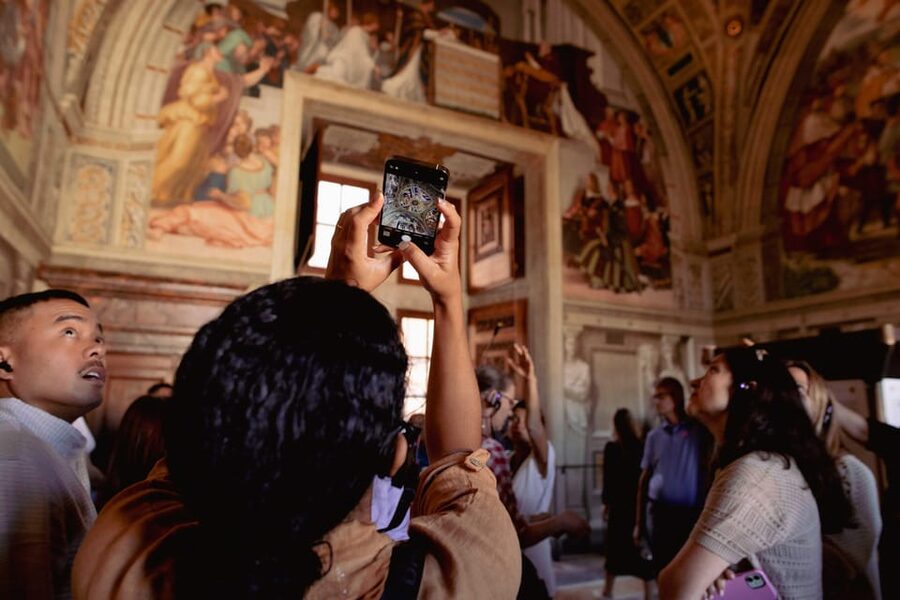
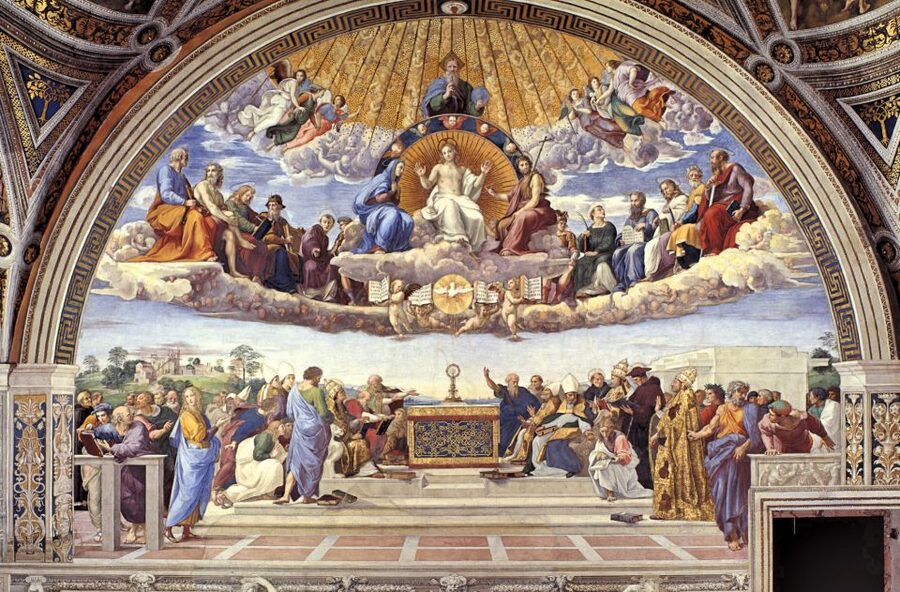
The Raphael Rooms are a major highlight of the tour, and you do not just pass through. You will be guided through the rooms that include the School of Athens as well as other Raphael works discussed during the visit.
One of the best “practical” differences with a private evening guide is that you get help with viewing positions. In daytime, you often see paintings from the wrong spot, blocked by other people, or you miss key details because your angle is off. A strong guide can help you find where to stand so you can appreciate the composition while not bumping into others.
This is also where stories help the art stick. You will hear tales about the masterworks and the context around Raphael’s work, including mention of the time he spent painting in these spaces. That kind of framing makes the rooms feel less like a museum checklist and more like an intentional creative environment.
Belvedere sculpture stops: ancient works that connect to later art
Your tour also includes prominent ancient sculpture stops such as the Ancient Laocoon statue and the Ancient Apollo statue, plus the Belvedere Torso. The Belvedere Torso is specifically mentioned as an example that even inspired Michelangelo while he worked on the Sistine Chapel ceiling.
Why this matters is simple. When you see a major Renaissance artist referencing ancient forms, you start noticing the line, balance, and anatomy language that carries across centuries. You are not just staring at beauty, you are spotting influence.
You will likely also hear the design secrets and stories tied to the Greek and Roman statues. That turns the galleries into more than “pretty stuff,” and it gives your brain hooks to remember what you saw later.
Sistine Chapel: how to enjoy it under strict rules
The final museum highlight is the Sistine Chapel. Here are the rules you should treat as non-negotiable before you even go inside:
- No flash photography
- No photography at all inside the Sistine Chapel
- Silence is mandatory once you are inside, with explanations provided beforehand
These rules can feel strict, but they also shape the experience. When the room is quiet, the ceiling hits differently. You can actually take in the scale, the composition, and the details without competing with voices.
The tour description also points out the Chapel ceiling size and timeline: the Sistine ceiling covers about 8,000 square feet and took roughly 4 years to create. That fact alone helps you understand why your guide will want you to slow down and look carefully.
Your guide also helps you see what to notice in the chapel setting, including mention of delicate evening light reflected from the arched windows. In practice, that means you get a more atmospheric ceiling view than a harsh, midday scan.
Price and value: is $288.88 per person fair for 3 hours?
At $288.88 per person for about 3 hours, this is not a cheap way to do Vatican Museums. But the value argument is pretty clear from what is included.
First, you are paying for skip-the-line entry through a separate entrance. Time in the Vatican is not free, and waiting in long queues can eat up the best part of your day, especially if you are in Rome only briefly.
Second, you get guided focus across major components, including the Courtyard of the Pigna, Octagonal Courtyard, Belvedere palace area, key sculpture highlights, the Raphael Rooms, and the Sistine Chapel. You are not just buying access, you are buying help to prioritize and understand.
Third, it is a private group. That often means fewer frustrations and a better pacing. One review note that night access felt worth the extra price, because it allowed for more time in galleries and a more relaxed Sistine Chapel visit. That aligns with what evening tours are designed to do: compress less, see more calmly.
Also, food and drink are not included. If you want a full evening plan, budget separately so you can keep your day moving without delays.
What the tour does well with real pacing
This is the kind of tour that works because it builds a rhythm.
- You start outdoors and semi-outdoors in courtyards, which helps your brain transition from street life to art life.
- You then layer in major museum galleries that are easy to miss if you do not have structure.
- You end in the Sistine Chapel with rules already explained, so you can focus.
One recurring theme from strong guide experiences is not just knowing facts, it is knowing what to point out. Guides like Giovanni and Christina are highlighted for giving education on unusual pieces and for showing where to stand to appreciate Raphael paintings. They also help you find calmer visual moments, including window views toward St. Peter’s. That is the kind of practical guidance that makes a private tour feel different from a standard museum wander.
Who this private evening tour is best for
This is a strong choice if you:
- Want time saved and fewer lines during Vatican Museums
- Care about understanding what you are seeing, not just taking photos
- Prefer quieter viewing conditions that an evening schedule supports
- Travel in a group that benefits from a more controlled pace
It might not fit as well if you:
- Want to move freely without guidance through every room
- Hate rules and silence requirements, since the Sistine Chapel is strict
- Plan to travel with a bulky bag, since backpacks are not permitted
If you want a “great hits” Vatican experience with better viewing conditions and stronger guidance, this is right in the target zone.
Should you book this Vatican evening tour?
I think it is a book-worthy option if your top goal is maximum art time with minimal waiting. The evening schedule plus the skip-the-line entry is the heart of the deal, and it directly affects how enjoyable the Vatican feels.
You should book it if you also value guidance that helps you see correctly, especially in the Raphael Rooms and the Sistine Chapel. If you are sensitive to rules, plan your mindset for silence and the no-photography policy in the chapel.
If you are on a tight budget, you might consider other entry methods. But if your time in Rome is precious, paying for a private, structured evening that protects your energy is often money well spent.
FAQ
What is the duration of the Rome: Vatican Museums & Sistine Chapel Private Evening Tour?
The tour duration is listed as 3 hours. Starting times vary, so you should check availability.
Where do I meet the guide?
You meet in front of Café Vaticano, Viale Vaticano 100, across the street from the Vatican Museum entrance.
How early should I arrive?
Please arrive 15 minutes prior to the tour commencement.
Is this tour private?
Yes, the tour is listed as a private group.
What languages are available for the live guide?
The tour offers live guiding in Spanish, English, and French.
Does the tour include skipping the line?
Yes. The tour includes skip the long line access through a separate entrance.
What is included in the tour besides museum access?
Included stops and highlights list Pinecone courtyard, Octagonal courtyard, Ancient Laocoon, Ancient Apollo, Belvedere Torso, Gallery of Maps, Raphael Rooms, School Of Athens, and Sistine Chapel, plus Michelangelo’s Sistine Chapel ceiling and Bernini’s bronze canopy.
Is food and drink included?
No. Food and drink are not included.
Are there photography rules in the Sistine Chapel?
Yes. The information states no flash photography and no photography at all inside the Sistine Chapel.
What items or documents are required?
Backpacks are not permitted in the Museums, and all guests regardless of age must present a government-issued ID.
More Private Tours in Rome
More Tours in Rome



More Tour Reviews in Rome

Not for you? Here's more nearby things to do in Rome we have reviewed












Vatican Tours, compared.
 ★ 4.5Vatican: Museums & Sistine Chapel Entrance TicketFrom $38144,003 reviews
 ★ 4.3Vatican Museums & Sistine Chapel Tour with Optional BasilicaFrom $7967,413 reviews
 ★ 4.5Vatican Museums, Sistine Chapel & St Peter’s Basilica Guided TourFrom $2239,149 reviews
 ★ 4.3Vatican Museums, Sistine Chapel & Basilica TourFrom $13013,872 reviews
 ★ 4.4Vatican Museums & Sistine Chapel Skip-the-Line Entry TicketFrom $4313,838 reviews
★ 4.7Vatican Museums, Sistine Chapel & Basilica TourFrom $7213,217 reviews
 ★ 4.5Skip-the-Line Group Tour of the Vatican, Sistine Chapel & St. Peter’s BasilicaFrom $3012,779 reviews
Vatican Museums & Sistine Chapel Guided TourFrom $11812,117 reviews
Browse the lists this tour appears in