
Reviewed · E-BIKES
Rome: E-Bike Tour of Appia Antica, Aqueducts, and Caffarella
Rome on a bike beats the grid. This half-day e-bike tour is a smart way to see Appia Antica and the countryside between monuments, with a small group that helps keep the pace calm and safe. The tradeoff is simple: you need to know how to ride a bicycle (e-bikes do the work, but they do not replace basic bike control).
One minute you’re starting near the Circus Maximus, and the next you’re rolling along roads that date back to the first highway Rome ever built. In between, you get a clear story that connects Roman engineering (water!), imperial life (tombs and villas), and the green space Antonio Cederna helped protect from endless development.
If your goal is to hit the highlights plus the quieter spots you’d skip on foot, this is a great use of 4 hours.
Key highlights that make this tour worth your time
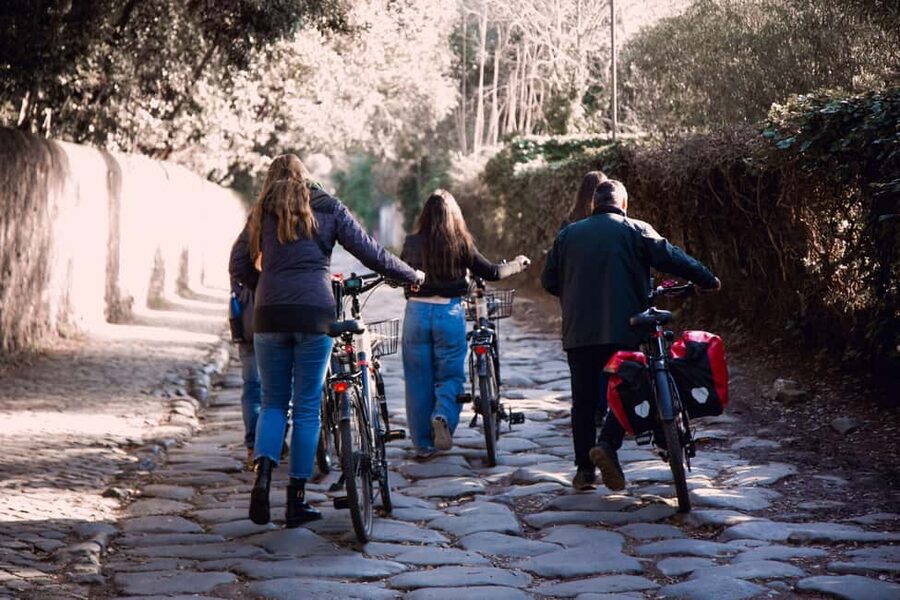
- Appia Antica by e-bike: fewer stairs, fewer queues, more time actually moving through history.
- A guide who manages traffic well: the route is planned to keep you away from cars as much as possible, with stops and crossings when needed.
- Ancient water logic, not just monuments: the aqueduct park stop is timed and explained so you understand what you’re seeing.
- Caffarella Valley as a breath of fresh air: you ride toward countryside that still feels like you escaped the city.
- Well-maintained bikes: strong battery assist helps on rough sections and gradual hills.
- A real break: you stop at a local bar for a pause, not just a quick photo and back on the bike.
Starting out at Circus Maximus, then getting out of town fast
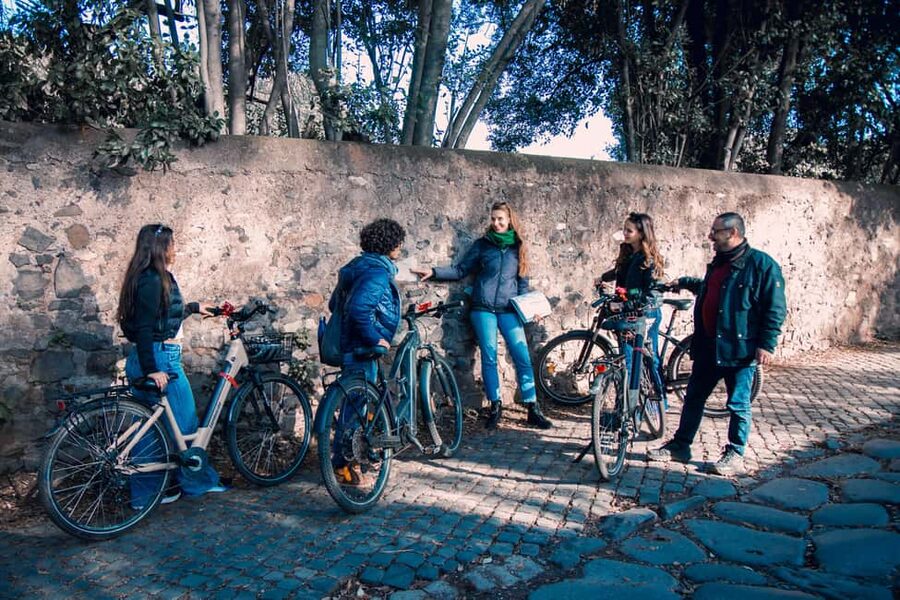
The tour begins at the company venue in front of the Circus Maximus, Rome’s massive chariot-racing stadium. It’s a great starting point because you can get there without wrestling with Rome’s maze for too long, and you’re in an area that makes the rest of the day feel like a “move outward” from the most crowded core.
Right away, you’ll do the practical stuff: arrive about 15 minutes early to fit the bike, get familiar with how it works, and sign paperwork. After that short prep, you start with a photo stop at the Circus Maximus (about 10 minutes). Even if you’ve seen images of it before, being there on the ground gives you the scale of what Rome once planned for spectacle.
This early portion also sets expectations. The day is not “museum and bus.” It’s a ride plus guided stops: quick photos, short visits where it makes sense, and plenty of time outdoors.
You can also read our reviews of more cycling tours in Rome

Caracalla Baths and Porta San Sebastiano: Rome’s power, control, and water
One of the smartest choices on this itinerary is the way it connects Roman ambition across different themes.
You’ll pass by or stop for photos at the Baths of Caracalla (about 20 minutes). These aren’t just impressive ruins. They’re tied to how Rome lived, worked, and bathed, and the tour’s pacing makes it feel like an introduction rather than a random stop.
Then you reach Porta San Sebastiano (about 20 minutes). This matters because it’s not just “old walls.” It’s part of how Rome protected itself as the city evolved. Seeing the Aurelian Walls and the idea of fortification while you’re still in active riding mode helps the day feel like one story, not a string of disconnected landmarks.
In practical terms, these early stops also work as a warm-up. You ease into the rhythm of riding, stopping, and regrouping, so by the time you hit the more famous stretches, you’re comfortable.
Quo Vadis and the catacombs area: faith spaces and underground Rome
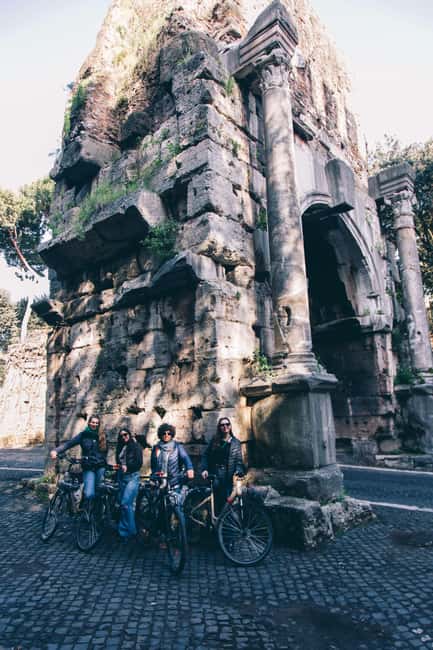
Next comes the Church of Domine Quo Vadis, where you spend about 20 minutes. This stop is worth it because it gives you a human-scale moment of meaning in a day that otherwise leans toward stone and engineering. Even if you’re not deeply religious, it’s a classic Roman spot that many visitors know from story, not from geography.
After that, the tour passes by the catacombs area for about 20 minutes. Important detail: this is a pass-by moment, not a listed guided visit. So treat it as a chance to see the setting and get context, not as the main catacombs attraction you might have planned as a separate ticket.
The benefit of doing this by bike is timing. You see the vibe of the area without spending hours in transit or waiting in a separate line later. If you want a relaxed, outdoor-focused day, these stops fit perfectly.
Villa Massenzio, Cecilia Metella, and the Appia corridor feel
As you ride, you hit the concentration of major sights that live near the first stretch of the Appian route. You’ll stop for photos at Villa di Massenzio (about 20 minutes) and then at the Tomb of Cecilia Metella (about 20 minutes).
These are the kind of places that can feel too familiar in photos, but different once you’re standing near them. The tomb shape and massing make more sense when you see how it sits in the open air and how the road corridor frames it.
Here’s one of the subtle wins of an e-bike approach. The ancient monuments do not sit in one convenient “walkable loop.” They are spread out. Riding helps you connect them without doing the heavy legwork of bouncing from viewpoint to viewpoint.
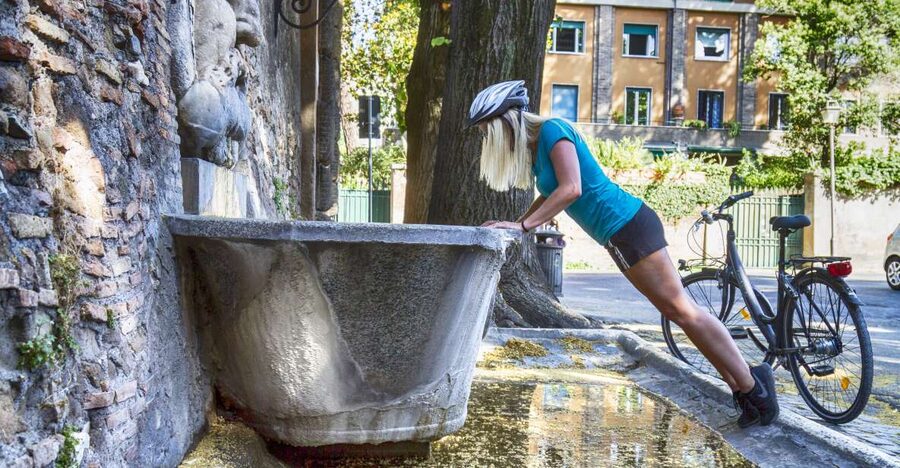
You also get a quick bar stop for about 20 minutes. This is not optional in practice. It’s when you reset, rehydrate, and take a breather before the heavier scenic portions of the day.
Riding the Regina Viarum on an e-bike: where the stones slow you down
This is the core experience, and it’s where the e-bike earns its keep.
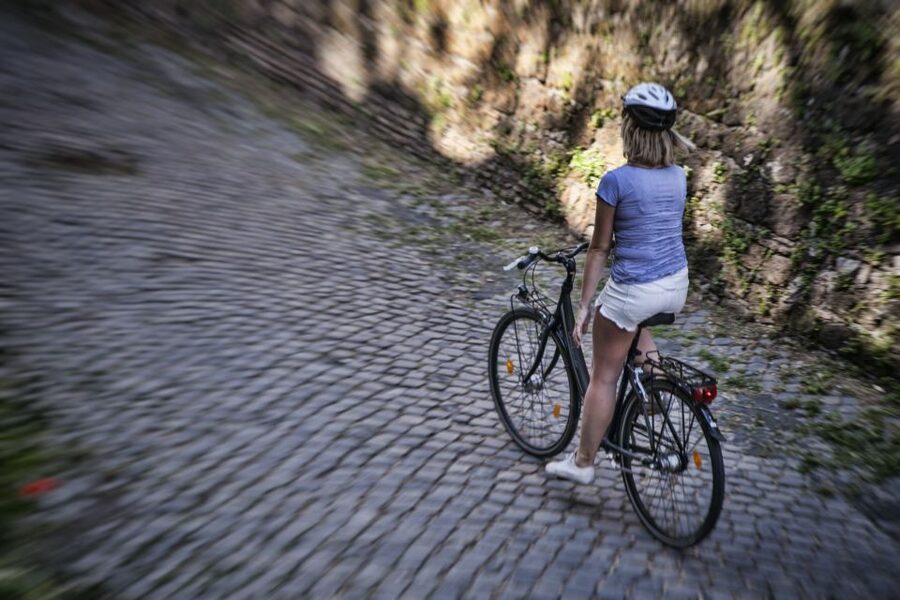
The Appian Way is famous for being rough in places, because it’s made with ancient stone paving. On a normal bike or on foot, that can turn into a leg-burning chore. With pedal assist, you still feel the texture under you, but you don’t waste the whole day battling the ground.
The big benefit I like about doing Appia Antica this way is the pacing. You can actually spend time looking, not just surviving the walk. The guide explains what you’re seeing as you go, and you can stop for photos when it makes sense rather than treating every pause like a checkpoint in a race.
Safety also tends to be better here than you might expect in a city like Rome. The route is planned to avoid heavy car traffic as much as possible, and the guide can manage crossings and stops when the route demands it. That is a big deal if you don’t love weaving into busy streets.
A few more Rome tours and experiences worth a look

Parco degli Acquedotti: understanding Roman water as you ride
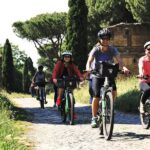
After the Appia corridor, the tour heads toward the Parco degli Acquedotti, with about 30 minutes there.
This section is where the day shifts from road romance to Roman engineering. The tour frames the aqueducts as the water system that supplied Rome with a huge volume of water, and the stops are designed so you’re not just looking at giant arches. You’re learning what the aqueducts were doing and why the landscape around them matters.
I like this because it turns “cool ruins” into comprehension. Once you understand the water purpose, the structures stop feeling like random stone and start feeling like a functional network.
Also, the park setting makes the whole day less tense. Even when you’re still moving from stop to stop, you’re not constantly surrounded by city noise. That rhythm helps you enjoy the history without burning out.
Caffarella Valley: animals, open air, and Egeria’s Nymphaeum
The tour then follows the Almone River into the Caffarella Valley, with about 30 minutes in Caffarella Park.
This is the anti-meandering part of the tour. Instead of wandering Rome’s center and getting stuck in crowds, you ride into a green zone that still feels like countryside minutes from the city. The route description even points to seeing horses, sheep, goats, and pigs close to the city center. Whether you see animals depends on timing, but the point is the feeling: open air, space, and a calmer pace.
Near the end, you reach the Nymphaeum of Egeria area, connected with the setting of Herodes Atticus’s villa. You get a graceful closing note to the day: not a huge spectacle, but a spot with atmosphere, tied to Roman mythology and elite life.
By the time you return, you’re likely to feel like you did two Rome days in one. You touched monuments and also regained a sense of scale by switching to nature.
Who should book this e-bike tour (and who might skip it)
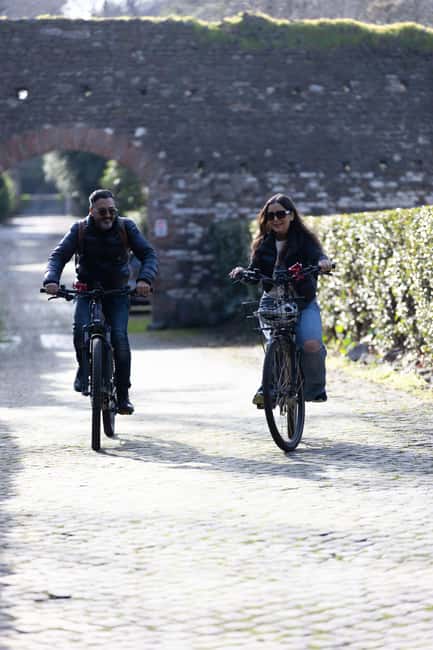
This tour is a strong match if you:
- Want a half-day plan that feels like countryside and ancient ruins, not just city walking.
- Like having a guide handle the “what am I looking at?” part, so you don’t spend the day guessing.
- Prefer small group energy, with time for photos and short stops without long waiting.
It might be a poor fit if you:
- Cannot ride a bicycle. The tour explicitly requires you to know how to drive a bike.
- Need mobility accommodations. It is not listed as suitable for people with mobility impairments.
- Are traveling with children under 12, or if the tour’s guidance does not match your travel needs. (Pregnancy is also listed as not suitable.)
One more practical consideration: bike fit. One traveler noted that the bike size did not fit a smaller rider as well as it should. This is why arriving early to get the correct setup matters. If you’re petite or between sizes, tell the staff at check-in, and ask for the best fit.
Guide style, group size, and why it affects your day
This is a small group tour, limited to 8 participants. That alone changes the experience. It’s easier to hear explanations, easier to regroup quickly, and less likely you get separated into a slow-moving line.
English and Dutch are offered. If you prefer English, you’ll have that option.
Guide names that come up include Monika, Adriana, Alannah, Adriana again in another listing, Frederick, and Martin. The common thread is how they handle two things: safety and clarity. You’ll see more because the guide gives context as you ride, and you’ll feel better because the route avoids the most stressful traffic as much as possible.
If you want a day that feels efficient without feeling rushed, small group plus a skilled guide is a winning formula.
Price and value: why $88 can make sense for Rome
At $88 per person for 4 hours, this is not the cheapest thing you can do in Rome. But it can be one of the best value choices if you weigh what’s included.
You’re paying for:
- An experienced guide
- An e-bike
- Access to a route that hits multiple major sites without wasting the day in transit
The value shows up in the time geometry. Without e-bikes, you’d likely spend more time walking or taking multiple rides to connect the Appian area, aqueduct park, and Caffarella Valley. Here, the bike is the transportation plus sightseeing platform.
Also, the e-bike is not just “nice to have.” It directly affects comfort on rough and uneven sections of ancient paving. That can be the difference between enjoying the day and feeling beat up after 60 minutes.
If your Rome time is limited and you want to leave the city center for a real change of scenery, I think this price is fair.
When should you book this tour instead of another Rome day?
Book this if your schedule allows and you want a break from the central crowds. Starting near Circus Maximus is convenient, and the ride direction naturally pulls you away from congestion.
If you’re flexible about weather, you’re set: the tour runs rain or shine. That also means you should dress for wet conditions if needed, and bring closed-toe shoes since you might get dirt on the ground.
If you want maximum comfort, choose a day when you’re not already exhausted from long museum hours. This tour is active, even with pedal assist.
Quick checklist before you go
For this kind of ride, I’d pack like it’s a countryside day:
- Comfortable clothes that can get dirty
- Closed-toe shoes
- Clothes prepared for rain if the forecast looks iffy
Also, if you don’t ride often, practice basic balance before arrival. You don’t need to be a cyclist, but the tour expects you to handle the bike confidently.
Should you book the Appia Antica, aqueducts, and Caffarella e-bike tour?
If you want an efficient, scenic, history-meets-nature Rome experience, I’d strongly consider booking it. The combination of Appia Antica, aqueducts, and Caffarella Valley is a rare pairing: big Roman monuments plus open-air calm in just 4 hours.
The main reason to hesitate is the bike requirement. If you’re not comfortable riding, skip it and choose a walking or guided site option that matches your comfort level.
Otherwise, this is one of those Rome tours where the “how” matters. Riding an e-bike changes what you can enjoy, because you get more time looking at the stones, the arches, and the countryside, and less time thinking about getting tired.
FAQ
What is the duration of the Rome e-bike tour?
The tour lasts 4 hours.
Where does the tour start?
The meeting venue is in front of the Circus Maximus. You should arrive about 15 minutes early.
How many people are in the group?
The group is small, limited to 8 participants.
What is included with the ticket?
The tour includes an experienced guide and an e-bike.
What languages are the guides available in?
The live guide is available in English and Dutch.
Does the tour run in rain?
Yes, the tour takes place rain or shine.
Do I need to know how to ride a bicycle?
Yes. The tour requires that you know how to drive a bicycle.
Is the catacombs stop a visit or just a pass-by?
It is listed as a pass-by stop, not a visit.
More Cycling Tours in Rome
More Tours in Rome


More Tour Reviews in Rome
Not for you? Here's more nearby things to do in Rome we have reviewed







E-Bikes, compared.
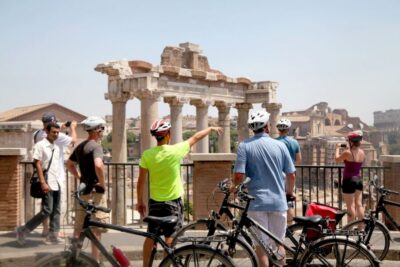 ★ 4.9Top Highlights & Hidden Gems Tour by Cannondale E-BikeFrom $851,760 reviews
 ★ 4.9Appian Way, Catacombs, & Roman Aqueducts E-bike TourFrom $851,421 reviews
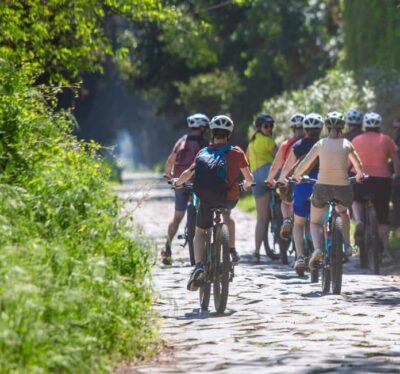 ★ 4.9Appian Way E-bike Tour with Catacombs, Aqueducts & FoodFrom $961,210 reviews
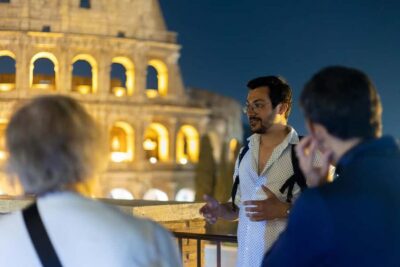 ★ 4.9E-Bike Night Tour with Food and Wine TastingFrom $891,131 reviews
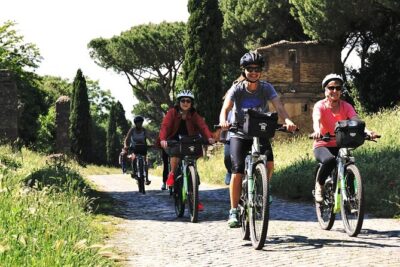 ★ 5.0Appian Way, Catacombs and Aqueducts Park Tour with Top E-BikeFrom $102735 reviews
 ★ 4.6Appian Way E-Bike Tour Catacombs, Aqueducts & PicnicFrom $89727 reviews
 ★ 4.5Appian Way & Catacomb Sunset E-bike Tour with AperitifFrom $89682 reviews
 ★ 5.0Appian Way & Aqueducts small group e-bike tour(catacombs & food)From $90531 reviews
Browse the lists this tour appears in